

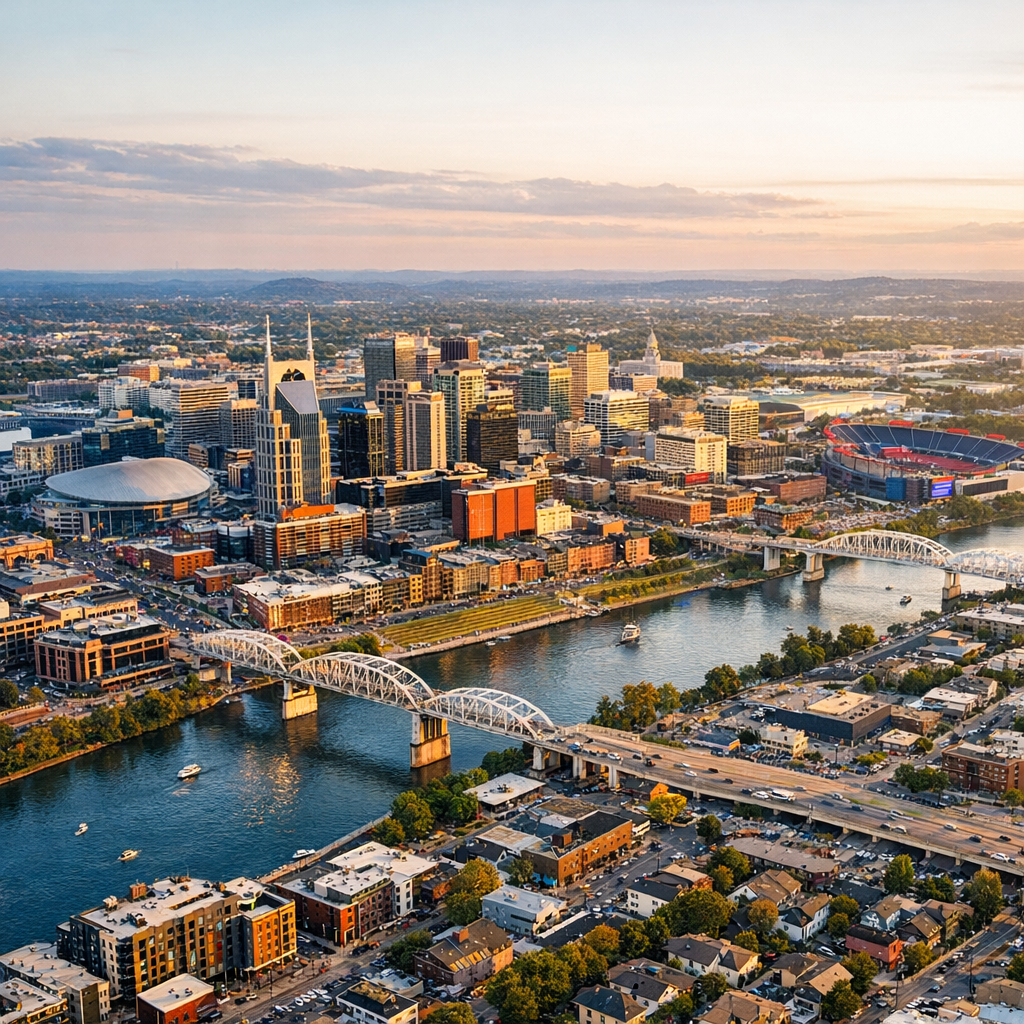
Nashville continues to demonstrate economic resilience, aligning with broader national trends in job growth and housing market dynamics.
Job Market Growth
In the first half of 2025, the Nashville metropolitan area added approximately 30,000 jobs, bringing total employment to over 1.2 million. This job growth outpaced the national average, with the unemployment rate in Nashville at 2.7%, more than a full percentage point below the U.S. average of 4%. Employment gains were particularly strong in the hospitality, retail, and wholesale trade sectors, while healthcare—Nashville’s largest industry—continued to see robust demand, especially for nurses.
Housing Market Dynamics
The housing market in Nashville has experienced significant shifts. As of April 2025, the number of home sellers nearly doubled that of buyers, reflecting a 90% seller surplus compared to a national average of 34%. This marks a major reversal from two years prior when buyers significantly outnumbered sellers. The increased seller presence offers potential homebuyers more options and stronger negotiating leverage, resulting in nearly two-thirds of homes in Nashville selling below asking price. Despite this favorable market shift, homeownership remains out of reach for many locals, with the median home price at $467,178 and a required annual income of $120,000 to afford it.
Economic Contributions
Vanderbilt University and Vanderbilt University Medical Center have significantly contributed to the local economy. Between 2019 and 2024, these institutions made a $22.13 billion annual economic impact on Nashville and Tennessee. Their contributions stem from institutional spending on payroll, construction, and procurement with Tennessee companies, as well as local spending by students and campus visitors.
Population Growth
In 2025, Nashville, particularly Davidson County, was the driving force behind Tennessee’s population growth, adding nearly 9,300 residents—the highest increase among the state’s 95 counties. This growth underscores major challenges and opportunities for the city, including rising home prices, increased traffic, higher tax bills, and extensive construction projects. Alongside these issues are opportunities in innovation, new businesses, and high-paying jobs.
Conclusion
Nashville’s economic landscape reflects broader national trends, with robust job growth and a dynamic housing market. The city’s resilience and adaptability position it well to navigate future economic challenges and opportunities.