

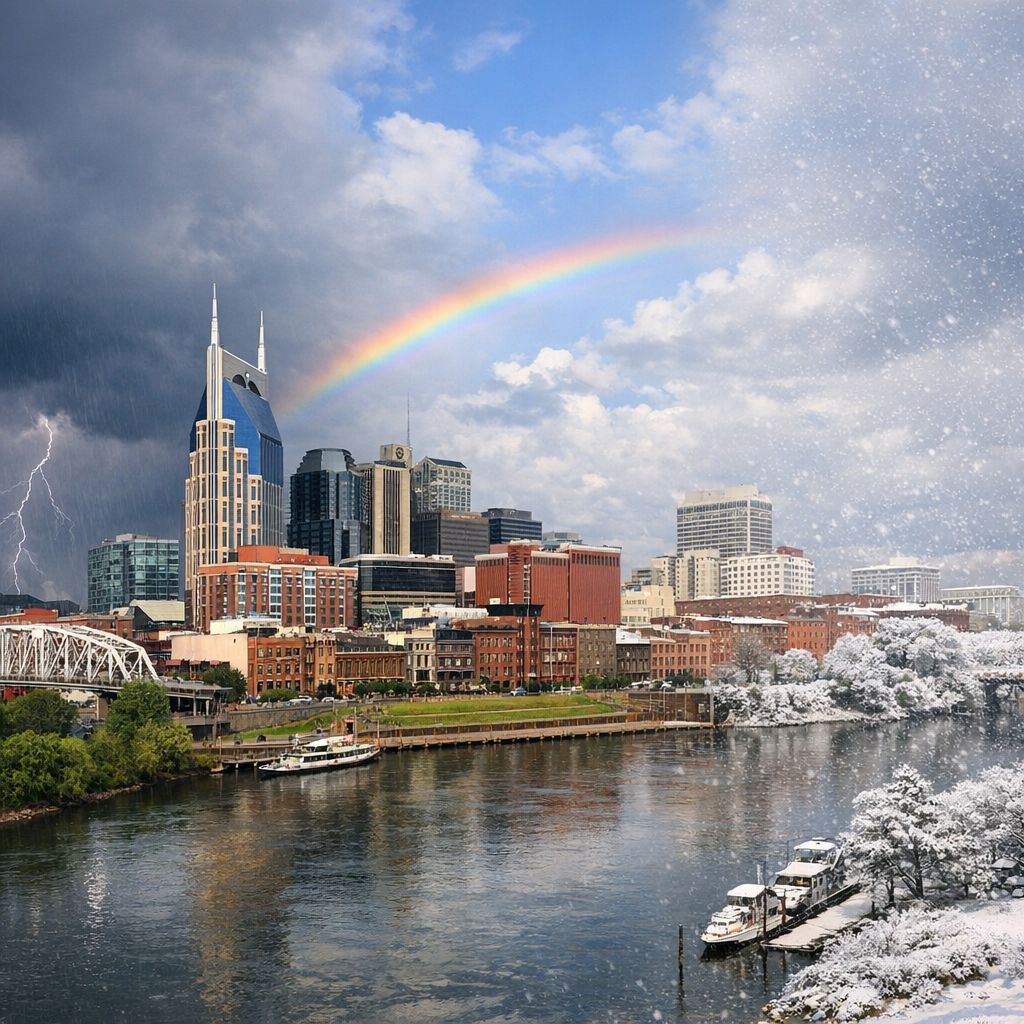
Nashville, Tennessee, experiences a humid subtropical climate characterized by four distinct seasons, each bringing unique weather patterns and environmental considerations.
Seasonal Weather Patterns
Spring (March – May)
Spring in Nashville is marked by fluctuating temperatures and increased precipitation. Average temperatures rise from the low 60s°F (16°C) in March to nearly 80°F (27°C) by late May. This season is also the wettest, with May typically being the rainiest month. Additionally, Nashville lies within “Dixie Alley,” making it susceptible to severe thunderstorms and tornadoes during this period.
Summer (June – August)
Summers are hot and humid, with temperatures often exceeding 90°F (32°C). The city has experienced an increase in the frequency and duration of heat waves, posing health risks, especially to vulnerable populations. Urban heat islands, areas with higher temperatures due to infrastructure and limited green spaces, exacerbate these conditions. Approximately 71% of Nashville residents live in such neighborhoods, intensifying the impact of extreme heat.
Autumn (September – November)
Autumn brings milder temperatures and reduced humidity, offering a respite from the summer heat. Average high temperatures decrease from the mid-80s°F (29°C) in September to the upper 60s°F (20°C) by November. This season is generally drier, with October being one of the least rainy months.
Winter (December – February)
Winters are relatively mild, with average temperatures ranging from the mid-30s°F (1°C) to the low 50s°F (10°C). Snowfall is infrequent, averaging about 4 inches annually. However, occasional cold snaps can bring temperatures below freezing, leading to icy conditions.
Environmental Challenges
Flooding
Nashville’s geography, situated in the Cumberland River basin, makes it prone to flooding. The city has experienced significant flood events, such as the May 2010 flood, which caused extensive damage. Climate models project a 20-30% increase in extreme precipitation intensity across Middle Tennessee by 2060, raising concerns about future flood risks.
Air Quality
Air pollution in Nashville stems from various sources, including vehicle emissions, industrial activities, and seasonal factors. During summer, high temperatures and stagnant air can lead to elevated ozone levels, while winter months may see increased particulate matter due to wood burning and temperature inversions. These conditions can affect respiratory health, particularly among sensitive groups.
Mosquito Activity
The city’s humid climate and abundant water bodies create favorable conditions for mosquitoes. The mosquito season typically runs from late April through October, approximately seven months, which is longer than in many other regions. This extended season increases the risk of mosquito-borne illnesses.
Understanding Nashville’s climate and environmental challenges is essential for residents and visitors to prepare and adapt to the city’s dynamic weather patterns.