

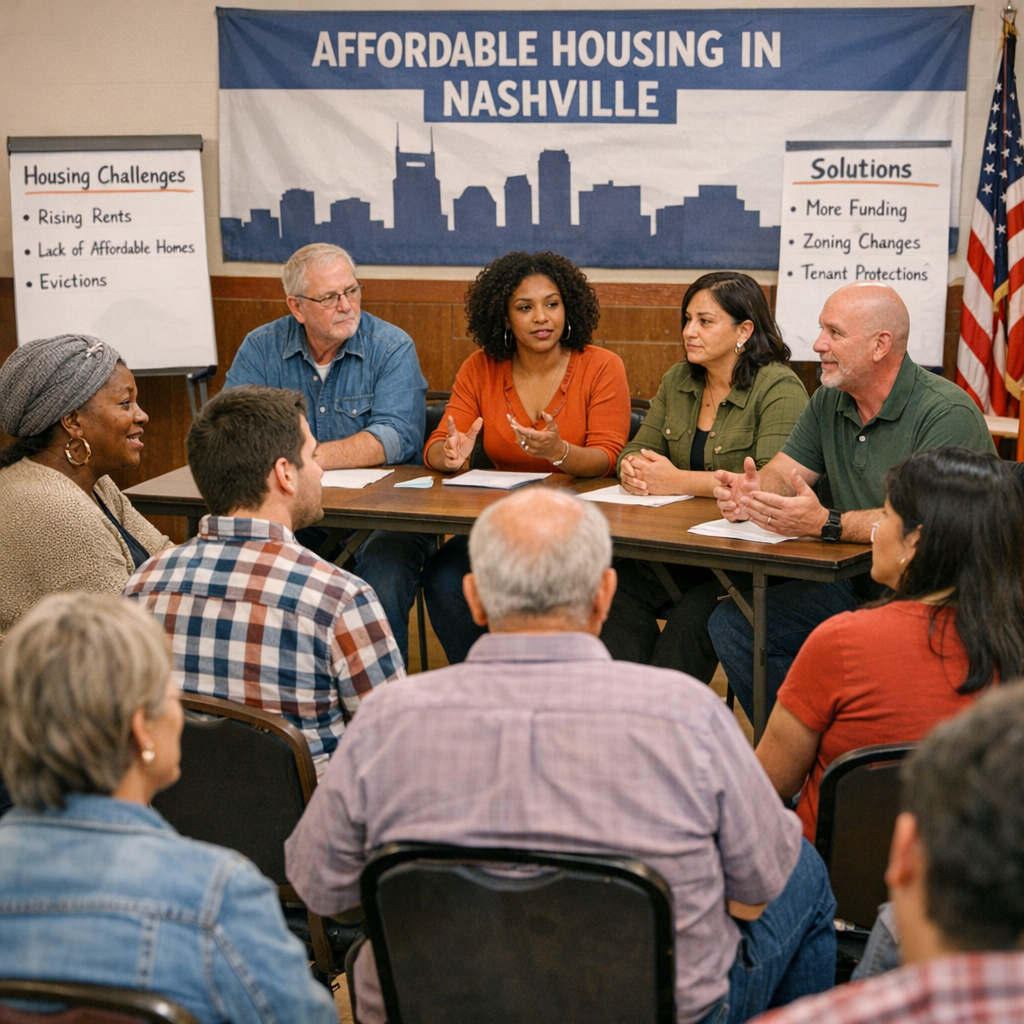
Nashville’s rapid population growth has brought economic opportunities but also intensified housing affordability challenges. Recent reports highlight the pressing need to address these issues to ensure all residents have access to adequate housing.
Community Health Improvement Plan Targets Housing
The 2026-2028 Nashville Community Health Improvement Plan identifies housing as a key priority. The plan aims to use the Unified Housing Strategy to implement immediate, low-barrier actions that improve equitable health outcomes for vulnerable populations. This approach acknowledges the significant impact that housing accessibility, availability, affordability, and adequacy have on overall health.
Disparities in Housing Affordability
Metro Social Services’ 17th annual Community Needs Evaluation report reveals that Nashville’s African American residents face greater affordability challenges compared to other groups. The report indicates that the poverty rate among African Americans in Davidson County is 18%, higher than the overall rate of 11.9%. Additionally, nearly half of all renters in Nashville are “cost-burdened,” spending more than 30% of their income on housing.
Public Perception and Policy Implications
A Vanderbilt Poll conducted in March 2026 found that 82% of residents believe they cannot afford to buy a house in Davidson County, and only 36% plan to purchase a home in the area. These concerns are reflected in the increased priority placed on bringing new, good jobs to the city, which more than doubled from 18% in 2025 to 43% in 2026. The poll also noted that 79% of residents feel Nashville’s population is growing too quickly, contributing to the housing affordability crisis.
Moving Forward
Addressing Nashville’s housing affordability challenges requires a multifaceted approach. The Community Health Improvement Plan’s focus on housing, combined with targeted economic development and job creation efforts, aims to alleviate the financial burdens faced by many residents. Continued collaboration between public agencies, community organizations, and residents is essential to develop and implement effective solutions that promote equitable access to housing for all Nashvillians.