

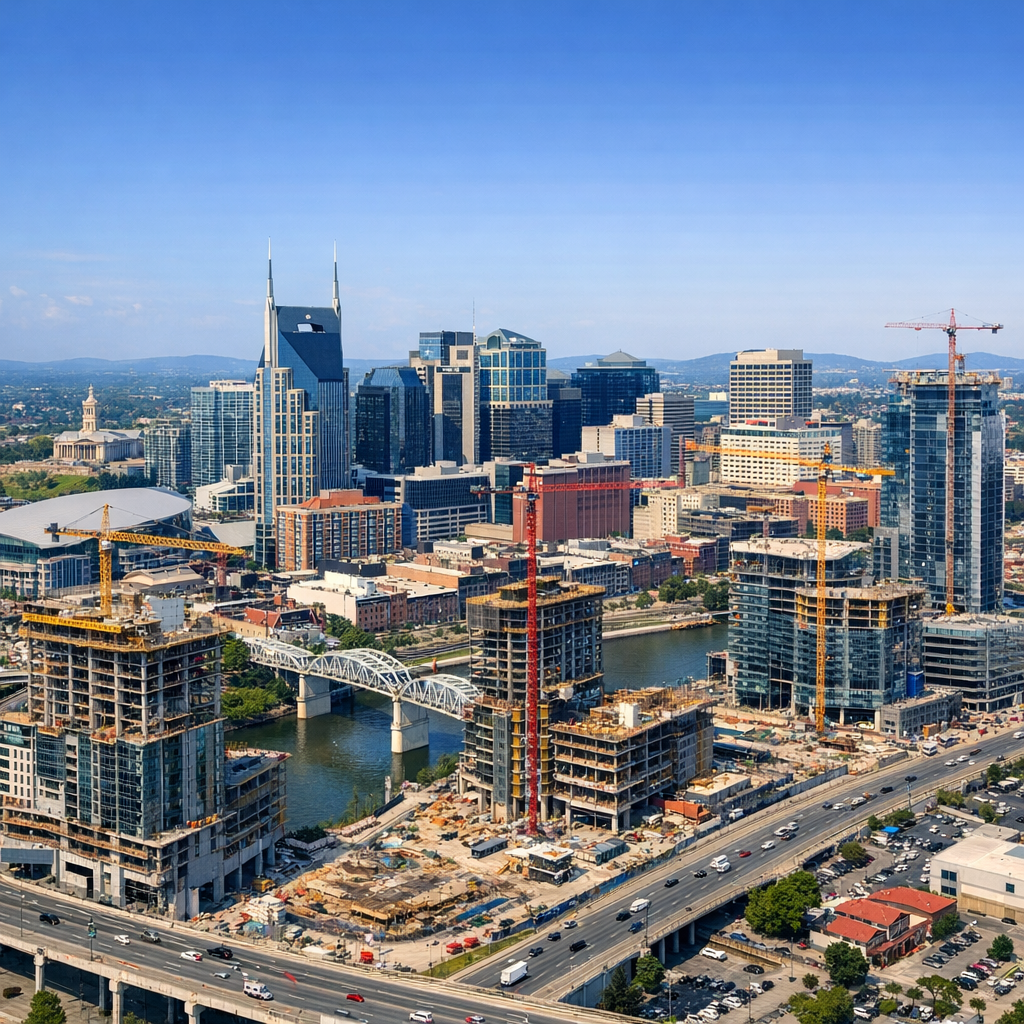
Nashville’s real estate market is experiencing notable shifts, presenting both challenges and opportunities for buyers and sellers. Understanding these changes is crucial for making informed decisions.
Market Trends
Recent data indicates a cooling trend in Nashville’s housing market. The median sale price of homes has seen a modest increase, with a 2.2% rise compared to the previous year, reaching $470,000. However, homes are staying on the market longer, averaging 98 days before sale, up from 64 days last year. Additionally, the number of homes sold has decreased by 5.8% year-over-year, totaling 817 sales in March 2026. This suggests a shift towards a more balanced market, offering buyers increased negotiating power.
Inventory and Buyer Opportunities
The inventory of available homes has risen, providing buyers with more options. Active listings climbed to 2,416 homes in February, marking a 7.0% increase from the previous year. New listings also saw an 8.7% year-over-year jump, nearly four times the national growth rate. This surge in inventory, coupled with slightly lower interest rates, empowers buyers with greater negotiating power, leading sellers to adopt creative tactics such as offering incentives.
Local Developments
Several significant developments are reshaping Nashville’s real estate landscape. The East Bank redevelopment has made substantial progress, with key milestones including construction advances on the new Titans stadium and plans for a new riverfront arts center. Additionally, the Belle Meade Plaza is undergoing transformation with the introduction of 1 Iris Lane, a luxury residential project featuring upscale condos starting at $2.5 million. These developments are set to enhance Nashville’s urban appeal and provide diverse housing options.
Neighborhood Highlights
Antioch (ZIP code 37013) continues to lead Nashville’s real estate market, recording 1,121 home sales in 2025, marking the third consecutive year at the top. This underscores the area’s rapid growth and attractiveness to buyers seeking more affordable options. Other neighborhoods like The Nations, Sylvan Park, Crieve Hall, Hermitage, Bellevue, and North Nashville are also experiencing strong buyer interest, reflecting a broader trend of growth in various parts of the city.
Conclusion
Nashville’s real estate market is evolving, with increased inventory and significant developments offering new opportunities. Buyers can benefit from a more balanced market with greater negotiating power, while sellers may need to adapt strategies to attract interest. Staying informed about these trends is essential for navigating the dynamic landscape of Nashville’s housing market.