

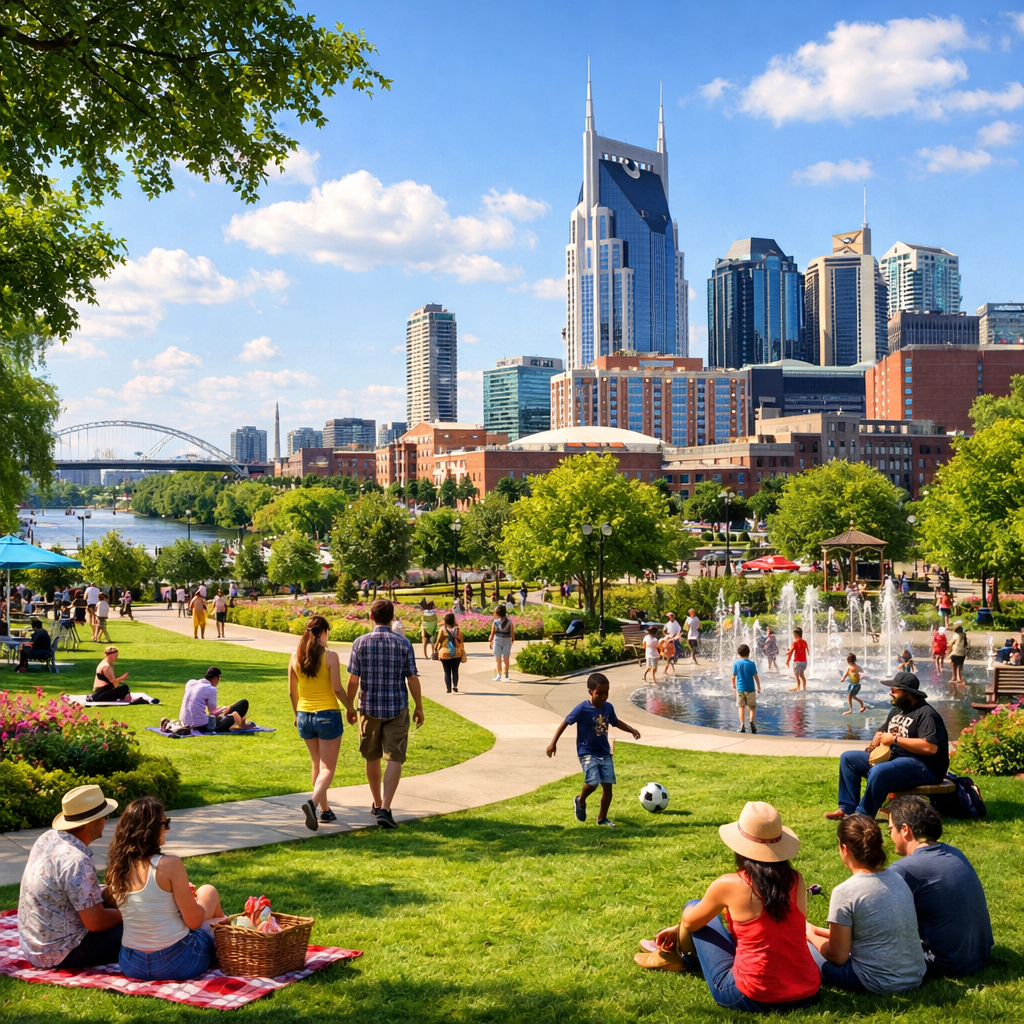
Nashville is actively pursuing a range of initiatives aimed at enhancing environmental sustainability and resilience. These efforts encompass urban forestry, green infrastructure, and community engagement, reflecting the city’s dedication to preserving its natural resources and promoting sustainable growth.
Investing in Urban Forestry
Recognizing the vital role of trees in urban environments, Nashville has implemented legislation to manage public trees as valuable assets. This includes regular progress reports and the establishment of a review panel to oversee significant tree removals on Metro property. Additionally, the city has committed to planting 500,000 trees by 2050, supported by dedicated funding from building permits and construction revenues. These efforts aim to expand the city’s tree canopy, providing benefits such as improved air quality, reduced urban heat, and enhanced aesthetic appeal.
Advancing Green Infrastructure
Metro Nashville Public Schools (MNPS) are at the forefront of integrating green infrastructure into educational facilities. Notable projects include the installation of a green roof at James Lawson High School, contributing to energy savings and offering a unique learning environment for students. These initiatives not only promote sustainability but also serve as educational tools, fostering environmental awareness among the younger generation.
Community Engagement and Environmental Education
Organizations like Urban Green Lab are instrumental in teaching communities how to live sustainably. By offering programs that reach educators, businesses, and households, they aim to create a more sustainable Nashville. Their efforts have impacted numerous educators and organizations, emphasizing the importance of community involvement in environmental stewardship.
Ecological Conservation Strategy
Metro Planning has launched the Ecological Conservation Strategy (ECS) to assess the health of Nashville’s natural resources and develop an action plan for conservation. This initiative seeks to balance the city’s growth with the preservation of its unique landscapes and ecosystems, ensuring that development does not come at the expense of environmental integrity.
Climate Resilience and Adaptation
As climate change leads to more frequent and severe weather events, Nashville is focusing on climate resilience. This involves preparing and modifying the built environment and its supporting systems to withstand climate-driven disruptions. The city’s approach includes assessing vulnerabilities and implementing strategies to protect communities, infrastructure, and the local economy from the adverse effects of climate change.
Through these comprehensive efforts, Nashville demonstrates a strong commitment to environmental stewardship and sustainability, aiming to create a resilient and thriving community for current and future generations.