

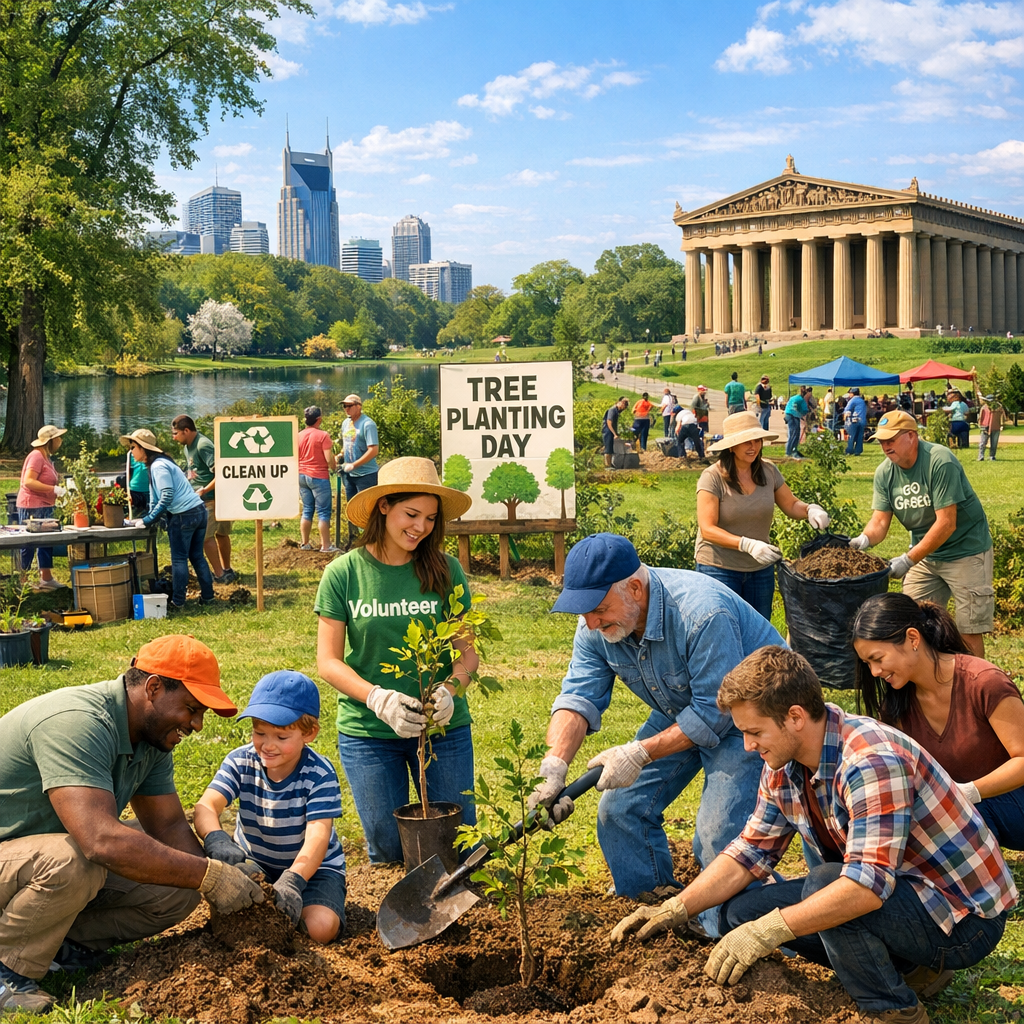
Nashville’s dedication to environmental sustainability is evident through various initiatives and community collaborations. The city’s natural environment, encompassing air, water bodies, plants, animals, forests, and green spaces, plays a crucial role in supporting daily life. Preserving these assets ensures responsible use of finite resources and maintains the ecosystem services vital to the community.
Major Environmental Initiatives
Investing in Our Tree Canopy
Recognizing the importance of urban forestry, Nashville has implemented legislation to manage trees on public property as valuable assets. This includes regular progress reports and the establishment of a review panel to oversee large-scale tree removals and enforce robust replacement standards. Additionally, a dedicated revenue stream supports tree canopy restoration and maintenance on private properties, contributing to the Root Nashville campaign’s goal of planting 500,000 trees by 2050.
Parks and Greenways Expansion
The city’s strategic master plan, adopted in 2017, outlines a ten-year vision to sustainably meet Nashville’s needs for parkland, greenways, community centers, and sports facilities. This plan focuses on land acquisition, facility development, program enhancement, operational improvements, and future funding strategies. Recent funding has been allocated to update this plan, ensuring it continues to serve the community’s evolving needs.
Community-Led Sustainability Efforts
Urban Green Lab
Urban Green Lab, a local nonprofit, is dedicated to teaching communities how to live sustainably. Their programs have trained numerous educators within the Metropolitan Nashville Public Schools (MNPS) system, reaching nearly half of Davidson County’s zip codes and serving hundreds of organizations. By integrating sustainability education into classrooms, they empower the next generation to make environmentally conscious decisions.
Nashville Earth Day Grants
Centennial Park Conservancy, managing Nashville’s official Earth Day celebrations, has donated proceeds from these events to support local environmental projects. Since 2020, the organization has contributed over $200,000 to initiatives focusing on bees, trees, water conservation, pollinator gardens, sustainability, and education. These grants have funded 17 projects across the city, fostering grassroots environmental stewardship.
Climate Resilience and Adaptation
In response to the increasing risks posed by climate change, Nashville has developed a Climate Adaptation and Resilience Plan. This plan aims to prepare the city for climate-driven disruptions such as heatwaves, severe storms, and flash flooding. By assessing the health of natural resources and developing concrete action plans, Nashville strives to protect its communities, infrastructure, and economy from the adverse effects of a changing climate.
Zero Waste Nashville
To address waste management challenges, Nashville’s Solid Waste Region Board approved a Solid Waste Master Plan in 2019, aiming for a 90% diversion of trash from landfills. The plan emphasizes reducing, reusing, recycling, and composting, with goals to increase recycling rates, adopt targeted recovery programs, and strengthen public education on waste reduction practices.
Nashville’s commitment to environmental sustainability is a collaborative effort involving city leadership, nonprofits, and residents. Through strategic planning, community engagement, and dedicated resources, the city continues to make significant strides toward a more sustainable and resilient future.