

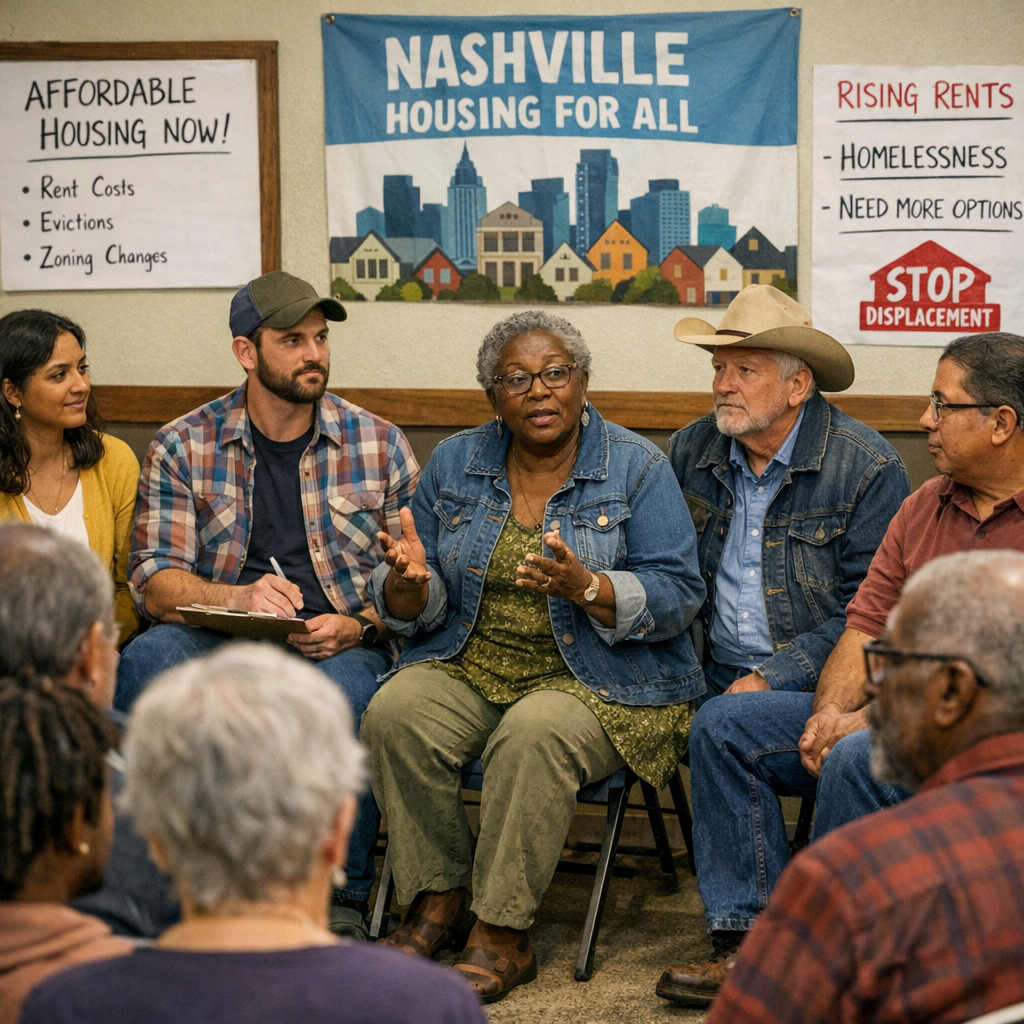
Nashville’s rapid growth has brought prosperity to many, but it has also intensified housing affordability challenges, disproportionately affecting African American and Hispanic communities.
Stark Disparities in Homeownership
A recent study revealed that Black and Hispanic families can afford median-valued homes in less than 1% of Nashville’s 481 neighborhoods—specifically, just 0.8% for Black families and 0.6% for Hispanic families. This stark finding points to the city’s ongoing housing crisis, deepened by a long history of discriminatory practices such as redlining and racist land-use policies.
Rising Costs and Economic Strain
The affordability crisis is not limited to minority communities. A Vanderbilt University poll indicates that 82% of Nashville residents feel they cannot afford to buy a home in Davidson County. This widespread concern comes even as local leaders push initiatives like the Unified Housing Strategy to increase affordable housing supply. In fiscal year 2025, city funding supported the construction and preservation of nearly 1,800 affordable housing units. Despite this, residents are growing uneasy, with many shifting their attention toward economic issues—43% now prioritize attracting good jobs, up from 18% the previous year.
Community Initiatives and Policy Responses
In response to these challenges, Metro Social Services has released interactive maps highlighting areas of gentrification, wage disparities, and poverty. These tools aim to inform policy decisions and community initiatives to address the affordability crisis. Additionally, the city’s report recommends major zoning reforms, including permitting higher-density housing along transit corridors and adjacent streets, to help address the affordability and accessibility challenges faced by minority communities.
Looking Ahead
As Nashville continues to grow, addressing housing affordability remains a critical issue. Ensuring that all residents, regardless of race or income, have access to affordable housing is essential for the city’s long-term prosperity and social cohesion.