

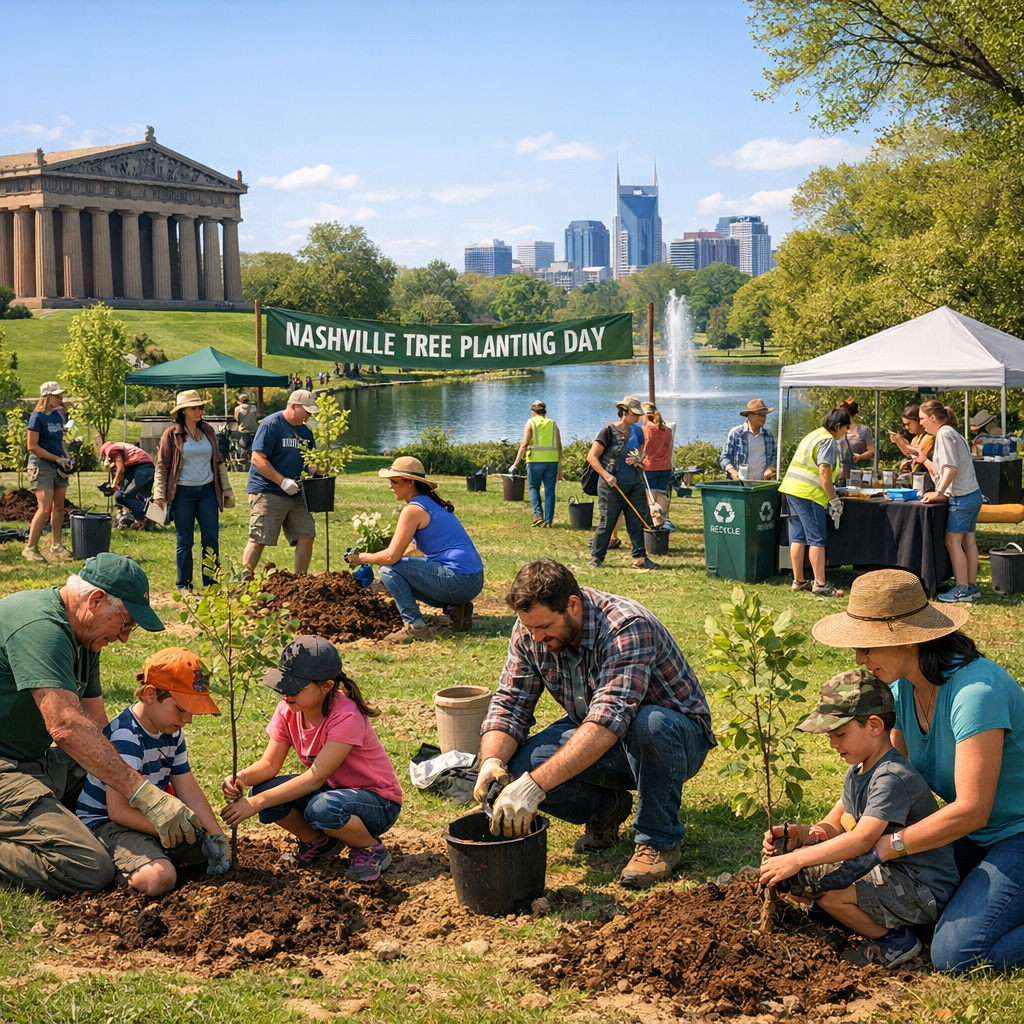
Nashville’s dedication to environmental sustainability is evident through various community-driven initiatives and city-led programs. These efforts aim to preserve natural resources, promote green infrastructure, and foster a culture of environmental stewardship among residents.
City-Led Sustainability Initiatives
The Mayor’s Office has been proactive in implementing policies that support sustainable growth. The 2021 Climate Action Plan outlines strategies to reduce greenhouse gas emissions and enhance the city’s resilience to climate change. Key focus areas include decarbonizing the electrical grid and promoting energy efficiency across municipal operations.
In 2024, the city launched the Ecological Conservation Strategy, Nashville’s first countywide plan since 2011 to assess the impact of growth on the county’s landscape. This strategy aims to protect natural environments such as waterways, forests, and green spaces while accommodating urban development.
Community Engagement and Education
Nonprofit organizations play a crucial role in educating the community about sustainable living. Urban Green Lab, for instance, teaches communities how to live sustainably in Nashville and its surrounding counties. Their programs have reached nearly half of Davidson County’s zip codes, training educators and serving numerous organizations.
Additionally, the Nashville Earth Day festival, managed by the Centennial Park Conservancy, has become a platform for environmental education and action. Proceeds from the event have funded local environmental projects, including pollinator gardens and sustainability education programs, with $48,000 awarded to 17 initiatives in 2025.
Green Infrastructure and Urban Forestry
Investments in green infrastructure are evident in projects like the Nashville Downtown Arboretum, launched in May 2025. This initiative added over 3,000 trees to downtown areas, enhancing the urban tree canopy and providing environmental benefits such as improved air quality and reduced urban heat island effects.
The Nashville Public Library’s Donelson Branch exemplifies sustainable building practices. Opened in June 2024, the facility achieved LEED Gold Certification, incorporating features like geothermal wells and solar power to minimize its environmental footprint.
Educational Institutions Leading by Example
Metro Nashville Public Schools (MNPS) are also contributing to sustainability efforts. The MNPS Energy Program has achieved a 20% annual reduction in energy consumption over three years, equivalent to reducing 260,000 metric tons of carbon emissions. Schools have implemented energy-efficient designs, solar energy systems, and geothermal HVAC systems to promote sustainability.
Challenges and Community Advocacy
Despite these advancements, challenges remain. The Nashville Zoo recently opposed the construction of a 69,000-square-foot data center adjacent to its grounds, citing concerns over potential threats to animal welfare and environmental impacts. The zoo’s petition against the project garnered over 375,000 signatures, highlighting the community’s commitment to environmental preservation.
Through collaborative efforts between city officials, nonprofit organizations, educational institutions, and engaged citizens, Nashville continues to make significant strides toward a more sustainable and environmentally conscious future.