

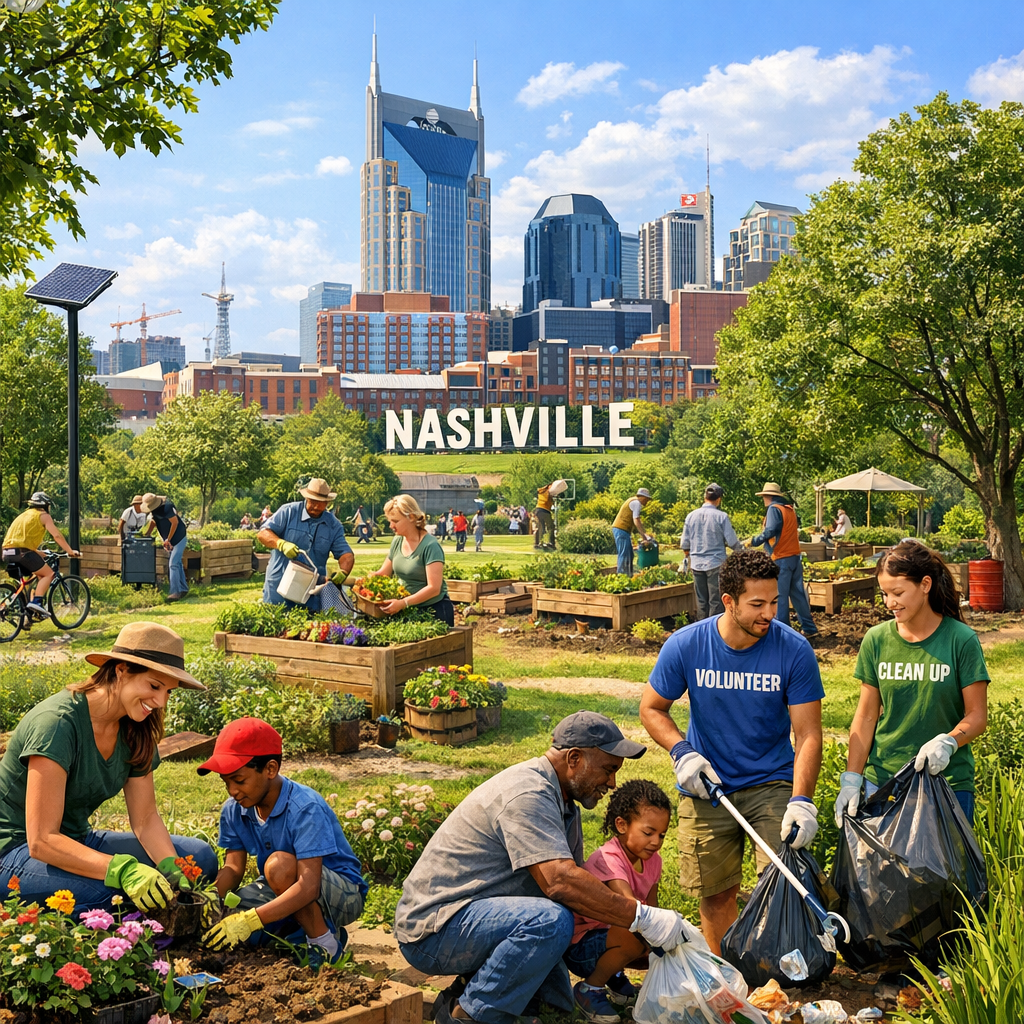
Nashville is actively pursuing a sustainable future through a series of comprehensive initiatives aimed at environmental stewardship and resilience. These efforts encompass urban forestry, green infrastructure, and community engagement, reflecting the city’s dedication to preserving its natural resources and enhancing the quality of life for its residents.
Urban Forestry and Green Spaces
In May 2025, the Nashville Downtown Arboretum was inaugurated, featuring over 3,000 trees strategically planted along sidewalks, boulevards, and public areas. This project, managed collaboratively by the Nashville Downtown Partnership and the Nashville Department of Transportation, underscores the city’s commitment to expanding and maintaining its urban tree canopy.
Additionally, the Metro Nashville Public Schools (MNPS) have integrated green infrastructure into their facilities. Notably, James Lawson High School boasts a green roof that contributes to energy savings and provides a unique learning environment for students.
Community Engagement and Education
Organizations like Urban Green Lab play a pivotal role in educating communities on sustainable living practices. As a nonprofit dedicated to sustainability education, Urban Green Lab has trained numerous educators and reached nearly half of Davidson County’s zip codes with its programs, fostering a culture of environmental responsibility.
Furthermore, the Centennial Park Conservancy has been instrumental in supporting local environmental projects. Since 2020, proceeds from the Nashville Earth Day festival have funded various initiatives, including pollinator gardens and sustainability education programs, totaling $208,000 in donations.
Climate Adaptation and Resilience
Recognizing the challenges posed by climate change, Metro Nashville developed the Climate Adaptation and Resilience Plan (CARP) in September 2024. This plan aims to prepare the city for climate-related events such as heatwaves, severe storms, and flooding, ensuring the community’s ability to thrive amidst environmental changes.
Complementing this, the Ecological Conservation Strategy (ECS) was launched to assess the health of Nashville’s natural resources and develop actionable plans for conservation. This strategy emphasizes the importance of preserving waterways, forests, and green spaces while accommodating urban growth.
Zero Waste Initiatives
In December 2019, Nashville’s Solid Waste Region Board approved a Solid Waste Master Plan with the ambitious goal of diverting 90% of the city’s waste from landfills. This plan focuses on reducing, reusing, recycling, and composting, aiming to decrease the environmental impact of waste and promote sustainable practices among residents.
Through these multifaceted initiatives, Nashville demonstrates a robust commitment to environmental sustainability. The collaborative efforts of government agencies, educational institutions, nonprofits, and the community at large are pivotal in fostering a resilient and eco-friendly urban environment.