

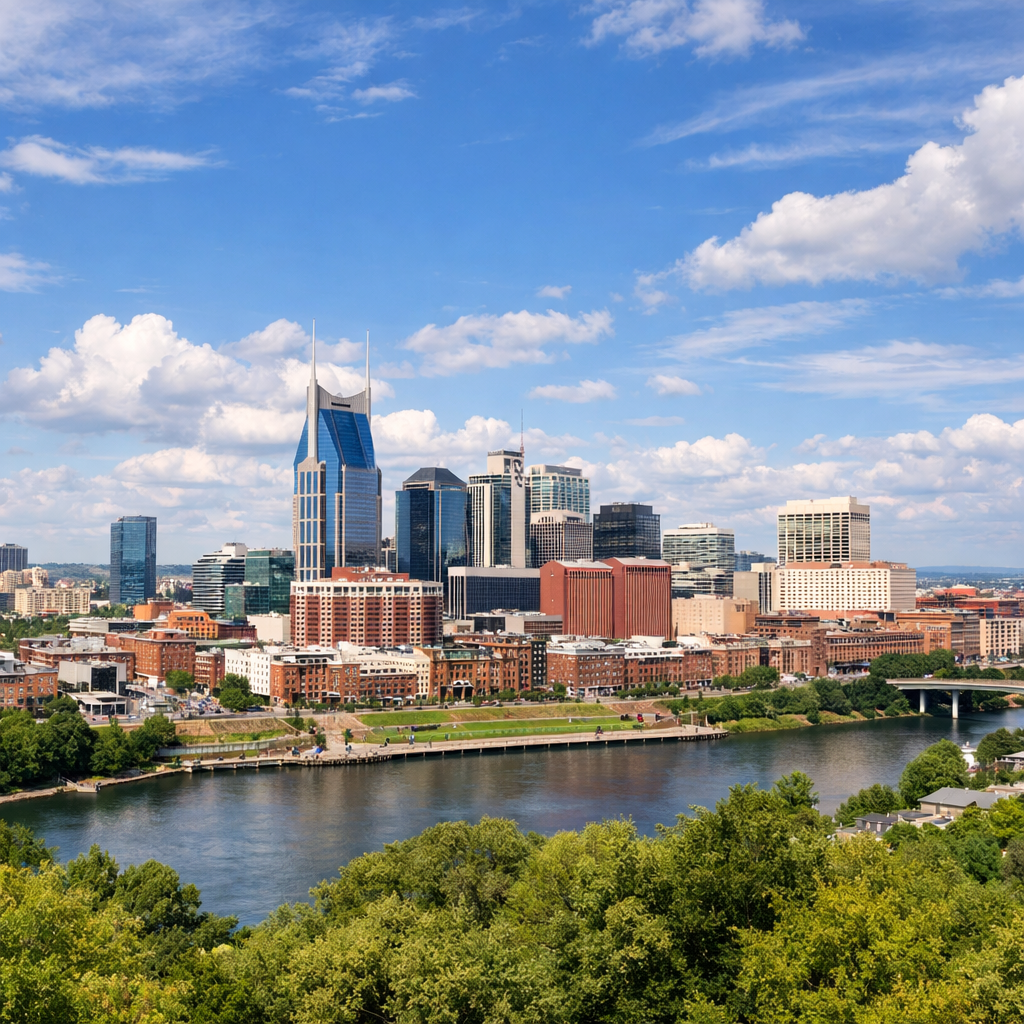
Nashville, Tennessee, experiences a humid subtropical climate characterized by hot, humid summers and mild to cool winters. Understanding these patterns is essential for residents to navigate the city’s weather effectively.
Seasonal Overview
Summer
Summers in Nashville are typically hot and muggy, with average high temperatures reaching around 89°F (31.7°C) in July. The season also brings frequent thunderstorms, contributing to the city’s annual precipitation of approximately 53.5 inches. Residents should stay hydrated and be prepared for sudden weather changes during these months.
Winter
Winters are generally mild, with average low temperatures around 31°F (-0.6°C) in January. Snowfall is infrequent but possible, so it’s advisable to stay updated on weather forecasts during this period.
Environmental Challenges
Urban Heat Islands
A significant portion of Nashville’s population resides in urban heat islands—areas where infrastructure like buildings and roads absorb and re-emit heat more than natural landscapes. This effect can lead to higher temperatures in certain neighborhoods, emphasizing the need for increased green spaces and reflective materials in urban planning.
Flooding
Nashville’s location in the Cumberland River basin makes it susceptible to flooding, especially during heavy rainfall. The May 2010 flood serves as a stark reminder of the city’s vulnerability. Residents should be aware of flood-prone areas and have emergency plans in place.
Community Initiatives
The Metro Public Health Department’s Environmental Health Programs aim to promote healthy living conditions through clean air, safe food, and reduced exposure to environmental hazards. Additionally, the city’s Air Pollution Control program works to enhance air quality, benefiting all residents.
By staying informed about Nashville’s climate and participating in community efforts, residents can contribute to a more resilient and sustainable city.