

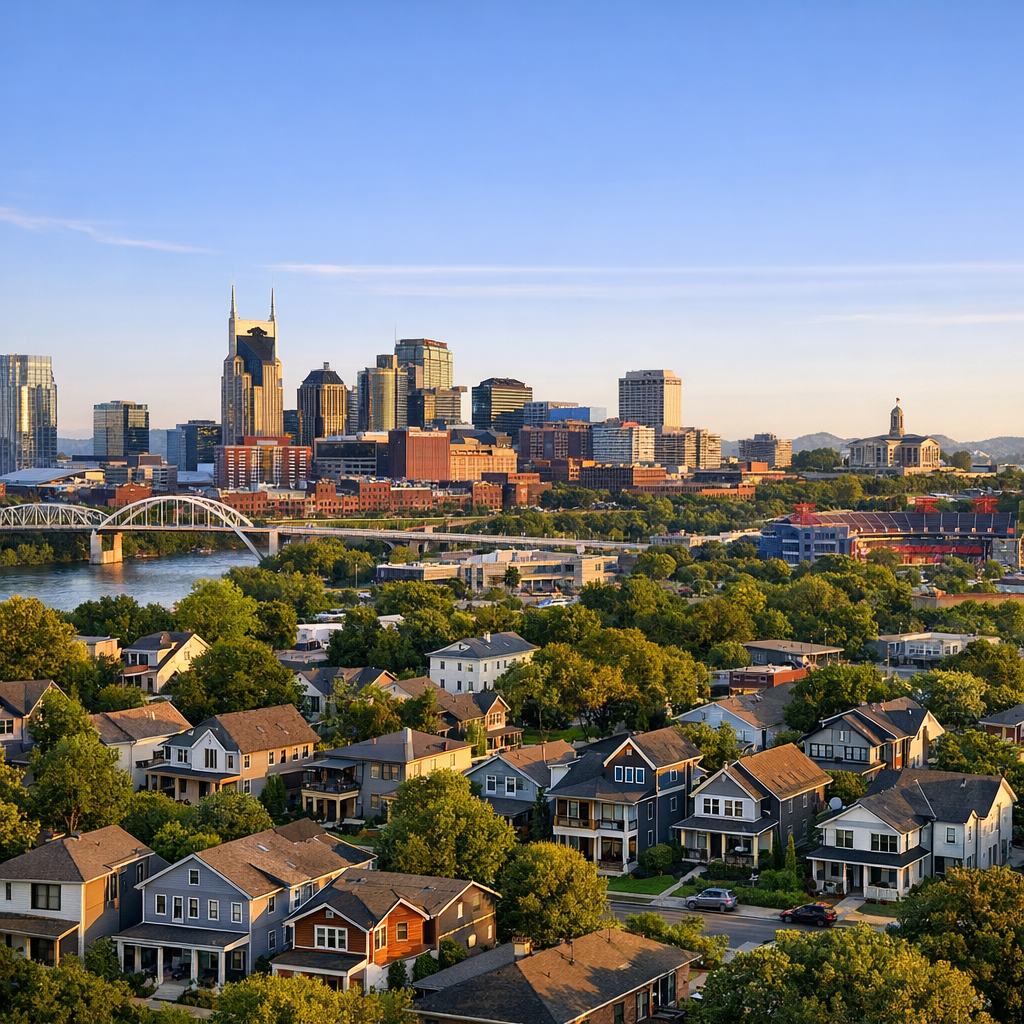
Nashville’s real estate market is experiencing notable shifts, offering both challenges and opportunities for buyers and sellers alike. Recent data indicates a trend toward a more balanced market, characterized by increased housing inventory and moderated price growth.
Market Trends
As of March 2026, the median sale price for homes in Nashville was approximately $470,000, reflecting a 2.2% increase from the previous year. Homes are spending an average of 98 days on the market, up from 64 days last year, suggesting a cooling from the previously heated market conditions. Additionally, the number of homes sold in March decreased to 817 from 867 in the same month last year.
Inventory and Buyer Dynamics
The housing inventory has seen a significant uptick, with active listings reaching 12,315 properties, marking a 12% rise from the previous year. This increase, coupled with lower interest rates, has empowered buyers with greater negotiating power, leading sellers to adopt creative tactics such as offering incentives. Although home prices have decreased slightly—condo prices fell from $350,000 in February 2025 to $338,500 last month—overall prices remain significantly higher than in past years, continuing to price out some buyers.
Neighborhood Highlights
Antioch (ZIP code 37013) continues to lead Nashville’s real estate market, recording 1,121 home sales in 2025. This marks the third consecutive year Antioch has topped the list, emphasizing its rapid growth in southeastern Davidson County. Rising home prices in popular areas like East Nashville have pushed buyers toward more affordable destinations like Antioch, which is also benefiting from new amenities such as Tanger Outlets and an upcoming In-N-Out.
Development Projects
In the realm of development, the Nashville Zoo is leading opposition against a proposed 69,000-square-foot data center adjacent to its grounds. Concerns include potential threats to animal welfare, noise and light pollution, and water quality. A petition against the project has garnered over 375,000 signatures within a week, reflecting significant community engagement on development issues.
Overall, Nashville’s real estate landscape is evolving, with increased inventory and moderated price growth creating a more balanced market. Buyers have more options and negotiating power, while sellers may need to adjust strategies to align with current market conditions. Staying informed about these trends is crucial for making well-informed real estate decisions in the Nashville area.