

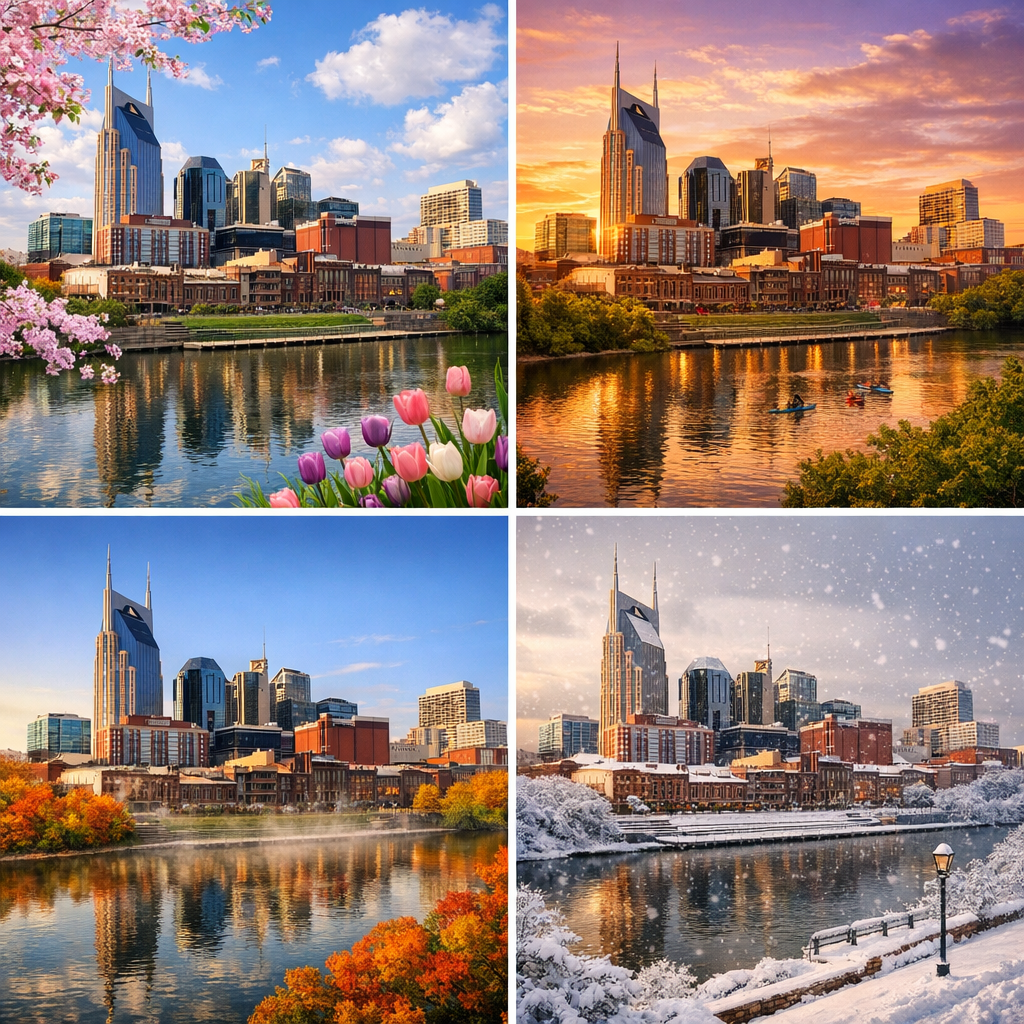
Nashville, Tennessee, experiences a humid subtropical climate characterized by four distinct seasons, each offering unique weather patterns and challenges. Understanding these seasonal variations can help residents and visitors prepare for the city’s diverse climate.
Spring: A Season of Renewal and Rain
Spring in Nashville, spanning March through May, brings gradually warming temperatures and increased rainfall. Average highs rise from the low 60s°F (16°C) in March to nearly 80°F (27°C) by late May. This period is also the wettest time of year, with May typically being the rainiest month. The combination of warmth and moisture contributes to lush greenery and blooming flowers across the city.
Summer: Heat and Humidity
Summers in Nashville, from June to August, are hot and humid. Average high temperatures hover around 89°F (31.7°C) in July, the warmest month. The city often experiences muggy conditions, with humidity levels peaking during this season. Thunderstorms are common, providing brief respite from the heat but also bringing the risk of severe weather.
Autumn: Mild and Pleasant
Autumn, from September to November, offers milder temperatures and lower humidity. Average highs decrease from the low 80s°F (27°C) in September to the low 60s°F (16°C) by November. This season is characterized by clear skies and comfortable weather, making it an ideal time for outdoor activities and enjoying the fall foliage.
Winter: Cool and Occasionally Snowy
Winters in Nashville, spanning December through February, are generally mild but can be unpredictable. Average low temperatures in January, the coldest month, are around 31°F (-0.6°C). While snowfall is infrequent, the city occasionally experiences ice storms that can disrupt daily life. Residents should be prepared for sudden cold snaps and potential winter weather hazards.
Climate Change and Its Impact
Recent years have seen an increase in extreme weather events in Nashville, including heat waves and heavy precipitation. These changes are consistent with broader climate trends and highlight the importance of staying informed and prepared for varying weather conditions.
By understanding Nashville’s seasonal weather patterns, residents and visitors can better plan their activities and take necessary precautions to stay safe and comfortable throughout the year.