

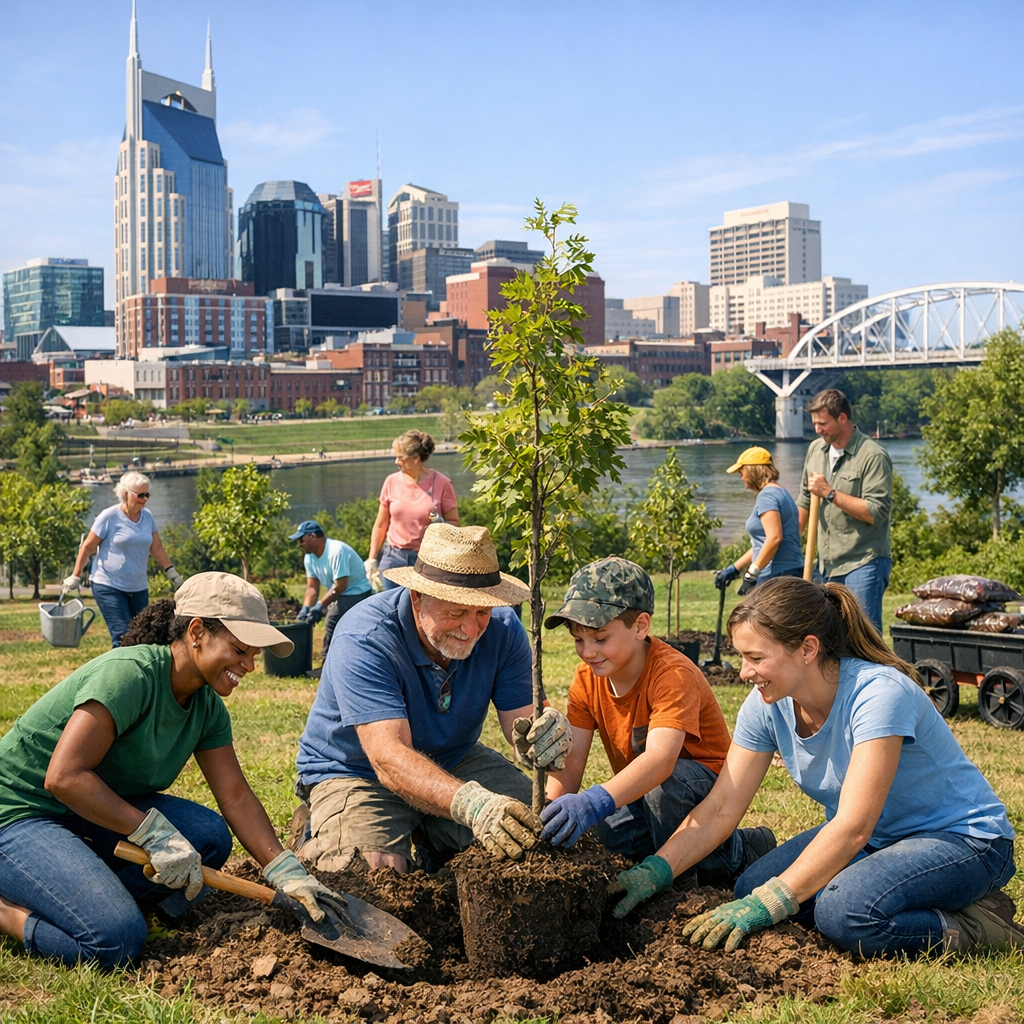
Nashville is actively pursuing environmental sustainability through various initiatives and programs aimed at preserving natural resources and promoting eco-friendly practices.
Community-Led Environmental Initiatives
Organizations like Urban Green Lab are at the forefront of teaching communities how to live sustainably. Their programs have reached nearly half of Davidson County’s zip codes, training educators and engaging numerous organizations to foster a culture of sustainability.
City Programs and Policies
The Mayor’s Office has established several formal targets to guide climate action and measure progress. These include transitioning the metro general government fleet to 100% zero emissions by 2050 and developing strategic energy management plans to reduce energy and water use across metro-owned buildings.
Educational Efforts
Metro Nashville Public Schools (MNPS) are committed to promoting environmental stewardship. Initiatives like the MNPS Energy Program have achieved a 20% annual reduction in energy consumption, equivalent to reducing 260,000 metric tons of carbon emissions. Additionally, the installation of solar energy systems and geothermal HVAC systems at various campuses underscores this commitment.
Urban Green Spaces
The Nashville Downtown Arboretum, launched in May 2025, features over 3,000 trees distributed along sidewalks and public areas, enhancing the city’s urban tree canopy. This initiative is part of broader efforts to expand and maintain green spaces within the city.
Climate Adaptation and Resilience
Recognizing the challenges posed by climate change, the city developed the Climate Adaptation and Resilience Plan (CARP) in September 2024. This plan aims to prepare Nashville and Davidson County to withstand severe weather events and other climate-related challenges.
Through these collective efforts, Nashville continues to demonstrate a strong commitment to environmental sustainability, ensuring a healthier and more resilient community for future generations.