

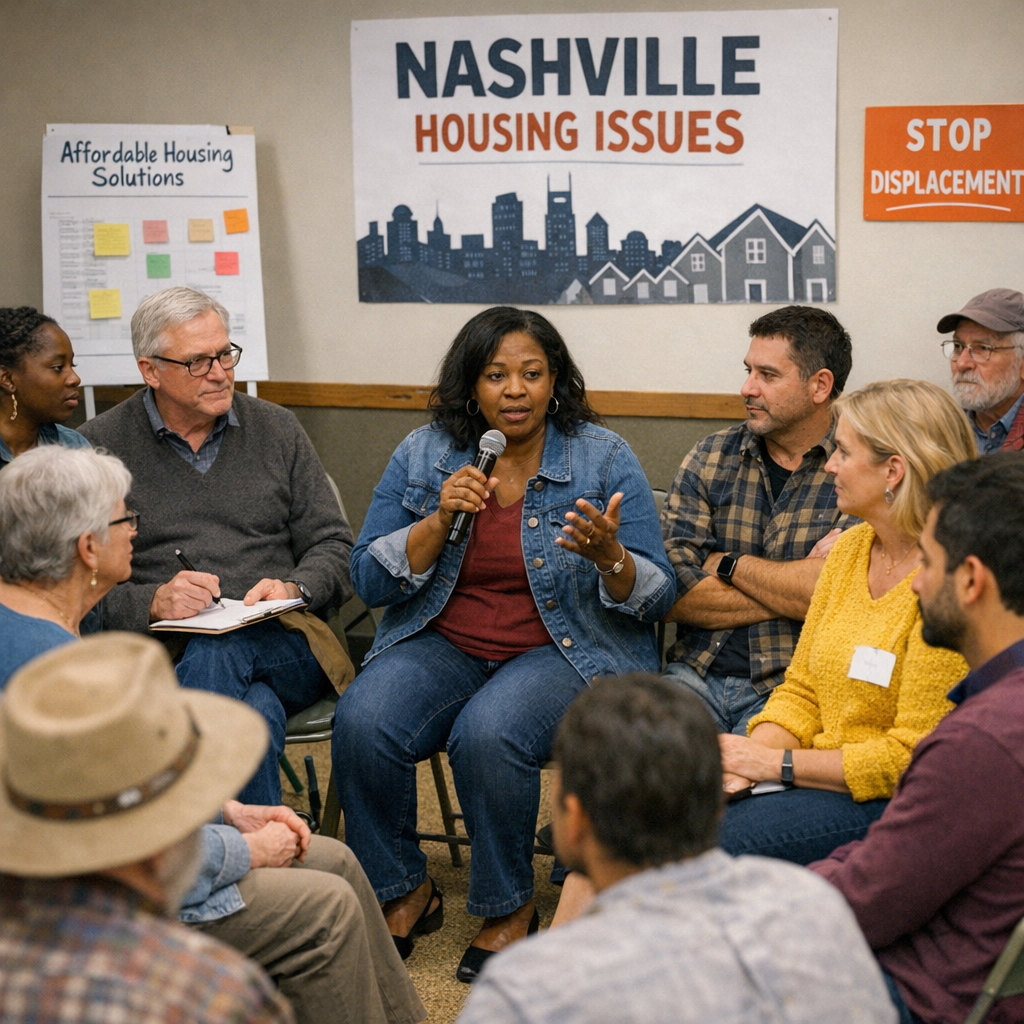
Nashville’s rapid growth has brought prosperity to many, but it has also intensified housing affordability challenges, particularly for Black residents. Recent studies and reports highlight the depth of this crisis and its disproportionate impact on minority communities.
Widespread Affordability Concerns
A Vanderbilt University poll revealed that 82% of Nashville residents feel they cannot afford to buy a home in Davidson County. This sentiment underscores the city’s escalating housing costs and the financial strain on its residents.
Disproportionate Impact on Black Families
The Metro Social Services’ 17th annual Community Needs Evaluation report sheds light on the specific challenges faced by Black Nashvillians. The report indicates that the poverty rate among African American residents stands at 18%, significantly higher than the city’s overall rate of 11.9%. Additionally, Black workers experience higher unemployment rates and lower wages compared to their white counterparts, even with similar educational backgrounds.
Historical and systemic factors contribute to these disparities. A housing and infrastructure study found that Black and Hispanic families can afford median-valued homes in less than 1% of Nashville’s neighborhoods. This stark statistic points to the enduring effects of discriminatory practices like redlining and restrictive land-use policies.
Community and Policy Responses
In response to these challenges, various initiatives aim to address housing affordability and economic disparities. The city’s Unified Housing Strategy seeks to increase the supply of affordable housing, with nearly 1,800 units constructed or preserved in the fiscal year 2025. However, public support for multifamily housing development has waned, complicating efforts to expand housing options.
Community organizations are also stepping up. The Nashville People’s Budget Coalition advocates for participatory budgeting to allocate resources toward affordable housing and genuine community safety. Their efforts highlight the need for inclusive decision-making processes that reflect the priorities of all residents.
Looking Ahead
Addressing Nashville’s housing affordability crisis requires a multifaceted approach that includes policy reforms, community engagement, and targeted investments. Ensuring that all residents, especially those from historically marginalized communities, have access to affordable housing is crucial for the city’s equitable growth and prosperity.