

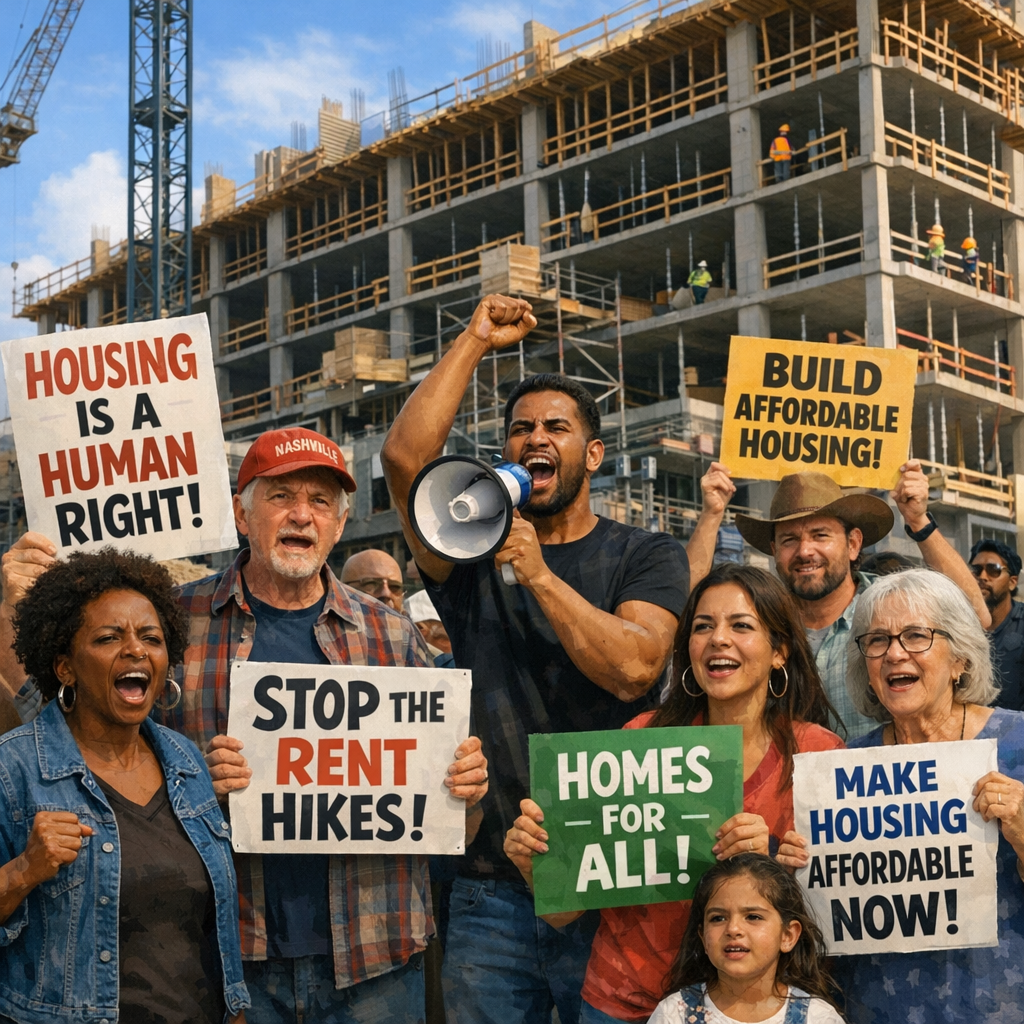
Nashville’s rapid growth has brought prosperity to many, but it has also intensified housing affordability challenges for a significant portion of its residents. Recent studies and surveys highlight the depth of this crisis and its disproportionate impact on minority communities.
Widespread Affordability Concerns
A Vanderbilt University poll revealed that 82% of Nashvillians feel they cannot afford to purchase a home in Davidson County. This sentiment reflects the escalating housing costs that have outpaced income growth for many residents. Additionally, 73% of respondents identified housing affordability as a top priority for city leadership.
Disproportionate Impact on Minority Communities
The affordability crisis is particularly acute among African American and Hispanic families. A housing and infrastructure study found that Black families can afford median-valued homes in only 0.8% of Nashville’s 481 neighborhoods, while Hispanic families fare slightly worse at 0.6%. These statistics underscore the enduring legacies of discriminatory practices and the pressing need for targeted interventions.
Community Initiatives and Policy Responses
In response to these challenges, local organizations and government agencies are taking action. Metro Social Services released an interactive mapping tool to better understand socio-economic patterns, including gentrification and poverty, aiding in the development of informed policies. Furthermore, the city’s Unified Housing Strategy aims to increase the supply of affordable housing, with nearly 1,800 units constructed or preserved in the fiscal year 2025.
Despite these efforts, the path to equitable housing remains complex. Balancing development with preservation of community character, ensuring inclusive growth, and addressing systemic inequalities require sustained commitment from all stakeholders.
As Nashville continues to evolve, it is imperative that the city prioritizes housing affordability to maintain its diverse and vibrant community fabric.