

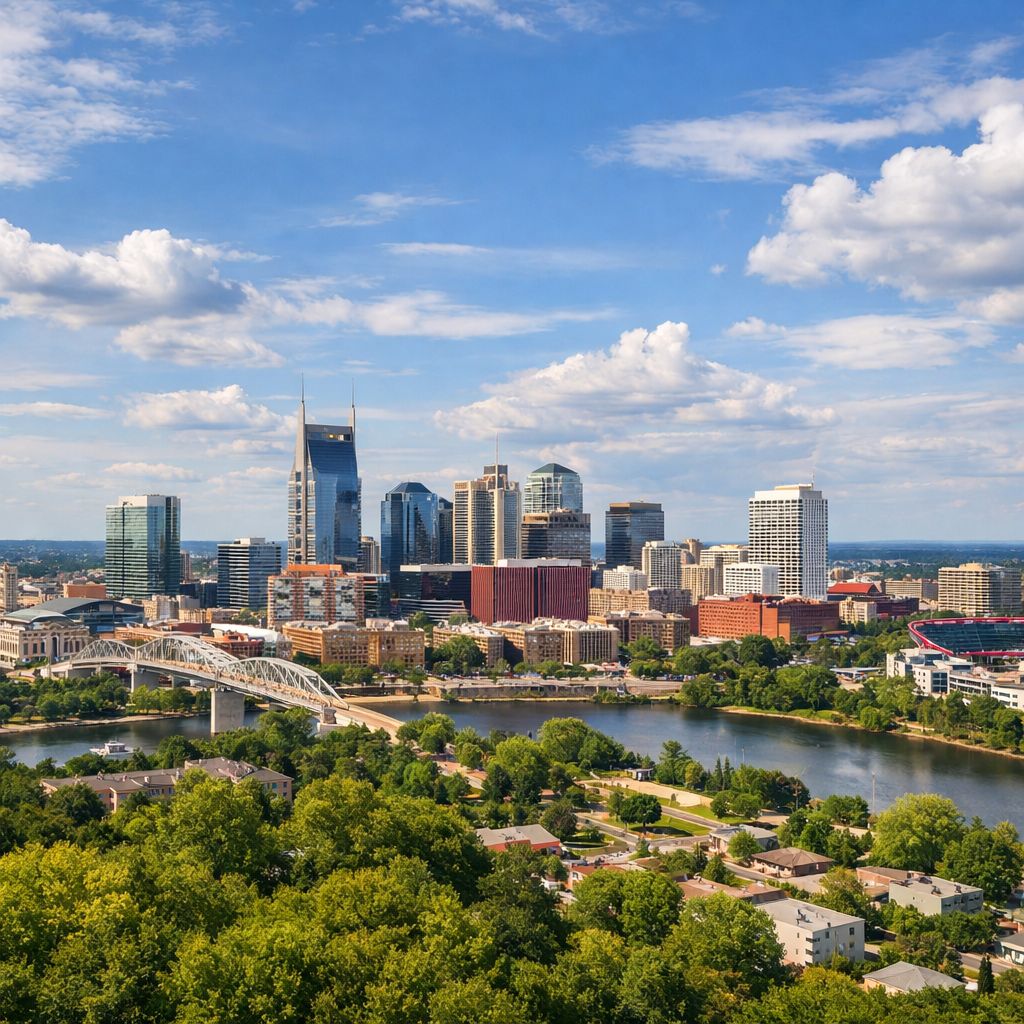
Nashville, Tennessee, experiences a humid subtropical climate characterized by four distinct seasons, each bringing unique weather patterns and environmental considerations.
Seasonal Weather Patterns
Spring (March – May)
Spring in Nashville is marked by rapidly warming temperatures and increased precipitation. Average highs progress from the low 60s°F (16°C) in March to nearly 80°F (27°C) by late May. This season is also the wettest, with May typically being the rainiest month. Additionally, Nashville’s location within “Dixie Alley” makes it susceptible to severe thunderstorms and tornadoes during this period.
Summer (June – August)
Summers are hot and humid, with average highs around 90°F (32°C) in July. High humidity levels can make temperatures feel even more oppressive. The urban heat island effect exacerbates this, as areas with dense infrastructure and limited green spaces can be significantly warmer than surrounding regions. Notably, 71% of Nashville residents live in these heat-prone neighborhoods.
Fall (September – November)
Fall brings relief from the summer heat, with temperatures gradually cooling and humidity levels decreasing. This season is generally drier, with October being the driest month. The comfortable weather and vibrant foliage make it a popular time for outdoor activities.
Winter (December – February)
Winters are relatively mild compared to northern states, with average highs in the upper 40s to low 50s°F (8°C – 11°C) and lows near freezing. Snowfall is rare, averaging only about 3 to 5 inches annually. However, the city is more prone to freezing rain and sleet, which can lead to hazardous conditions.
Environmental Challenges
Urban Heat Islands
The urban heat island effect is a significant concern in Nashville. Areas with dense infrastructure and limited vegetation can experience temperatures up to 12°F higher than surrounding regions. This phenomenon disproportionately affects low-income neighborhoods, where access to air conditioning may be limited.
Air Quality
Nashville faces challenges with air quality, particularly concerning ground-level ozone. The American Lung Association’s recent report assigned the metro area an F grade for ozone pollution, ranking it 66th worst in the nation. This poses health risks, especially for children, the elderly, and individuals with respiratory conditions.
Flooding
Situated in the Cumberland River basin, Nashville is susceptible to flooding. The May 2010 flood remains a defining climate disaster, with over 13 inches of rain falling in 48 hours, causing significant damage. Climate models project a 20-30% increase in extreme precipitation intensity across Middle Tennessee by 2060, highlighting the need for continued investment in flood mitigation efforts.
Understanding Nashville’s climate and environmental challenges is crucial for residents and policymakers alike. By staying informed and proactive, the community can better prepare for and adapt to the city’s dynamic weather patterns and environmental concerns.