

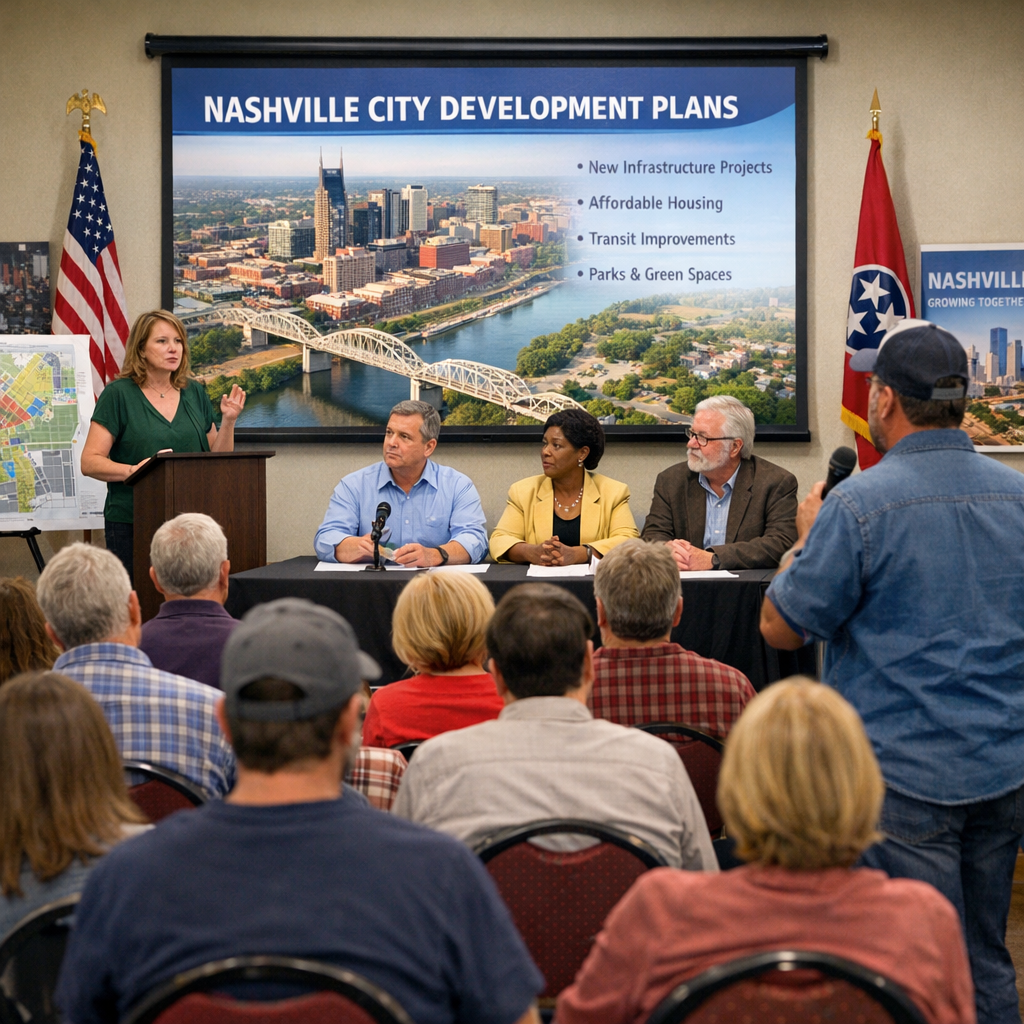
Nashville is experiencing significant developments across various sectors, prompting both optimism and concern among residents.
Financial Health and Budget Developments
Metro Nashville’s finance director, Jenneen Reed, has expressed confidence in the city’s financial health, even as recent revenue growth has remained modest. The Metro Council is preparing to vote on a $3.8 billion operating budget that includes a proposal to eliminate the city’s grocery tax. Reed highlighted a new fiscal policy requiring Nashville to maintain 17% of all operating funds and 50% of debt service obligations in reserve, indicating a conservative approach to financial management amid uncertain global economic conditions. Despite relatively flat key revenue streams, the O’Connell administration has successfully navigated the city’s budget. However, the city’s tax policy has faced criticism, particularly regarding property tax bills that have impacted homeowners and businesses, including prominent venues such as Acme Feed & Seed. The Council is expected to finalize and vote on the budget plan on Tuesday evening.
Housing Affordability Challenges
Affordability remains a pressing issue, particularly for African American residents. The 17th annual Community Needs Evaluation report by Metro Social Services reveals that Nashville’s African American residents face significant affordability challenges compared to other Nashvillians. The report identifies historic and contemporary causes of Nashville’s wealth gap, current trends, and forecasts potential future impacts. Key findings include:
- According to the American Community Survey’s 2024 1-year estimates, Nashville’s overall “official” poverty rate is 11.9%, representing approximately 83,898 people. But for African American residents, the poverty rate rises to 18.0%.
- Black workers face significantly higher unemployment rates and receive lower pay and fewer benefits than their White counterparts, even when they have comparable education. The latest unemployment rate of African Americans in Davidson County is 5.5%—almost three times that of whites at 2.0%.
- Nearly half of all renters in Nashville are “cost-burdened” (spending more than 30% of their income on housing).
These statistics underscore the need for targeted interventions to address economic disparities and housing affordability.
Community Initiatives and Health Assessments
In response to these challenges, various community initiatives are underway. The Metro Public Health Department, in collaboration with local organizations, has released the Community Health Improvement Plan. This action-oriented plan outlines priority health issues and strategies to improve the well-being of Nashville residents. Thousands of Nashvillians participated in the visioning, assessment, and strategy development processes that resulted in this plan, aiming to create a culture of compassion and well-being where all people belong, thrive, and prosper.
Additionally, the Nashville Community Health + Well-being Survey, a partnership between NashvilleHealth and the Metro Public Health Department, provides an up-to-date picture of the city’s health. This comprehensive assessment seeks to enhance ongoing health-related work in the community by identifying current needs and guiding improvement strategies.
Transportation and Infrastructure Investments
Transportation remains a focal point for city development. Mayor Freddie O’Connell announced more than $100 million in Choose How You Move capital projects aimed at improving sidewalks, signals, service, and safety citywide. These investments are designed to make roads safer and more accessible, whether residents choose to drive, ride, roll, or walk. The administration’s commitment to enhancing transportation infrastructure reflects a broader vision for a modern system that reduces costs and improves mobility for all Nashvillians.
Community Engagement and Social Connectivity
Amid these developments, residents are finding creative ways to build community and connect with their neighbors. Initiatives such as casual neighborhood gatherings, book clubs, and dog meet-ups are fostering social ties and countering trends of social isolation. These grassroots efforts highlight the importance of community engagement in enhancing the quality of life and addressing broader societal challenges.
As Nashville continues to evolve, the collective efforts of city officials, organizations, and residents will play a crucial role in shaping a more inclusive and resilient community.