

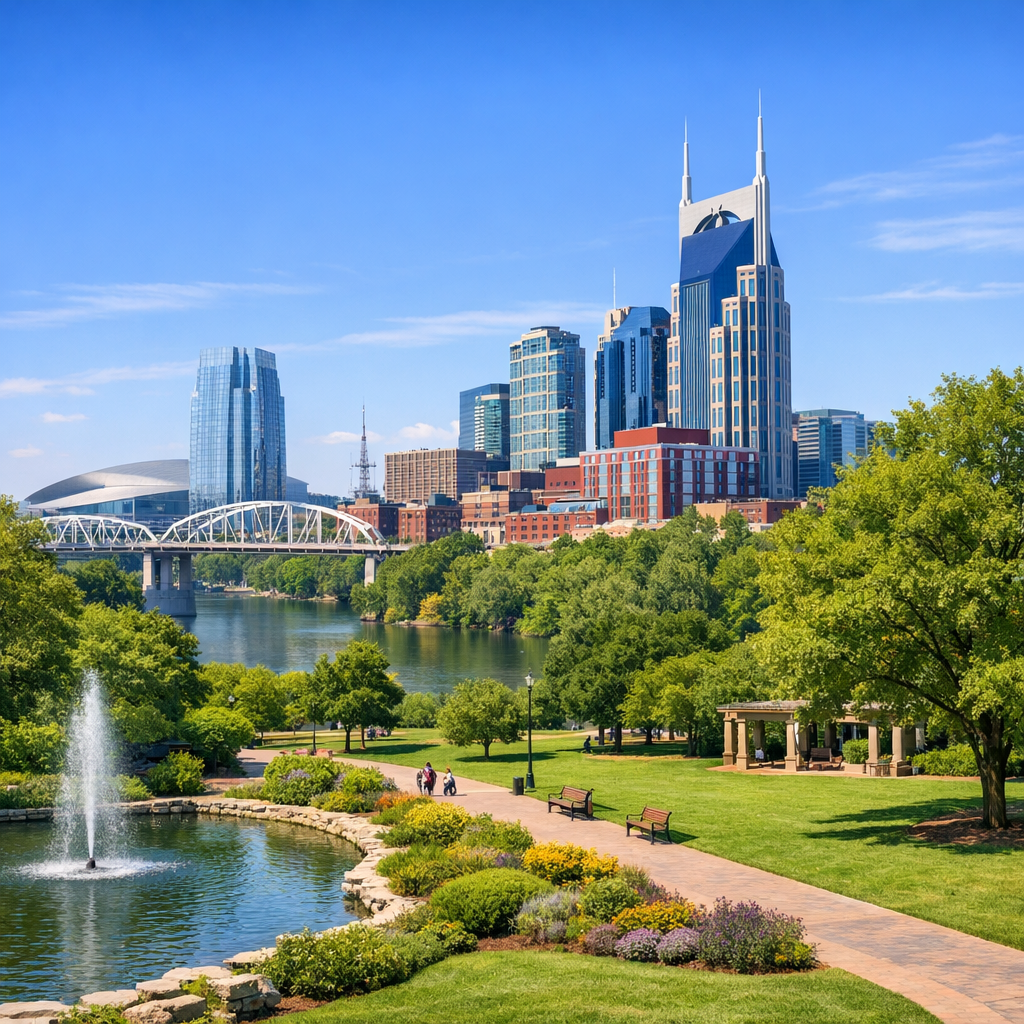
Nashville, Tennessee, experiences a humid subtropical climate characterized by hot, humid summers and mild to cool winters. The average annual high temperature is approximately 69.9°F (21°C), while the average low is around 48.1°F (9°C). The city receives an average annual precipitation of 53.5 inches (1,357.9 mm), contributing to its lush green landscapes.
Seasonal Climate Patterns
Each season in Nashville brings distinct weather conditions:
- Spring (March to May): Temperatures gradually warm, with average highs ranging from 60.7°F (16°C) in March to 78.6°F (26°C) in May. This season also sees increased rainfall, averaging around 5 inches (127 mm) per month.
- Summer (June to August): Summers are hot and humid, with average highs peaking at 89.2°F (32°C) in July. Thunderstorms are common, contributing to monthly precipitation averages of approximately 4.5 inches (114 mm).
- Autumn (September to November): Temperatures gradually decrease, with average highs dropping from 83.1°F (28°C) in September to 60°F (16°C) in November. Rainfall averages around 3.8 inches (97 mm) per month.
- Winter (December to February): Winters are mild, with average highs around 50.4°F (10°C) in December and lows dipping to 28.3°F (-2°C) in January. Snowfall is infrequent but possible.
Environmental Initiatives in Nashville
Recognizing the importance of environmental stewardship, Nashville has implemented several initiatives to promote sustainability and resilience:
Tree Canopy Restoration
The city has committed to managing trees on public property as valuable assets. Legislation mandates regular progress reports and establishes a review panel for large-scale tree removals. Additionally, a dedicated revenue stream supports tree canopy restoration on private properties, aiming to plant 500,000 trees by 2050.
Parks and Greenways Expansion
In 2017, Nashville adopted the ‘Plan to Play’ master plan, outlining a ten-year vision to enhance parklands, greenways, community centers, and sports facilities. This strategic plan focuses on sustainable growth to meet the recreational needs of residents.
Ecological Conservation Strategy
Launched recently, the Ecological Conservation Strategy aims to balance Nashville’s growth with the preservation of its natural landscapes. This countywide plan assesses the health of natural resources and develops action plans for conservation priorities, pilot projects, and policy recommendations.
Community Engagement and Education
Organizations like Urban Green Lab play a pivotal role in educating communities about sustainable living. They offer programs that teach residents how to incorporate sustainability into their daily lives, fostering a culture of environmental responsibility.
Through these initiatives, Nashville demonstrates a strong commitment to preserving its natural environment while accommodating urban growth, ensuring a sustainable future for its residents.