

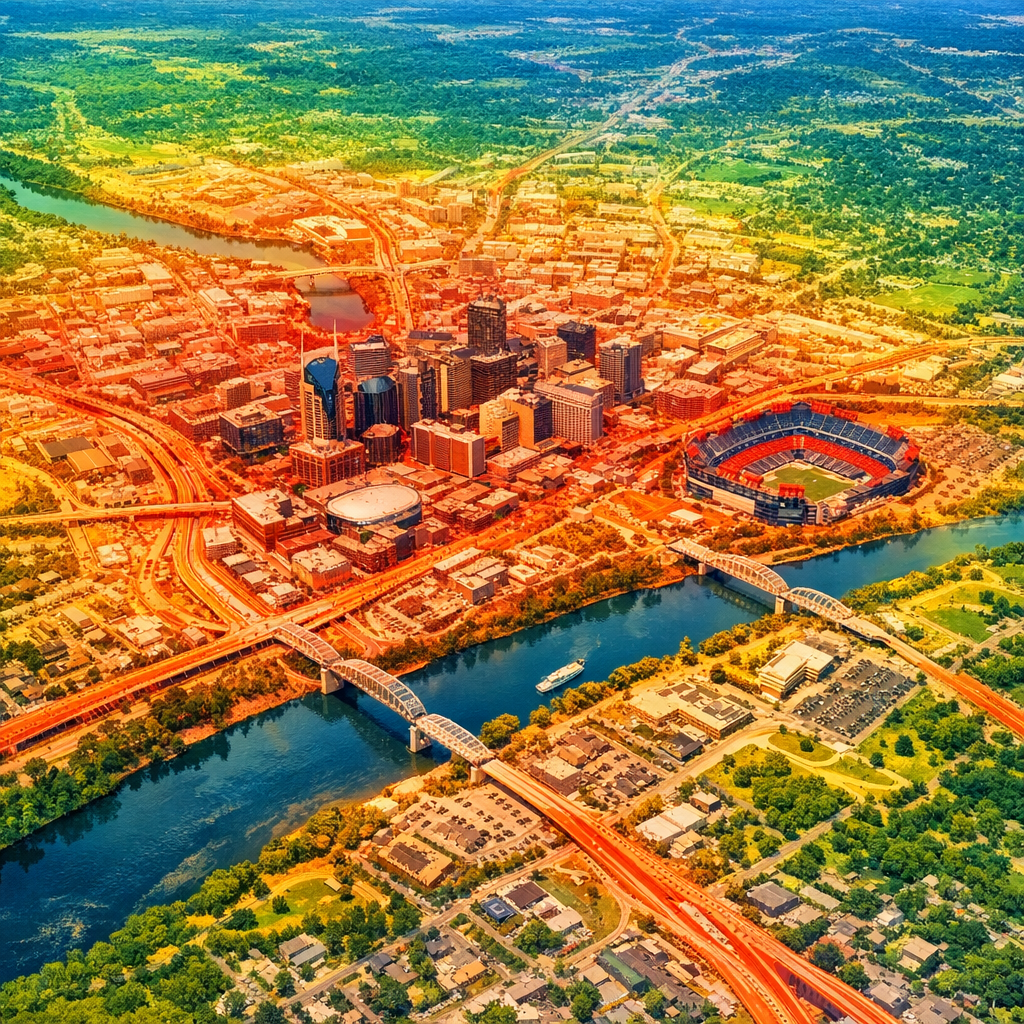
Nashville’s rapid urbanization has led to a phenomenon known as the Urban Heat Island (UHI) effect, where urban areas experience higher temperatures than their rural surroundings. This effect is primarily due to the abundance of heat-absorbing materials like asphalt and concrete, reduced vegetation, and human activities that generate heat.
Causes of the Urban Heat Island Effect
Several factors contribute to the UHI effect in Nashville:
- Impermeable Surfaces: Materials such as asphalt and concrete absorb and retain heat, leading to elevated temperatures.
- Reduced Vegetation: The loss of trees and green spaces diminishes natural cooling through shade and evapotranspiration.
- Human Activities: Energy consumption from vehicles, air conditioning, and industrial processes releases additional heat into the environment.
Impacts on the Community
The UHI effect has several implications for Nashville residents:
- Health Risks: Increased temperatures can lead to heat-related illnesses, particularly among vulnerable populations.
- Energy Consumption: Higher temperatures result in increased use of air conditioning, leading to higher energy bills and greater greenhouse gas emissions.
- Environmental Concerns: Elevated temperatures can exacerbate air pollution and negatively impact local ecosystems.
Mitigation Strategies
To combat the UHI effect, Nashville can implement several strategies:
- Enhancing Green Spaces: Planting trees and creating parks can provide shade and cool the air through evapotranspiration.
- Cool Roofing and Pavements: Using reflective materials for roofs and pavements can reduce heat absorption.
- Urban Planning: Designing buildings and streets to promote airflow and incorporating green infrastructure can help dissipate heat.
By understanding and addressing the factors contributing to the UHI effect, Nashville can work towards creating a cooler and more sustainable urban environment for all residents.