

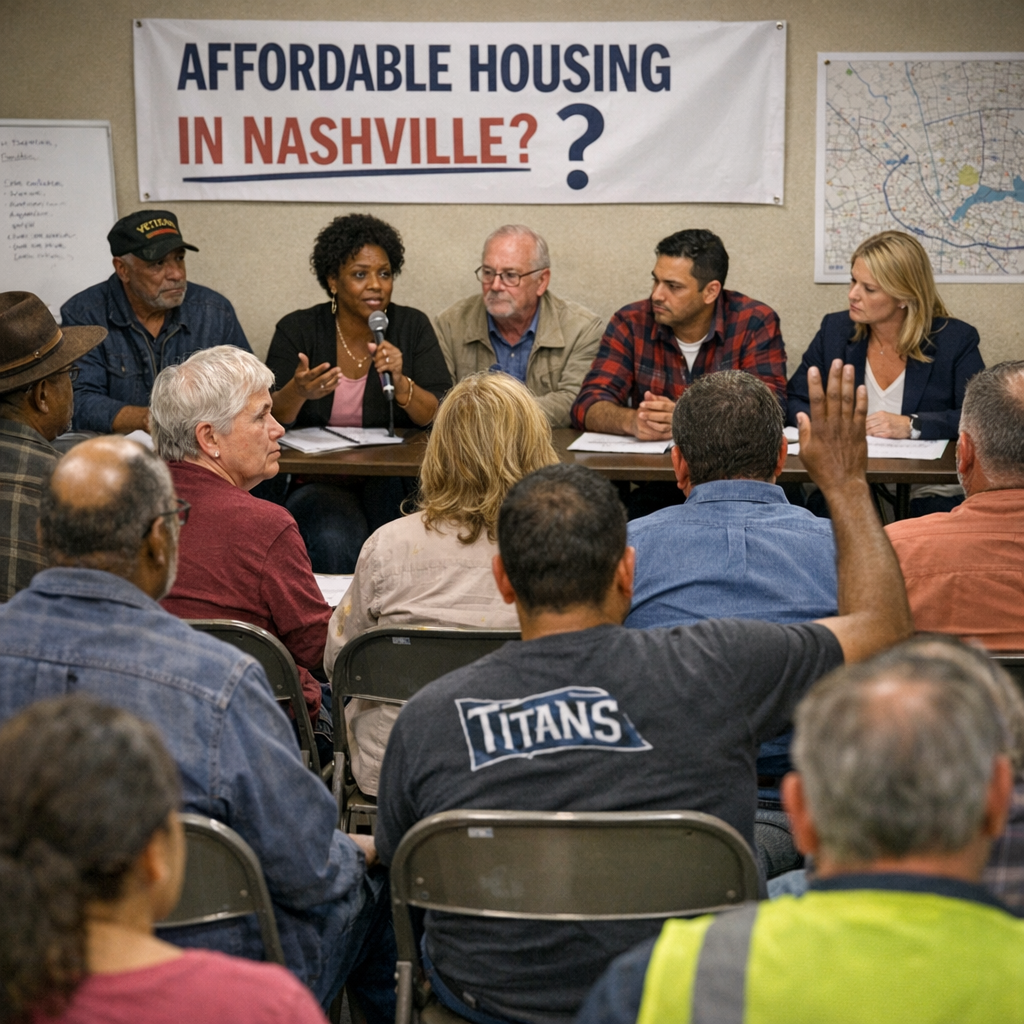
Nashville’s rapid growth has brought economic opportunities but also significant challenges, particularly in housing affordability. Recent reports highlight the increasing difficulty residents face in securing affordable housing.
Rising Housing Costs and Income Disparities
According to the 2026 Vanderbilt Poll, 82% of residents report being unable to afford a home in Davidson County. This affordability crisis is more pronounced among African American residents, who experience higher poverty rates and unemployment compared to their white counterparts. The Metro Social Services’ 17th annual Community Needs Evaluation reveals that the poverty rate for African Americans in Nashville stands at 18%, significantly higher than the city’s overall rate of 11.9%.
Community Initiatives and Policy Responses
In response to these challenges, local organizations and government agencies are implementing strategies to address housing affordability. The Metro Public Health Department, in collaboration with various partners, has developed a Community Health Improvement Plan aiming to improve overall community well-being, including housing stability. Additionally, Mayor Freddie O’Connell’s administration has announced investments in transportation infrastructure to enhance accessibility and support economic mobility for residents.
Looking Ahead
While these initiatives are steps in the right direction, the complexity of Nashville’s housing affordability crisis requires ongoing collaboration between policymakers, community organizations, and residents. Addressing systemic issues such as income disparities and gentrification is essential to ensure that all Nashvillians have access to safe and affordable housing.