

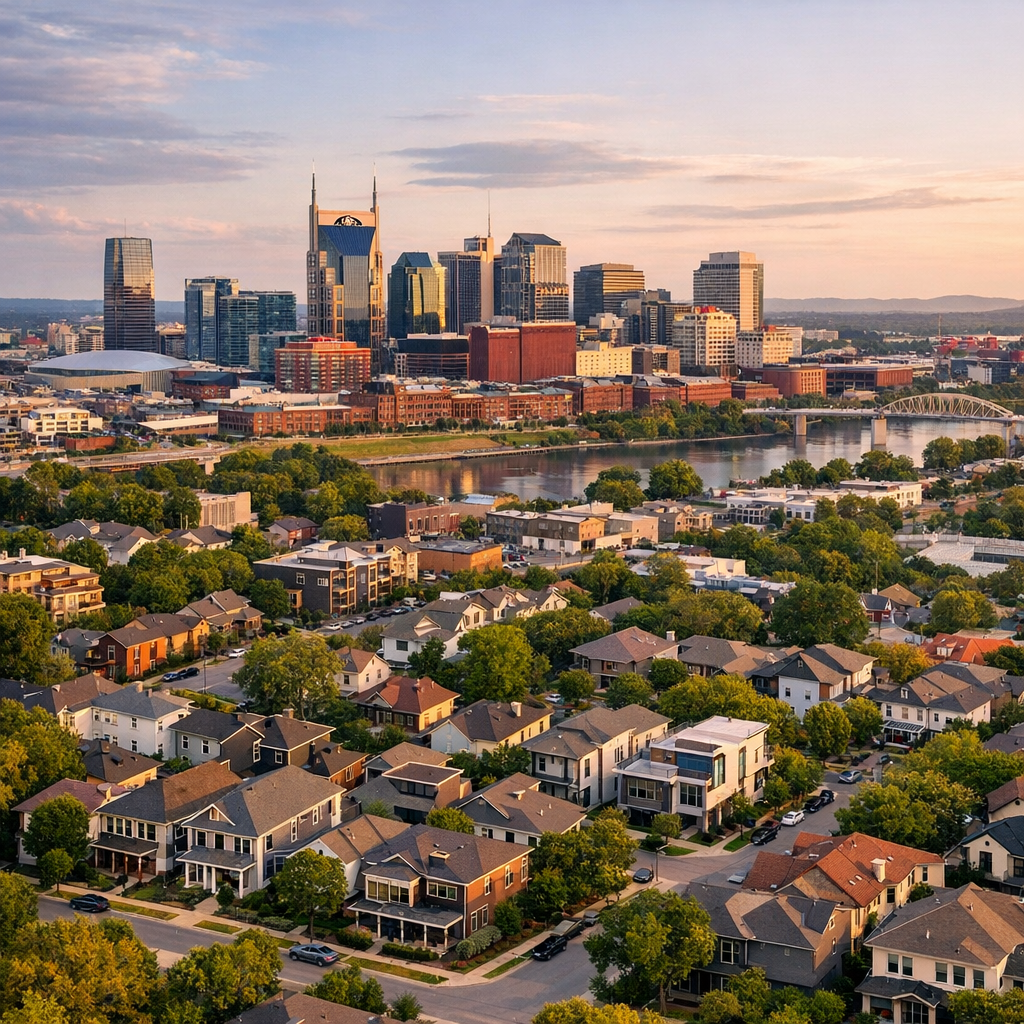
Nashville’s real estate market is experiencing notable shifts, offering both challenges and opportunities for buyers and sellers alike.
Market Trends
Recent data indicates a cooling trend in the housing market. The median sale price of homes has seen minimal change, with some reports noting a slight decrease. For instance, in March, the median sale price remained flat at $460,000, while active listings reached their highest level since 2019. Additionally, total home sales declined by 7.5% year-over-year, aligning with broader cooling trends observed in other high-growth Southeast metros.
Inventory and Buyer Dynamics
The increase in housing inventory has shifted the market dynamics in favor of buyers. As of March, the Greater Nashville Realtors reported 12,315 properties available for sale, marking a 12% rise from the previous year. This surge, coupled with lower interest rates, has empowered buyers with greater negotiating power, prompting sellers to adopt creative tactics such as offering incentives.
Affordability Concerns
Despite the cooling market, affordability remains a pressing issue. A recent Vanderbilt University poll revealed that 82% of Nashville residents feel they cannot afford to buy a home in Davidson County, underscoring the city’s ongoing housing affordability crisis.
Development Initiatives
In response to these challenges, several development projects aim to address housing needs. The Opaline, a 251-unit affordable, mixed-use development located at 3533 Dickerson Pike, is one such initiative. This project includes affordable units for residents at 60% Area Median Income, nonprofit services, studios, maker spaces for creatives, an expanded child care facility, retail spaces, and a future transit center.
Additionally, Metro Nashville offers resources like the Barnes Housing Trust Fund, which awards funds to nonprofit housing developers to create and preserve housing, and the Connecting Housing to Infrastructure Program (CHIP), which connects affordable housing to enhanced infrastructure investments.
Conclusion
Nashville’s real estate landscape is evolving, presenting a more balanced market with increased inventory and development projects aimed at enhancing affordability. Prospective buyers and sellers should stay informed and consider these trends when making decisions in this dynamic environment.