

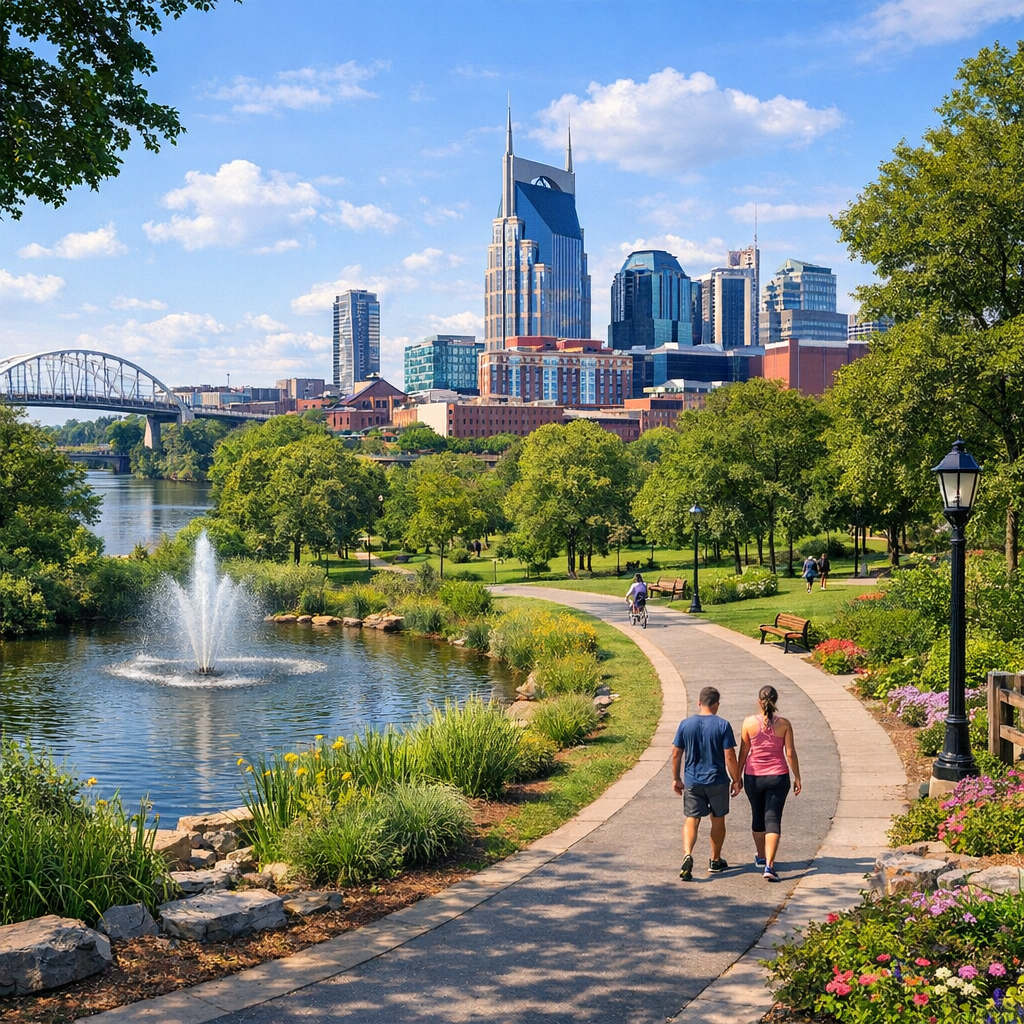
Nashville, Tennessee, experiences a humid subtropical climate characterized by hot, humid summers and mild to cool winters. The city’s average annual high temperature is approximately 69.9°F (21°C), with an average low of 48.1°F (9°C). Annual precipitation averages around 53.5 inches (1,357.9 mm), contributing to the region’s lush greenery and diverse ecosystems.
Seasonal Climate Patterns
Each season in Nashville brings distinct weather conditions:
- Spring (March to May): Temperatures gradually rise from an average low of 37.9°F (3.3°C) in March to a high of 78.6°F (25.9°C) in May. This period also sees increased rainfall, averaging around 5 inches (127 mm) per month, supporting the blooming of various flora.
- Summer (June to August): Summers are typically hot and humid, with average highs reaching 89.2°F (31.8°C) in July. Thunderstorms are common, contributing to monthly precipitation averages of approximately 4.5 inches (114 mm).
- Autumn (September to November): The fall season brings cooler temperatures, with average highs decreasing from 83.1°F (28.4°C) in September to 60°F (15.6°C) in November. Rainfall during this period averages around 3.8 inches (97 mm) per month.
- Winter (December to February): Winters are generally mild, with average lows around 30.6°F (-0.8°C) in January and highs near 50.4°F (10.2°C) in December. Snowfall is infrequent but possible during this season.
Environmental Initiatives in Nashville
Recognizing the importance of environmental stewardship, Nashville has implemented several initiatives aimed at promoting sustainability and resilience:
Tree Canopy Restoration
The city has committed to managing public trees as valuable assets, with legislation directing regular progress reports and the establishment of a review panel for large-scale tree removals. Additionally, a dedicated revenue stream supports tree canopy restoration on private properties, contributing to the Root Nashville campaign’s goal of planting 500,000 trees by 2050.
Parks and Greenways Expansion
In 2017, Nashville adopted the “Plan to Play” master plan, outlining a ten-year vision to sustainably meet the city’s needs for parkland, greenways, community centers, and sports facilities. This strategic plan focuses on land acquisition, facility development, program enhancement, and operational improvements to ensure accessible recreational spaces for all residents.
Ecological Conservation Strategy
Metro Planning has launched the Ecological Conservation Strategy (ECS) to assess the health of Nashville’s natural resources and develop an action plan for conservation. This initiative aims to balance the city’s growth with the preservation of its unique landscapes, ecosystems, and sense of place.
Community Engagement and Education
Organizations like Urban Green Lab play a pivotal role in educating communities on sustainable living practices. By offering programs and resources, they empower residents to make environmentally conscious decisions in their daily lives.
Through these concerted efforts, Nashville continues to foster a sustainable and resilient environment, ensuring that its natural beauty and resources are preserved for future generations.