

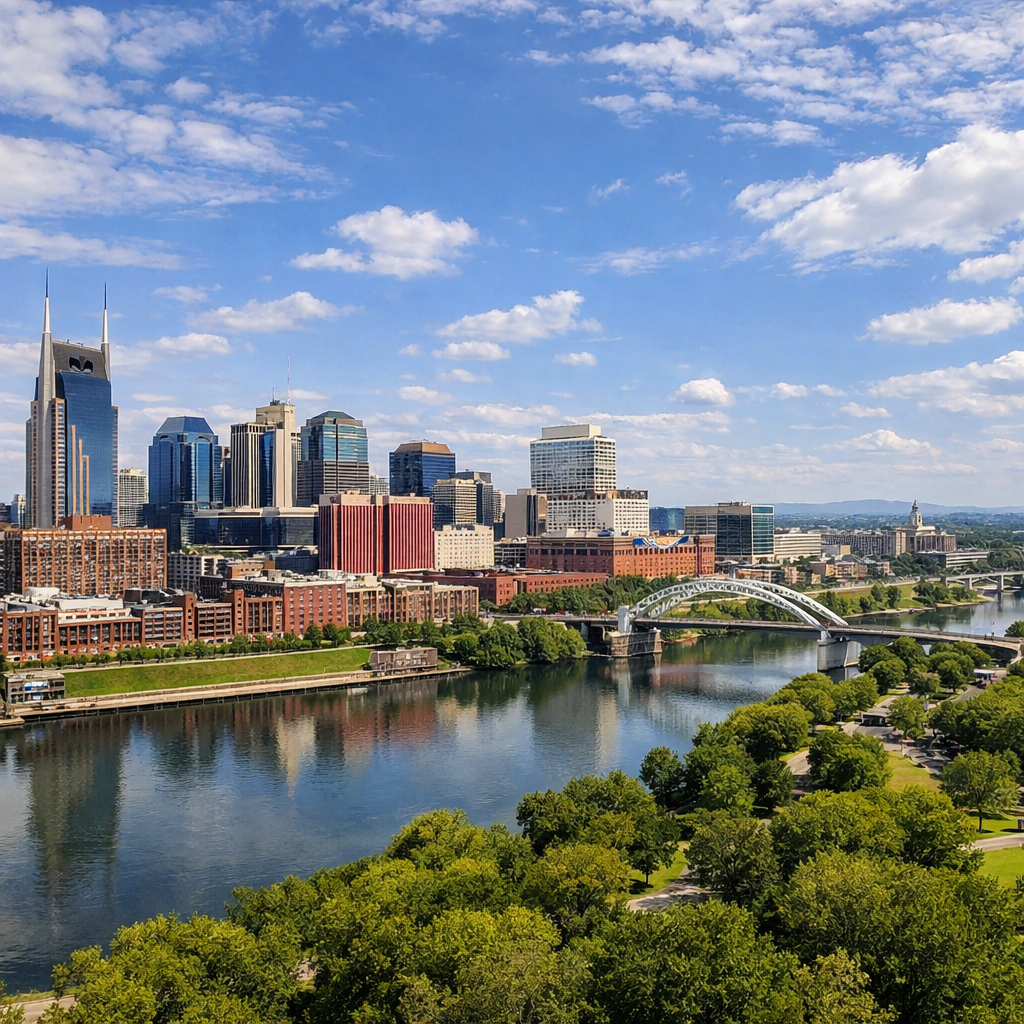
Nashville, Tennessee, experiences a humid subtropical climate, characterized by hot, humid summers and mild to cool winters. This climate influences various aspects of daily life, from outdoor activities to energy consumption.
Seasonal Weather Patterns
Summer
Summers in Nashville are notably hot and humid. July stands as the warmest month, with average high temperatures around 89°F (31.3°C). The city often experiences temperatures exceeding 90°F (32°C) during this period. Rainfall is relatively consistent, with July receiving an average of 4.02 inches (102 mm) of precipitation.
Winter
Winters are generally mild, with January being the coldest month. Average low temperatures hover around 30.6°F (-0.8°C). Snowfall is infrequent, averaging about 2 inches annually.
Spring and Fall
Spring and fall offer moderate temperatures and are often considered the most pleasant times of the year. These seasons are marked by comfortable weather, making them ideal for outdoor activities.
Environmental Challenges
Urban Heat Islands
A significant portion of Nashville’s population resides in urban heat islands—areas where infrastructure like buildings and roads absorb and re-emit heat more than natural landscapes. This phenomenon leads to higher temperatures in these regions, affecting approximately 71% of residents. Efforts are underway to mitigate this issue, including implementing pavement coatings that reflect sunlight.
Air Quality Concerns
Air quality is another pressing concern. The American Lung Association’s 2026 “State of the Air” report indicates that over 427,000 children in Tennessee are exposed to unhealthy air levels. The Nashville-Davidson–Murfreesboro metro area received an F grade for ozone smog, highlighting the need for continued efforts to improve air quality.
Staying Informed
Understanding Nashville’s climate and environmental challenges is crucial for residents and visitors alike. Staying informed about weather patterns and participating in community initiatives can contribute to a healthier and more sustainable environment for all.