

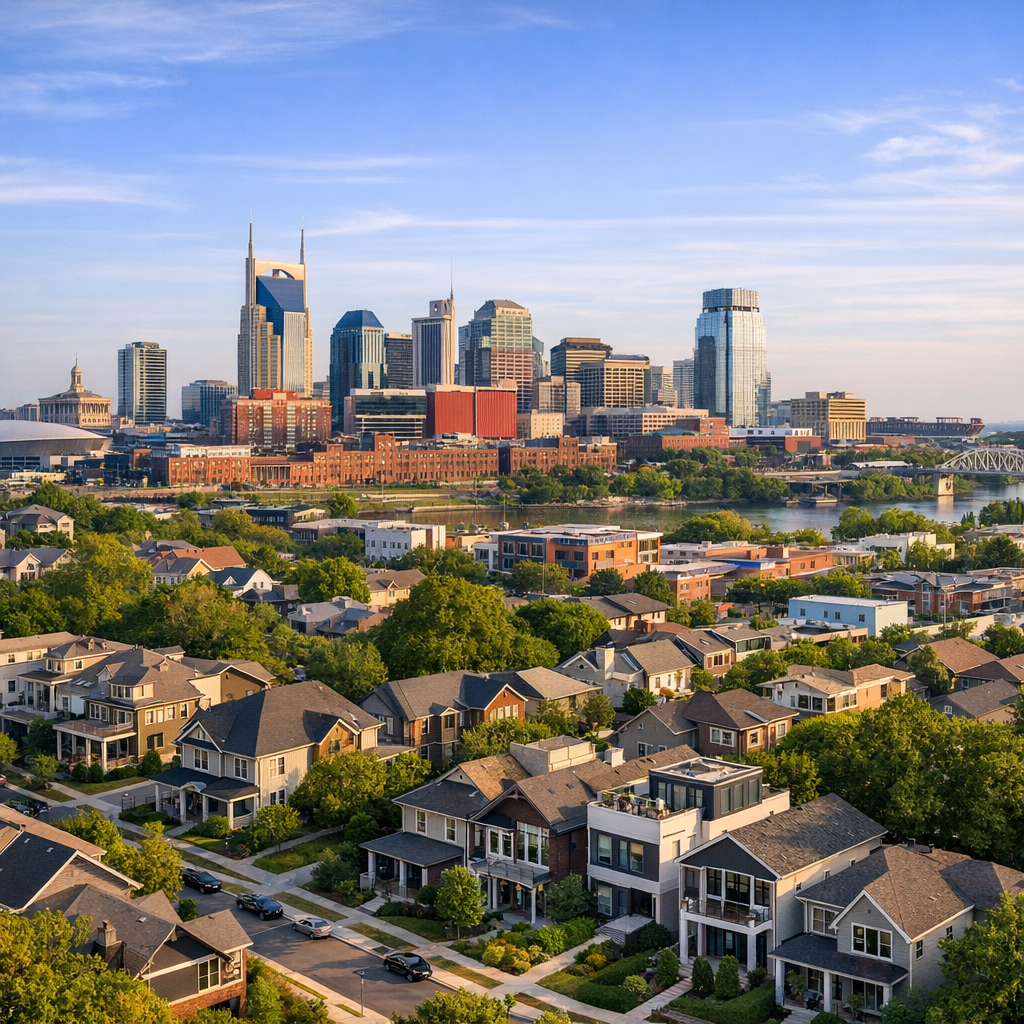
Nashville’s real estate market is experiencing notable shifts, presenting both challenges and opportunities for buyers and sellers alike. Understanding these trends is essential for making informed decisions in this dynamic environment.
Market Trends and Home Prices
Recent data indicates a slight decrease in home prices. As of May 2026, the average home value in Nashville stands at $436,519, reflecting a 3.3% decline over the past year. Homes are typically going under contract in approximately 22 days, suggesting a market that, while cooling, remains active. This trend offers potential buyers more negotiating power and a broader selection of properties.
Inventory and Sales Activity
The housing inventory has seen a significant uptick. In March 2026, active listings reached 2,642, marking a 9.8% increase from the previous year. This surge in available properties provides buyers with more options and has contributed to a slight softening in prices. Notably, home sales in May 2026 rose by 1.1% compared to the same period last year, indicating sustained demand despite the increased inventory.
Neighborhood Highlights
Certain Nashville neighborhoods continue to attract strong buyer interest. Antioch (ZIP code 37013) led the city with 1,121 home sales in 2025, marking its third consecutive year at the top. The area’s affordability and new amenities, such as the Tanger Outlets and an upcoming In-N-Out, have bolstered its appeal. Conversely, areas like Green Hills (ZIP code 37215) remain the priciest, with median home prices exceeding $1.1 million.
Development Projects and Community Impact
Several development projects are shaping Nashville’s landscape. For instance, DC Blox is proceeding with plans to build a 69,000-square-foot data center near the Nashville Zoo, despite significant public and environmental opposition. Over 500,000 individuals have signed a petition against the project, and two environmental organizations have criticized its potential threat to endangered species in the area. While the Metro Planning Commission has approved measures to limit future data center developments, DC Blox remains undeterred. The company insists the project will comply with all regulations concerning light, sound, stormwater, and energy use and emphasizes its commitment to transparency and environmental responsibility. Nonetheless, environmental and community concerns remain key points of contention.
In response to community concerns, Nashville Mayor Freddie O’Connell is taking a significant step to block the proposed data center near the Nashville Zoo by filing eminent domain legislation. The move would grant the city authority to acquire the land, currently owned by MarketStreet Enterprises and under contract to be sold to data center firm DC Blox for $23 million. O’Connell stated the city has a legitimate public need for the property and acknowledged widespread community and zoo-related concerns about the project.
If approved, Metro would condemn and purchase the property at market value for public use. This action coincides with two other Metro Council initiatives: one imposing a temporary moratorium on data centers and another challenging the zoning approval granted to DC Blox. Despite these efforts, DC Blox’s proposal was already in progress before the moratorium was introduced. The Metro Council is expected to review the eminent domain legislation as early as July 7.
Conclusion
Nashville’s real estate market is in a state of flux, influenced by increasing inventory, evolving neighborhood dynamics, and significant development projects. For those looking to buy or sell, staying informed about these trends is crucial. Engaging with local real estate professionals and community resources can provide valuable insights to navigate this ever-changing market.