

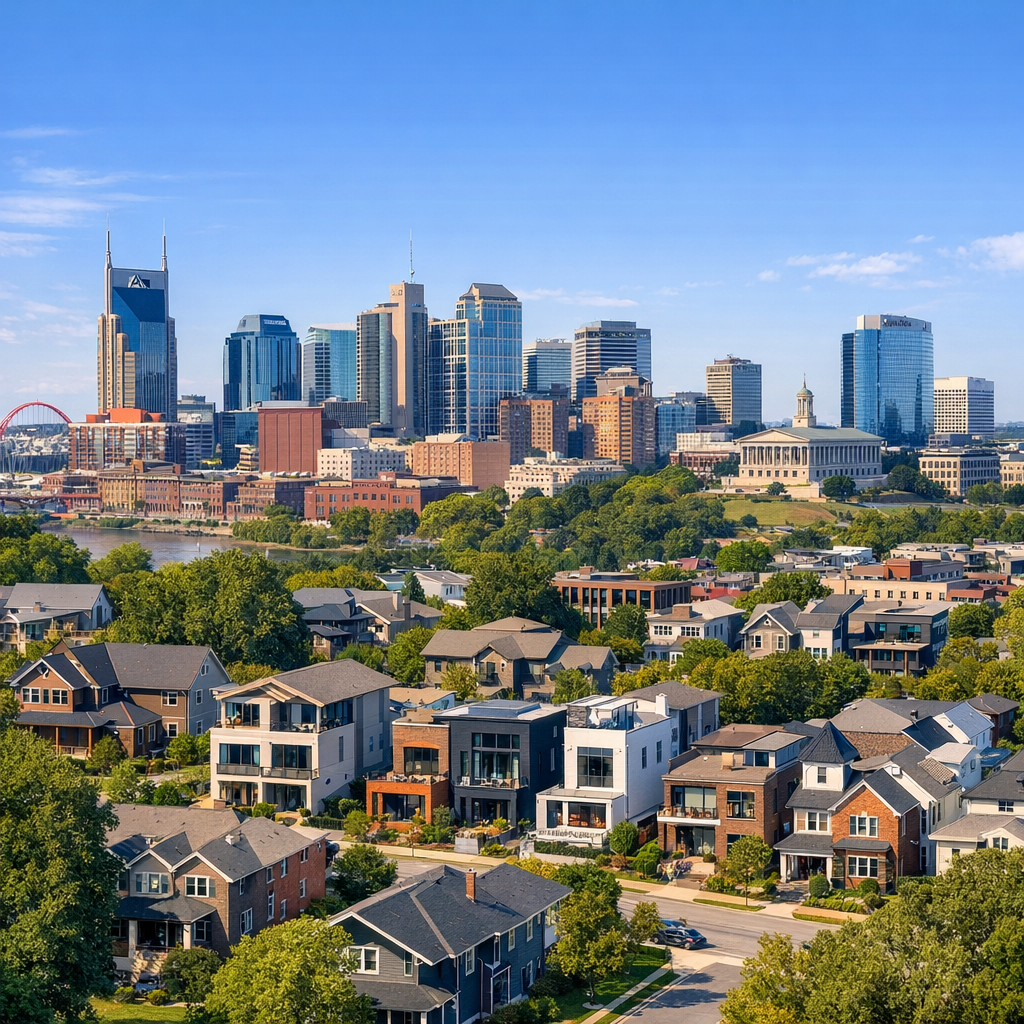
Nashville’s real estate market is experiencing notable shifts, presenting both challenges and opportunities for buyers and sellers alike. Understanding these trends is crucial for making informed decisions in this dynamic environment.
Market Trends
Recent data indicates a slight decrease in home values. As of May 31, 2026, the average home value in Nashville was $436,519, reflecting a 3.3% decline over the past year. Homes are going pending in approximately 22 days, suggesting a moderately paced market. Additionally, the median sale price stood at $442,483, with a median list price of $496,567. Notably, 12.5% of sales were above the list price, while 65.7% were below, highlighting a market leaning towards buyers.
Inventory and Sales
The housing inventory has seen a significant uptick. In March 2026, active listings reached 12,315 properties, marking a 12% increase from the previous year. This surge provides buyers with more options and negotiating power. Concurrently, home sales have remained steady, with 2,133 homes sold in February 2026, consistent with the same period last year.
Neighborhood Highlights
Certain neighborhoods are drawing increased attention. Antioch (ZIP code 37013) led the city with 1,121 home sales in 2025, marking its third consecutive year at the top. The area’s affordability and new amenities, such as the Tanger Outlets and an upcoming In-N-Out, contribute to its appeal. Conversely, property values on Lower Broadway have surged, with some venues experiencing appraisal increases of over 140% in four years, driven by booming tourism.
Development Projects
Several development projects are shaping Nashville’s landscape. A proposed 69,000-square-foot data center near the Nashville Zoo by DC Blox has faced significant public and environmental opposition. Despite over 500,000 petition signatures against it, the company plans to proceed, emphasizing compliance with regulations. In response, Mayor Freddie O’Connell has filed eminent domain legislation to acquire the land, citing public need and community concerns.
Similarly, a new parking structure at Cheekwood Estate & Gardens has sparked legal action from residents aiming to halt construction. The dispute centers on traffic and land use issues surrounding the historic botanical garden.
Conclusion
Nashville’s real estate market is in flux, influenced by changing home values, increased inventory, and significant development projects. Staying informed about these trends is essential for navigating the market effectively.