

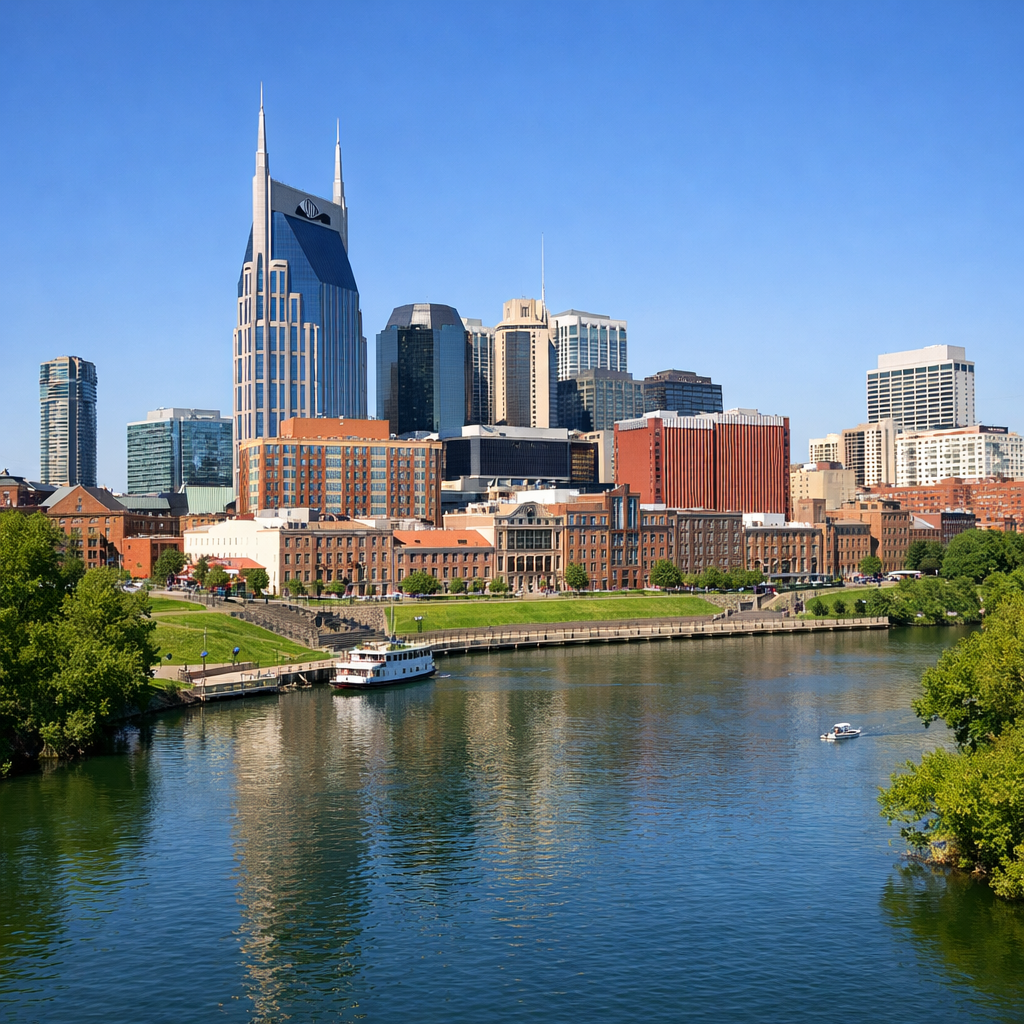
Nashville, Tennessee, experiences a humid subtropical climate characterized by hot summers and mild winters. This climate brings a variety of weather patterns and environmental challenges that residents should be aware of.
Seasonal Weather Patterns
Throughout the year, Nashville’s temperatures fluctuate significantly. January typically sees average lows around 30.6°F (-0.8°C), while July averages highs near 88.3°F (31.3°C). Rainfall is unevenly distributed, with July recording the highest precipitation at approximately 4.02 inches (102mm) and November the least at about 1.77 inches (45mm).
Increasing Heat Waves
Recent data indicates that heat waves in Nashville are becoming more frequent and prolonged. Since the 1960s, the city has experienced an average increase of three heat waves per year, each lasting nearly a day longer. This trend poses significant health risks, especially for vulnerable populations.
Intensifying Rainfall and Flooding
Studies show that hourly rainfall intensity in Nashville increased by 12% between 1970 and 2024. This escalation contributes to more frequent flash floods, creating hazardous conditions for residents and infrastructure.
Air Quality Concerns
Nashville’s air quality is influenced by various factors, including vehicle emissions, industrial activities, and seasonal conditions. During summer months, high temperatures and stagnant air can exacerbate pollution levels, leading to health advisories.
Environmental Initiatives
To address these challenges, Nashville has implemented several initiatives. The city’s Heat Mapping Campaign, launched in 2022, involved community scientists measuring temperatures across different neighborhoods to identify heat-prone areas. This data informs strategies to mitigate heat impacts, such as increasing urban greenery and implementing reflective pavement coatings.
Understanding Nashville’s climate and its evolving patterns is crucial for residents to stay informed and prepared for the environmental challenges ahead.