

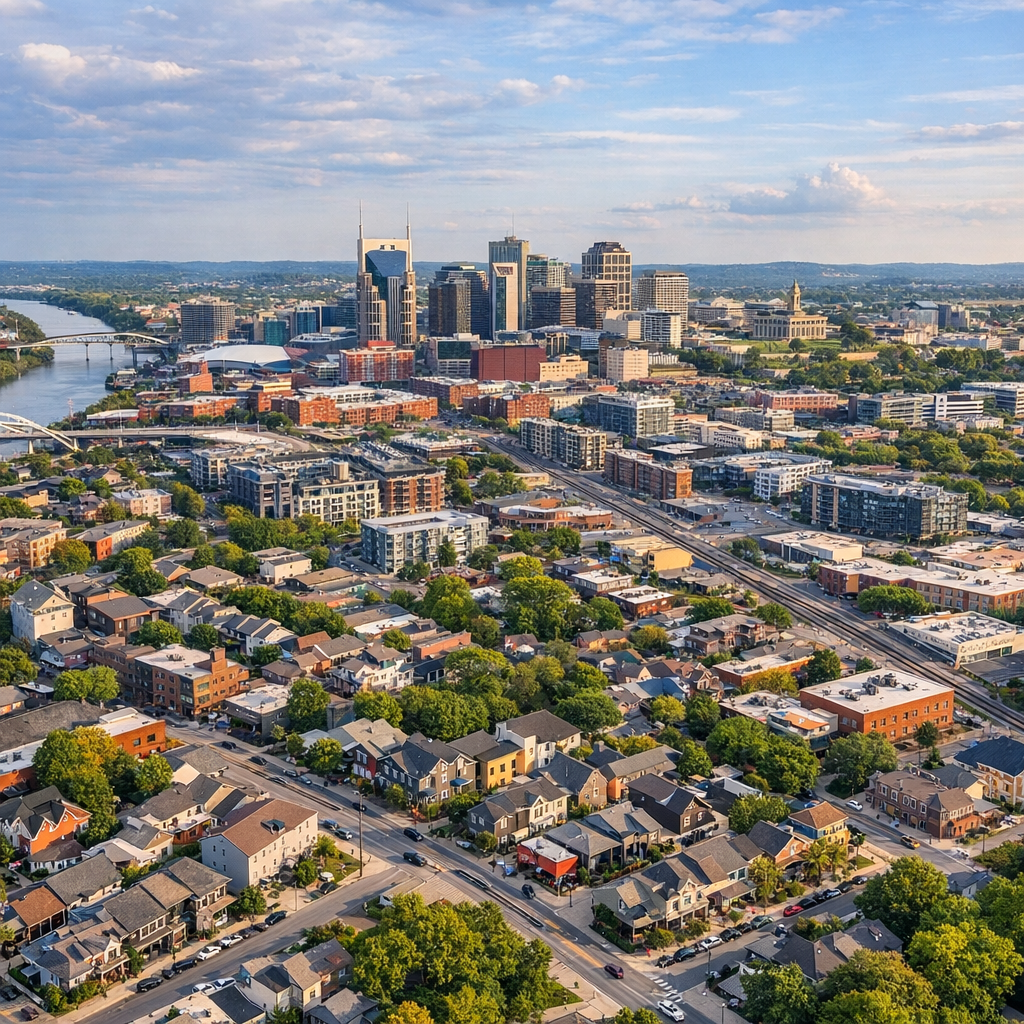
Nashville’s real estate market is experiencing notable shifts, presenting both challenges and opportunities for buyers and sellers alike. Understanding these trends is essential for making informed decisions in this dynamic environment.
Market Trends and Home Prices
Recent data indicates a slight decrease in home values. As of May 2026, the average home value in Nashville stands at $436,519, reflecting a 3.3% decline over the past year. Homes are typically going under contract in approximately 22 days, suggesting a market that, while cooling, remains active. [1]
In March 2026, the market showed signs of shifting in favor of buyers. Active inventory increased by nearly 10% year-over-year, and new listings surged by more than 16%. Concurrently, the median list price dropped by 4.6%, and homes stayed on the market longer, providing buyers with more options and negotiating power. [2]
Inventory and Sales Activity
The increase in housing inventory has been a significant factor in the market’s evolution. As of March 2026, there were 12,315 properties available for sale, marking a 12% rise from the previous year. This surge, coupled with lower interest rates, has empowered buyers with greater negotiating power, leading sellers to adopt creative tactics such as offering incentives. [3]
Despite the increase in inventory, home sales have remained steady. In May 2026, Nashville recorded 3,216 transactions, a 1.1% increase from the same period last year. Suburban areas, including Murfreesboro, Lebanon, Gallatin, and Mount Juliet, have driven much of this activity as buyers seek more space and affordability outside the urban core. [4]
Neighborhood Developments
Certain neighborhoods continue to attract significant attention. Antioch (ZIP code 37013) led the city with 1,121 home sales in 2025, marking the third consecutive year it has topped the list. This trend underscores Antioch’s rapid growth and appeal, driven by new amenities and more affordable housing options. [5]
Conversely, areas like Lower Broadway have seen property values surge dramatically, transforming the district into a high-stakes real estate hub. This increase is largely driven by booming tourism, with property values at key venues rising by at least 140% over the past four years. [6]
Looking Ahead
As Nashville’s real estate market continues to evolve, staying informed about these trends is crucial for prospective buyers and sellers. The current landscape offers opportunities, particularly for buyers, but also presents challenges that require careful consideration and strategic planning.
For a more in-depth analysis of Nashville’s housing market, you might find the following video insightful:
The Truth About Nashville’s Housing Market Right Now!
By staying attuned to these developments, individuals can navigate Nashville’s real estate market more effectively, making decisions that align with their goals and the city’s dynamic landscape.