

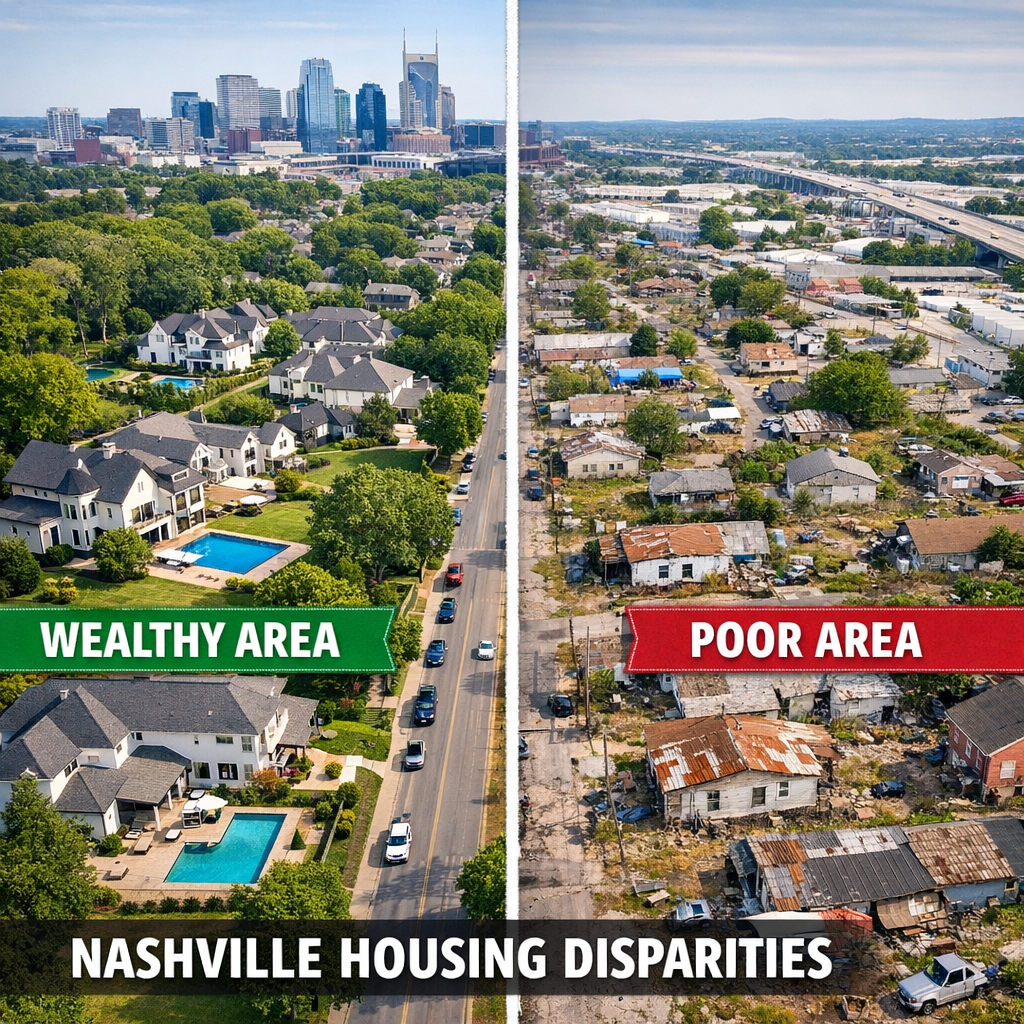
Nashville’s rapid growth has brought prosperity to many, but it has also intensified housing affordability challenges for a significant portion of its residents. Recent studies and surveys paint a concerning picture of the city’s housing landscape.
Widespread Affordability Concerns
A Vanderbilt University poll reveals that 82% of Nashville residents feel they cannot afford to buy a home in Davidson County. This sentiment underscores the city’s escalating housing crisis, where the median household income of $91,000 falls short of the approximately $120,000 needed to afford a median-priced home. This $30,000 gap highlights the financial strain on many families striving for homeownership.
Disproportionate Impact on Black and Hispanic Communities
The crisis is even more pronounced among Black and Hispanic families. A housing and infrastructure study indicates that these families can afford median-valued homes in less than 1% of Nashville’s 481 neighborhoods—specifically, just 0.8% for Black families and 0.6% for Hispanic families. This stark disparity points to systemic issues rooted in historical discriminatory practices such as redlining and exclusionary zoning laws.
Community and Policy Responses
In response to these challenges, Metro Social Services released an annual report highlighting affordability issues for African Americans in Nashville. The report identifies historic and contemporary causes of the wealth gap and suggests targeted actions to address these disparities. Additionally, city leaders are considering zoning reforms, including permitting higher-density housing along transit corridors, to increase affordable housing availability.
Looking Ahead
Addressing Nashville’s housing affordability crisis requires a multifaceted approach. While economic growth and development are vital, ensuring that all residents have access to affordable housing is essential for the city’s long-term sustainability and inclusivity. Community engagement, policy reforms, and targeted investments will be crucial in bridging the affordability gap and fostering a more equitable Nashville.