

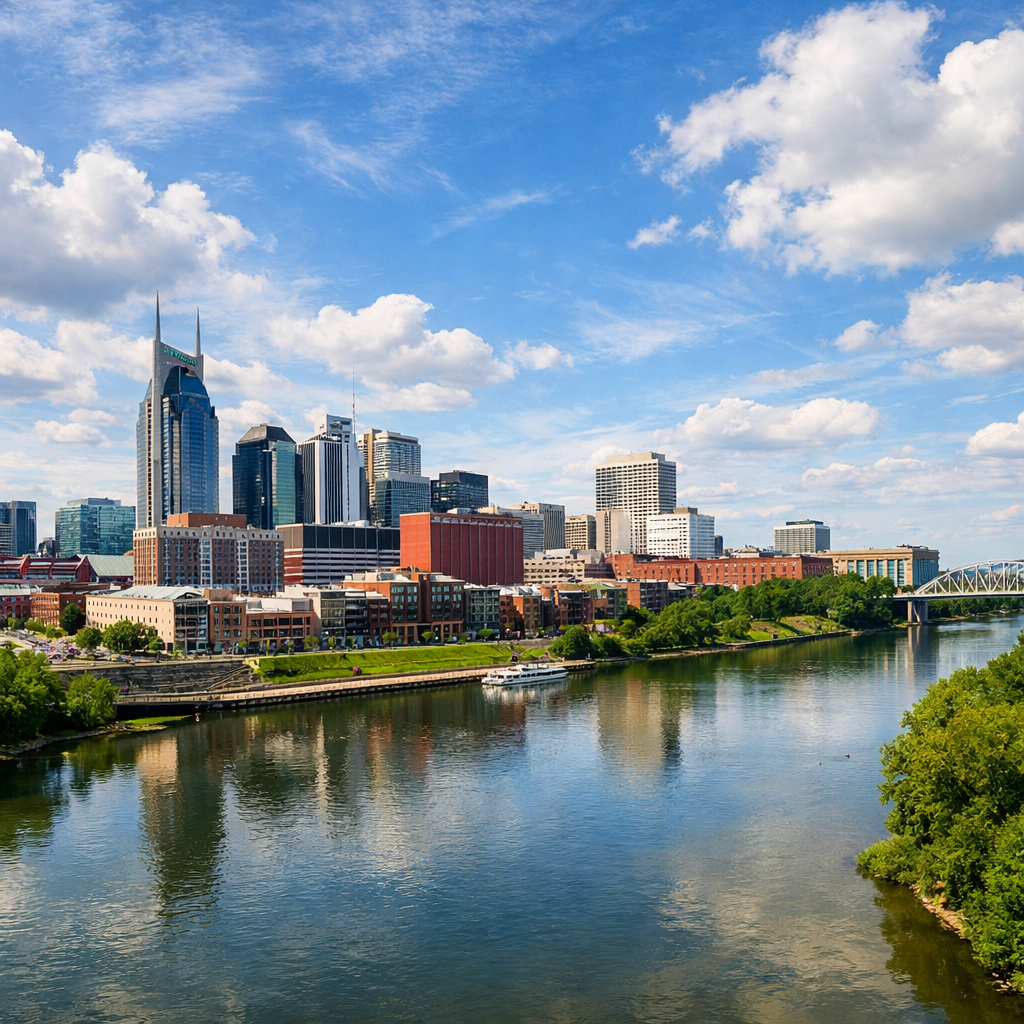
Nashville, Tennessee, experiences a humid subtropical climate characterized by hot summers, mild winters, and moderate to high humidity levels throughout the year. This climate classification, known as Cfa under the Köppen system, results in distinct seasonal variations that influence the city’s weather patterns and environmental conditions.
Seasonal Temperature Variations
Throughout the year, Nashville’s temperatures fluctuate significantly. January typically sees average lows around 30.6°F (-0.8°C), while July brings average highs of approximately 88.3°F (31.3°C). These variations contribute to the city’s diverse seasonal experiences, from chilly winters to warm, humid summers.
Precipitation Patterns
Rainfall in Nashville is distributed unevenly across the year. July often records the highest precipitation, averaging 4.02 inches (102 mm), whereas November tends to be drier, with averages around 1.77 inches (45 mm). This variability can lead to periods of both drought and heavy rainfall, impacting local agriculture and water resources.
Environmental Challenges
In recent years, Nashville has faced several environmental challenges linked to its climate:
Urban Heat Islands
A significant portion of Nashville’s population resides in urban heat islands—areas where infrastructure like buildings and roads absorb and retain heat, leading to higher temperatures compared to surrounding regions. This phenomenon exacerbates the effects of heat waves, particularly in neighborhoods with limited green spaces.
Increased Rainfall Intensity
Studies indicate that hourly rainfall intensity in Nashville increased by 12% between 1970 and 2024. This uptick in precipitation intensity raises concerns about flash flooding and the capacity of the city’s stormwater management systems to handle such events.
Air Quality Concerns
Air pollution in Nashville stems from various sources, including vehicular emissions, industrial activities, and construction dust. These pollutants can adversely affect public health, especially among vulnerable populations such as children and the elderly.
Adaptation and Mitigation Efforts
To address these challenges, Nashville has initiated several strategies:
- Heat Mapping Campaigns: The city has conducted heat mapping campaigns to identify the warmest neighborhoods, aiding in targeted interventions to mitigate heat risks.
- Green Infrastructure: Efforts are underway to increase urban greenery, such as planting trees and creating green roofs, to combat the urban heat island effect.
- Improved Stormwater Management: Enhancements to the city’s stormwater infrastructure aim to better manage increased rainfall and reduce flood risks.
Understanding Nashville’s climate and its associated environmental challenges is crucial for developing effective policies and community initiatives. By staying informed and proactive, residents and policymakers can work together to create a more resilient and sustainable Nashville.