

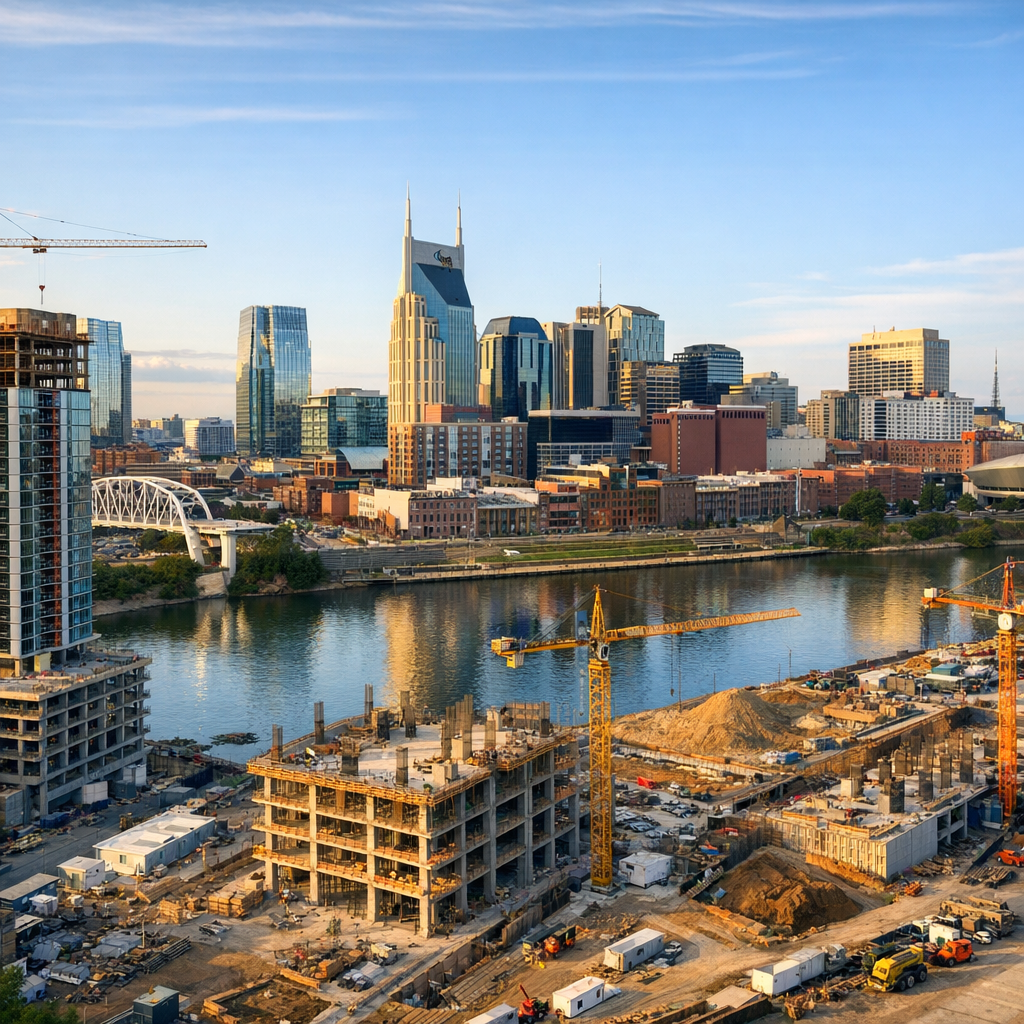
Nashville’s real estate market is experiencing notable shifts, presenting both challenges and opportunities for buyers and sellers alike. Understanding these changes is crucial for making informed decisions in this dynamic environment.
Market Trends
Recent data indicates a slight decrease in home values. As of May 31, 2026, the average home value in Nashville stands at $436,519, reflecting a 3.3% decline over the past year. Homes are going pending in approximately 22 days, suggesting a market that, while cooling, remains active. Source: Zillow
Inventory levels have risen, providing buyers with more options. In March 2026, active listings reached 2,642, marking a 9.8% increase from the previous year. This surge in inventory has shifted the market dynamics, offering buyers greater negotiating power. Source: Realtor.com
Neighborhood Highlights
Antioch (ZIP code 37013) continues to lead in home sales, recording 1,121 transactions in 2025. This marks the third consecutive year Antioch has topped the list, emphasizing its rapid growth in southeastern Davidson County. Source: Axios
In contrast, areas like Green Hills (ZIP code 37215) remain among the priciest, with median home prices exceeding $1.1 million. This disparity underscores the diverse range of housing options available across Nashville’s neighborhoods. Source: Axios
Development Projects
Significant developments are reshaping Nashville’s landscape. The East Bank redevelopment, a $2.2 billion initiative, made substantial progress in 2025. Key milestones include advancements on the new Titans stadium and plans for a riverfront arts center, signaling a transformation of the formerly industrial area into a vibrant urban hub. Source: Axios
Additionally, the Belle Meade Plaza is set to host 1 Iris Lane, a luxury residential project featuring condos starting at $2.5 million. This development reflects the growing demand for high-end living spaces in Nashville. Source: Axios
Conclusion
Nashville’s real estate market is in a state of flux, influenced by increasing inventory, shifting neighborhood dynamics, and ambitious development projects. Staying informed about these trends is essential for anyone looking to navigate the city’s housing market effectively.