

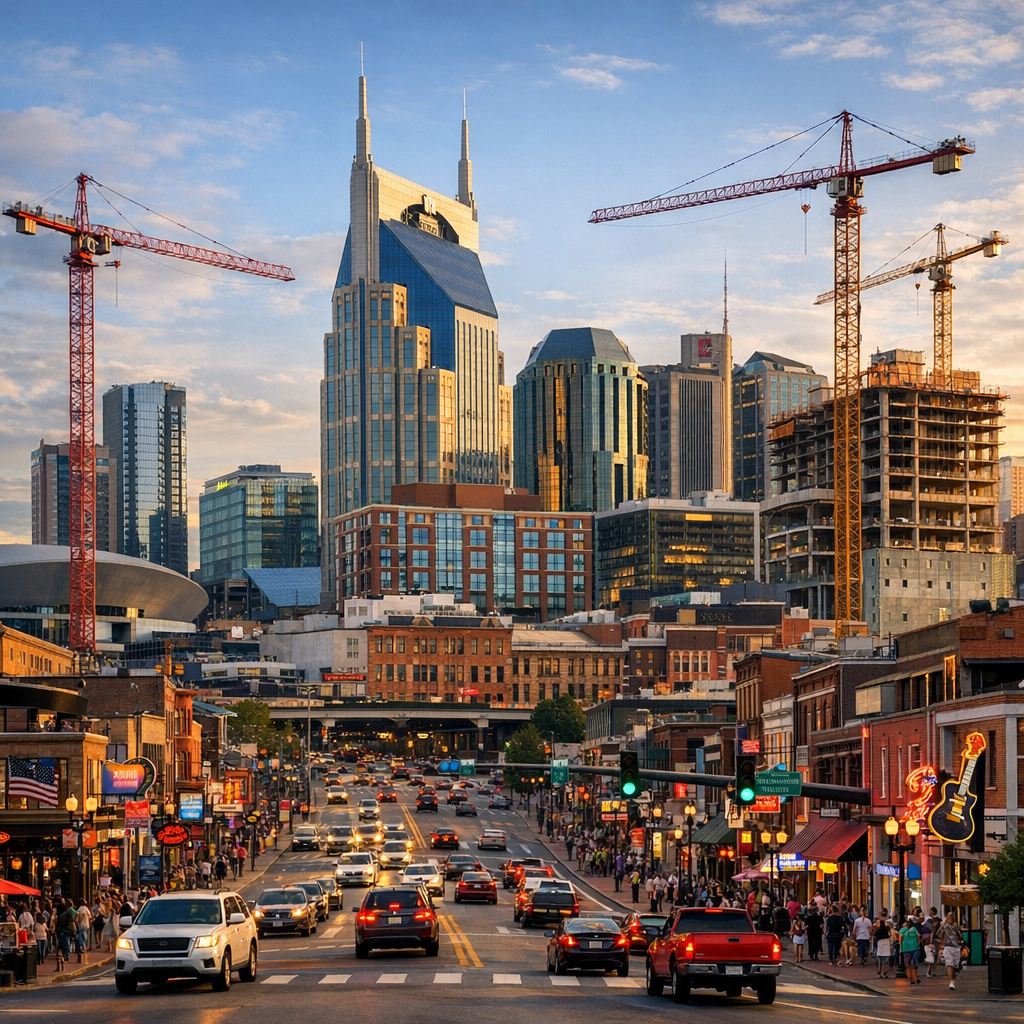
Nashville’s rapid economic expansion serves as a microcosm of broader national trends, reflecting both the opportunities and challenges that come with such growth.
Population Growth and Economic Impact
In recent years, Nashville has experienced significant population increases, with Davidson County adding nearly 9,300 residents in a single year, the highest among Tennessee’s 95 counties. This surge underscores the city’s appeal and mirrors national patterns of urban migration.
Contributing to this growth is the substantial economic impact of institutions like Vanderbilt University and Vanderbilt University Medical Center, which collectively added $22.13 billion to the local and state economies over a five-year period. Such figures highlight the pivotal role of educational and medical institutions in urban economic development.
Infrastructure and Transportation
To accommodate this growth, Nashville International Airport (BNA) has embarked on a $40 million Central Core Enhancement project. This initiative aims to expand terminal areas and improve the traveler experience, reflecting a nationwide trend of investing in infrastructure to support increasing urban populations.
Tourism and Events
The city’s vibrant tourism sector has also seen remarkable growth. Events like the Liberty Mutual Music City Bowl and the NCAA FCS Championship collectively generated nearly $70 million in economic impact, positioning Nashville as a premier sports destination. Looking ahead, the anticipated hosting of the 2030 Super Bowl is expected to have a monumental economic impact, further elevating the city’s status on the national stage.
Challenges and Considerations
However, rapid growth brings challenges. The housing market has become increasingly competitive, with home prices soaring due to a combination of low borrowing costs and the rise of remote work. This trend is not unique to Nashville but is observed in urban centers nationwide.
Additionally, the city has faced environmental challenges, such as severe storms leading to dangerous flooding. These events underscore the need for resilient infrastructure and proactive planning to mitigate the impacts of climate change.
Conclusion
Nashville’s trajectory offers valuable insights into the dynamics of urban growth in the United States. By examining the city’s successes and challenges, other urban areas can glean lessons on managing expansion, investing in infrastructure, and fostering economic resilience.