

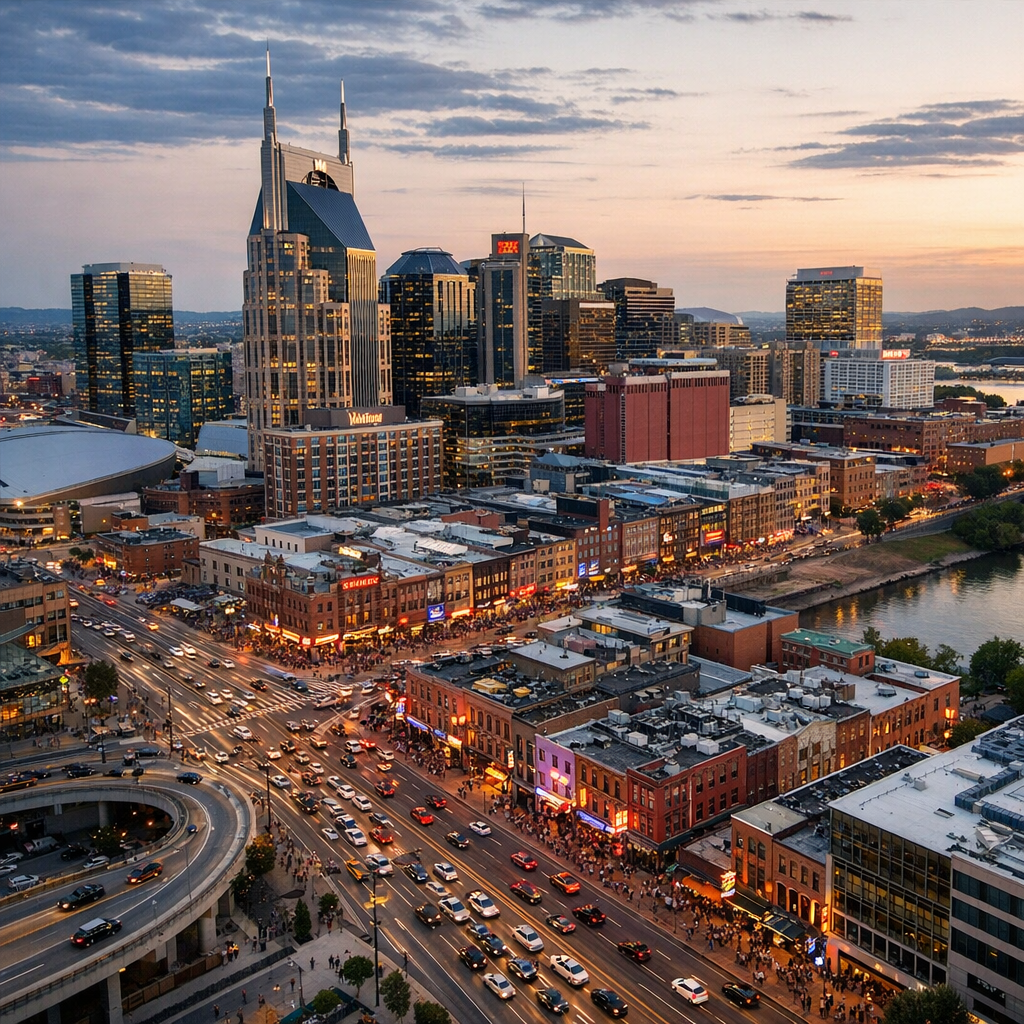
Nashville’s rapid economic expansion serves as a microcosm of broader national trends, reflecting both the opportunities and challenges that come with such growth.
Population Growth and Economic Impact
In recent years, Nashville has experienced significant population increases, with Davidson County adding nearly 9,300 residents in 2025 alone. This surge has positioned the city as a focal point for economic development in Tennessee. The influx of residents has been driven by domestic migration, as individuals from other states are drawn to Nashville’s vibrant economy and cultural scene.
Contributing to this economic vitality, Vanderbilt University and Vanderbilt University Medical Center have made a substantial impact, contributing $22.13 billion annually to the local and state economies. This underscores the pivotal role that educational and medical institutions play in regional economic health.
Infrastructure and Transportation Developments
To accommodate the growing population and enhance the traveler experience, Nashville International Airport (BNA) has embarked on an 18-month Central Core Enhancement project. This $40 million renovation aims to expand terminal entrance areas, ensuring the airport can efficiently handle the projected increase in annual travelers.
Tourism and Major Events
Nashville’s appeal as a tourist destination has been bolstered by hosting major events. The 2025 Liberty Mutual Music City Bowl and the NCAA FCS Championship collectively generated nearly $70 million in economic impact. Looking ahead, the city is set to host the 2030 Super Bowl, an event anticipated to have a monumental economic impact, further solidifying Nashville’s status as a premier sports and entertainment hub.
Housing Market Dynamics
The rapid population growth has also influenced the housing market. Home prices in Nashville have soared, making homeownership increasingly unattainable for many residents. This trend mirrors national patterns observed over the past five years, where urban centers have faced similar challenges in housing affordability.
Conclusion
Nashville’s economic trajectory offers valuable insights into the complexities of urban growth in the United States. While the city reaps the benefits of increased economic activity and cultural prominence, it also faces challenges that require thoughtful planning and policy responses to ensure sustainable and inclusive development.