

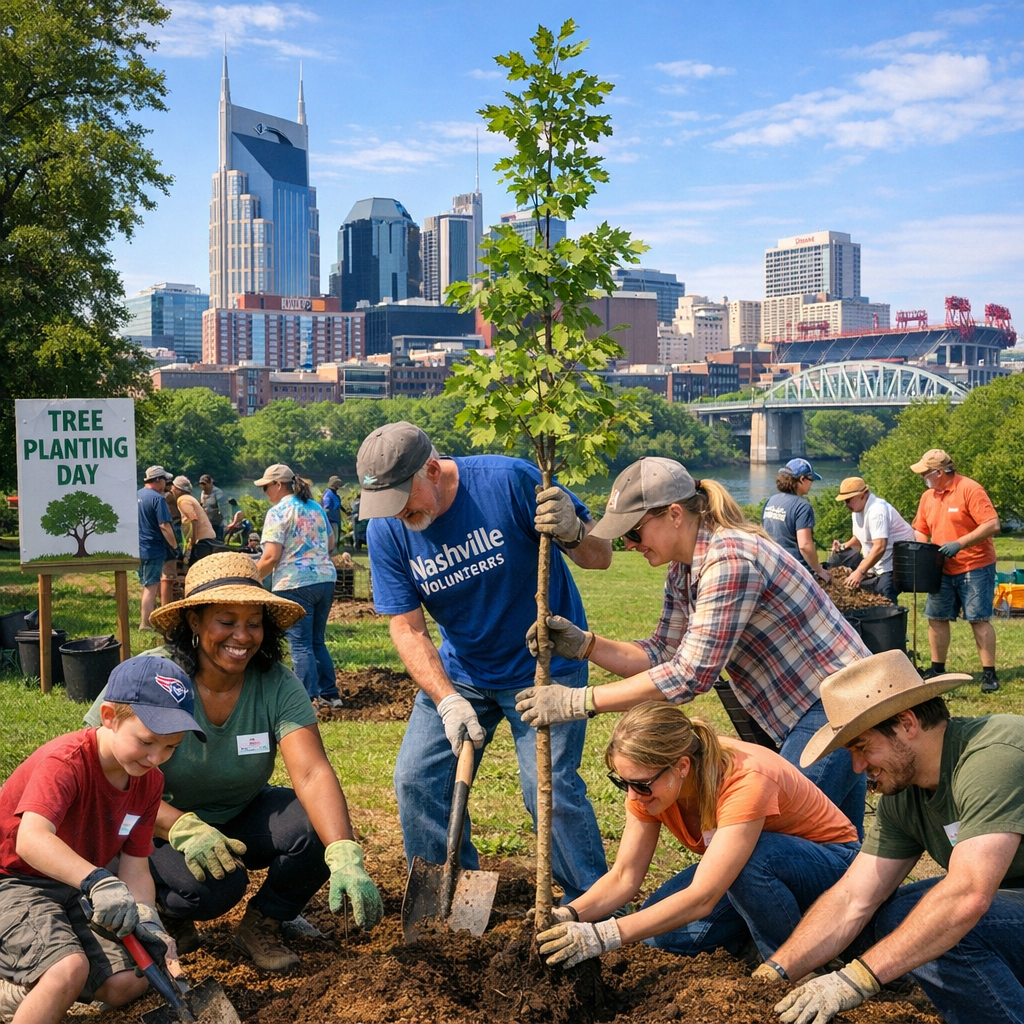
Nashville’s dedication to environmental stewardship is evident through various initiatives aimed at preserving natural resources and promoting sustainability. The city’s natural environment encompasses air, water bodies, plants, animals, forests, and green spaces, all of which provide essential services supporting daily life. Stewardship involves preserving these assets and ensuring responsible use of finite resources.
Major Initiatives
Investing in Our Tree Canopy
Legislation directs that trees on public property should be managed as assets, with regular progress reports. A review panel considers all large-scale removal of trees on Metro property and oversees robust replacement standards. Additionally, a dedicated revenue stream supports tree canopy restoration and maintenance on private properties, fully funding the Root Nashville campaign to plant 500,000 trees by 2050.
Parks and Greenways
A strategic master plan for Metro parks and greenways provides a ten-year vision to sustainably meet Nashville’s needs for park land, greenways, community centers, and sports facilities. Goals and recommendations fall under categories such as Land, Facilities, Programs, Operations, and Funding the Future.
Community Engagement
Organizations like Urban Green Lab teach communities how to live sustainably in Nashville and its surrounding counties. They envision a Nashville where everyone has access to opportunities for learning about sustainable living.
Since 2020, $208,000 has been given back to the community by Centennial Park Conservancy through Nashville Earth Day’s environmental project program. Proceeds have funded the planting of more than 380 trees in various parks and schools, as well as caring for 1.8 million bees residing in hives located in Centennial Park.
Climate Resilience
Climate change is happening, with sea levels rising, baseline temperatures warming, and extreme weather events becoming more frequent and severe. Nashville has experienced increasing risks from severe weather events caused by climate change, including more heat waves, flash floods, high wind events, and severe winter storms. The city is working toward resilience by preparing and adapting communities, built assets, systems, and the environment to withstand severe weather.
Zero Waste Goals
Nashville’s Solid Waste Master Plan aims to achieve 90% diversion of trash from landfills by reducing, reusing, recycling, and composting. The plan includes goals such as increasing recycling, food waste reduction and recovery, and composting throughout Davidson County, as well as adopting recycling and recovery programs targeted towards the growing construction and demolition waste stream.
Through these initiatives, Nashville demonstrates a strong commitment to environmental stewardship, ensuring a sustainable and resilient future for its residents.