

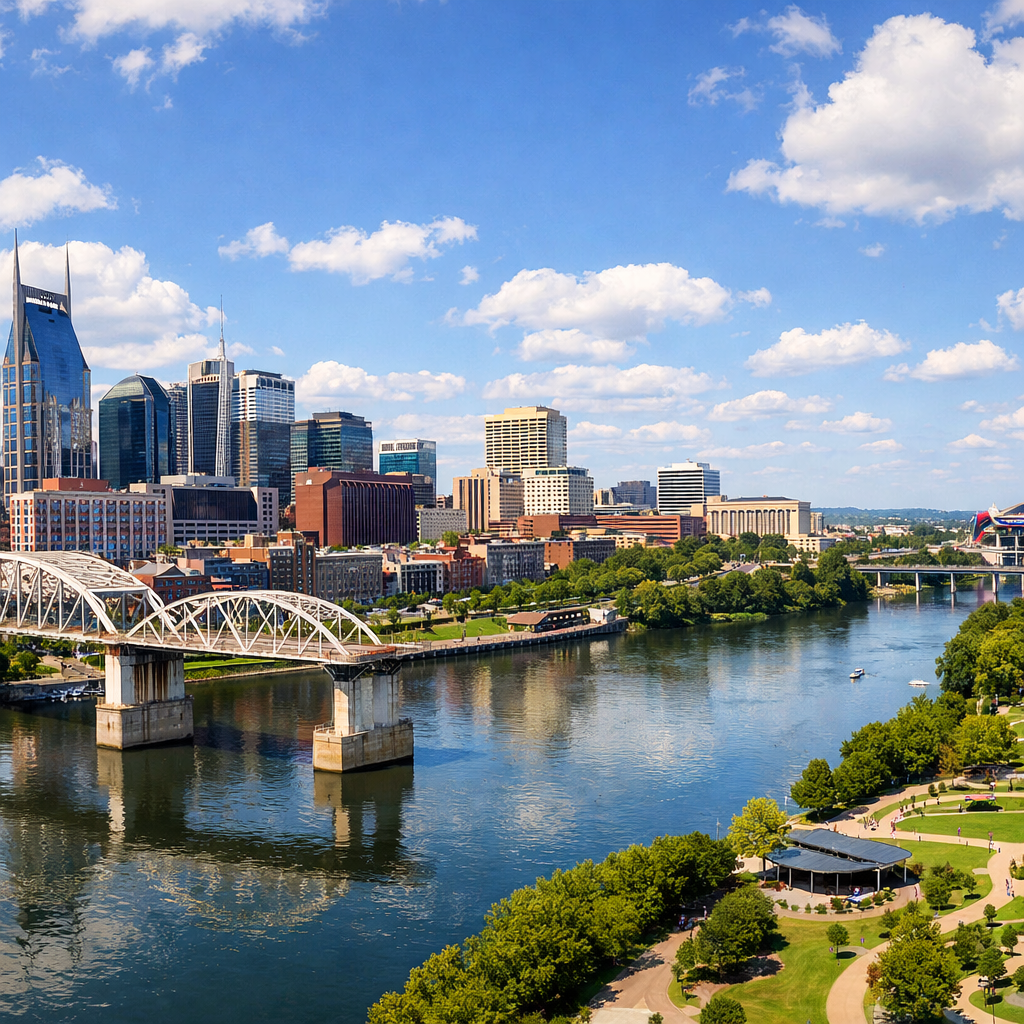
Nashville, Tennessee, experiences a humid subtropical climate, characterized by hot, humid summers and mild to cool winters. This climate influences various aspects of daily life, from outdoor activities to energy consumption.
Seasonal Weather Patterns
Summer
Summers in Nashville are typically hot and humid, with average high temperatures around 89°F (31.3°C) in July. The city often experiences heat waves, which have become more frequent and longer in duration over recent decades. These conditions can pose health risks, particularly for vulnerable populations.
Winter
Winters are generally mild, with average low temperatures around 30.6°F (-0.8°C) in January. Snowfall is occasional, averaging about 2 inches per year. However, cold snaps can occur, bringing freezing temperatures and the potential for ice.
Precipitation
Nashville receives approximately 53.5 inches of precipitation annually, distributed fairly evenly throughout the year. May tends to be the wettest month, while November is typically the driest.
Environmental Considerations
Urban Heat Islands
A significant portion of Nashville’s population resides in urban heat islands—areas where infrastructure like buildings and roads absorb and re-emit heat more than natural landscapes. This effect can lead to higher temperatures in these neighborhoods, exacerbating the impact of heat waves.
Air Quality
Recent reports have highlighted concerns about air quality in Nashville. Elevated levels of fine particulate matter have been detected, which can pose health risks, especially for individuals with respiratory conditions.
Stormwater Management
Stormwater runoff is a concern in urban areas like Nashville. Rainwater can pick up pollutants from streets and lawns, carrying them into local waterways. Residents can help mitigate this issue by adopting practices such as proper disposal of waste and using rain barrels to collect runoff.
Understanding Nashville’s climate and environmental challenges is essential for residents and policymakers alike. By staying informed and proactive, the community can work together to address these issues and promote a healthier, more sustainable environment.