

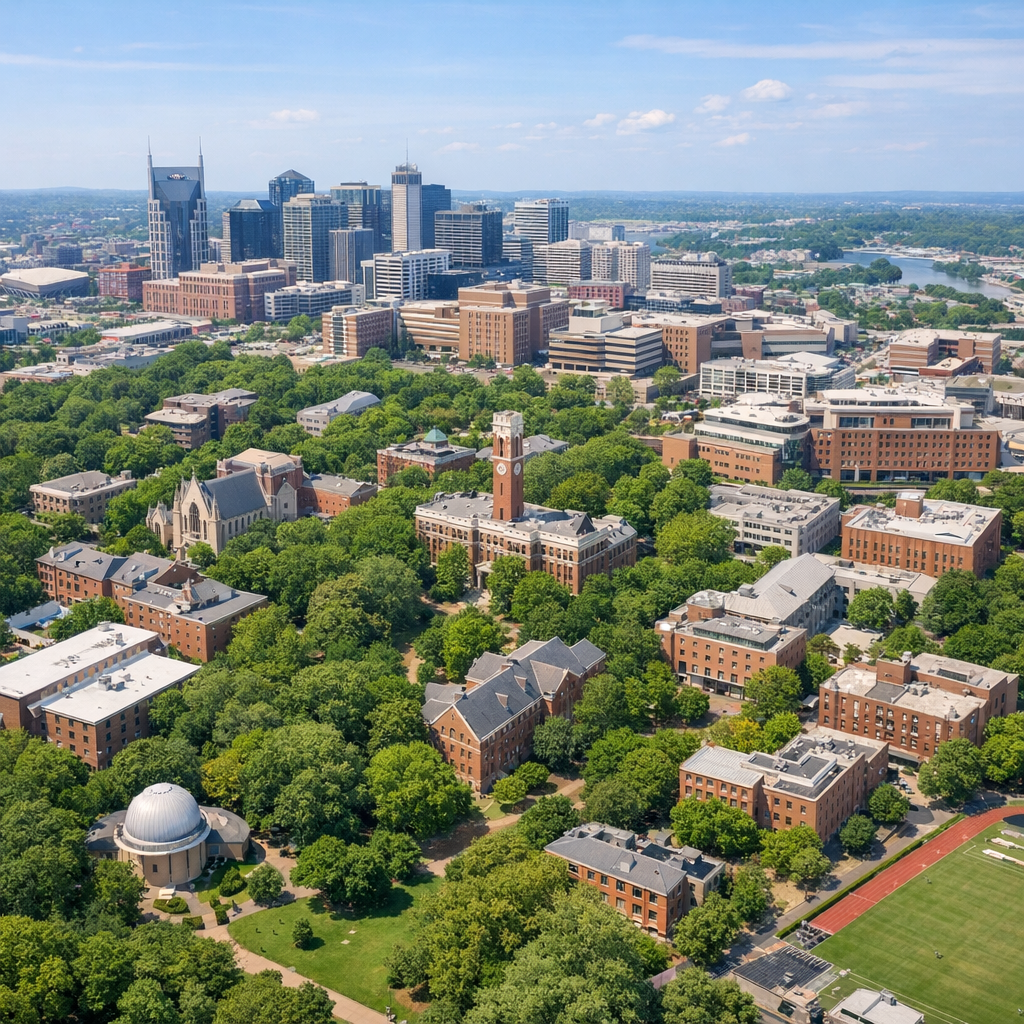
Vanderbilt University and Vanderbilt University Medical Center have long been integral to Nashville’s identity, not only as esteemed institutions of education and healthcare but also as significant economic drivers. Recent analyses reveal that their combined activities contribute a staggering $22.13 billion annually to Tennessee’s economy, highlighting their pivotal role in the state’s financial health.
Employment and Economic Contributions
As the largest private employer in the Nashville area and the second-largest in Tennessee, Vanderbilt’s influence extends far beyond its campus. Together, the university and medical center employ approximately 50,000 individuals, generating around 120,000 jobs in Nashville. This accounts for more than 10% of the city’s total employment, underscoring their substantial impact on the local labor market.
In the fiscal year 2024 alone, their direct spending in Nashville reached $10 billion. This expenditure encompasses payroll, construction, procurement with Tennessee companies, and local spending by students and visitors. Such financial activity supported a total of $7.46 billion in labor income, reflecting the institutions’ significant role in sustaining the city’s economic vitality.
Community Engagement and Development
Beyond economic contributions, Vanderbilt actively engages with the Nashville community through various initiatives. Programs like the Roberts Academy and Dyslexia Center, the Nashville Vanderbilt Scholars Program, and partnerships with local organizations exemplify the university’s commitment to enhancing the region’s quality of life. These efforts not only foster educational and cultural enrichment but also stimulate economic activity by attracting visitors and supporting local businesses.
Visitor Impact and Campus Growth
Vanderbilt’s presence significantly influences Nashville’s tourism sector. In 2024, the university and medical center collectively generated $299 million in visitor spending. Events such as campus tours, sporting events, and medical services draw thousands to the city, bolstering the hospitality and retail industries.
Moreover, Vanderbilt’s investment in campus development has been substantial. Over the past five years, the university has undertaken $1.45 billion in construction projects, including new residence halls and expansions of academic facilities. These developments not only enhance the university’s infrastructure but also create jobs and stimulate the local economy through construction activities and increased demand for services.
Looking Ahead
As Nashville continues to grow and evolve, Vanderbilt’s role as an economic and community pillar remains crucial. The university’s ongoing investments in education, healthcare, and community engagement are poised to further strengthen the city’s economic foundation and enhance the quality of life for its residents.
In conclusion, Vanderbilt University and Vanderbilt University Medical Center are more than academic and healthcare institutions; they are vital engines of economic growth and community development in Nashville. Their contributions underscore the symbiotic relationship between the university and the city, a partnership that continues to drive progress and prosperity in the region.