

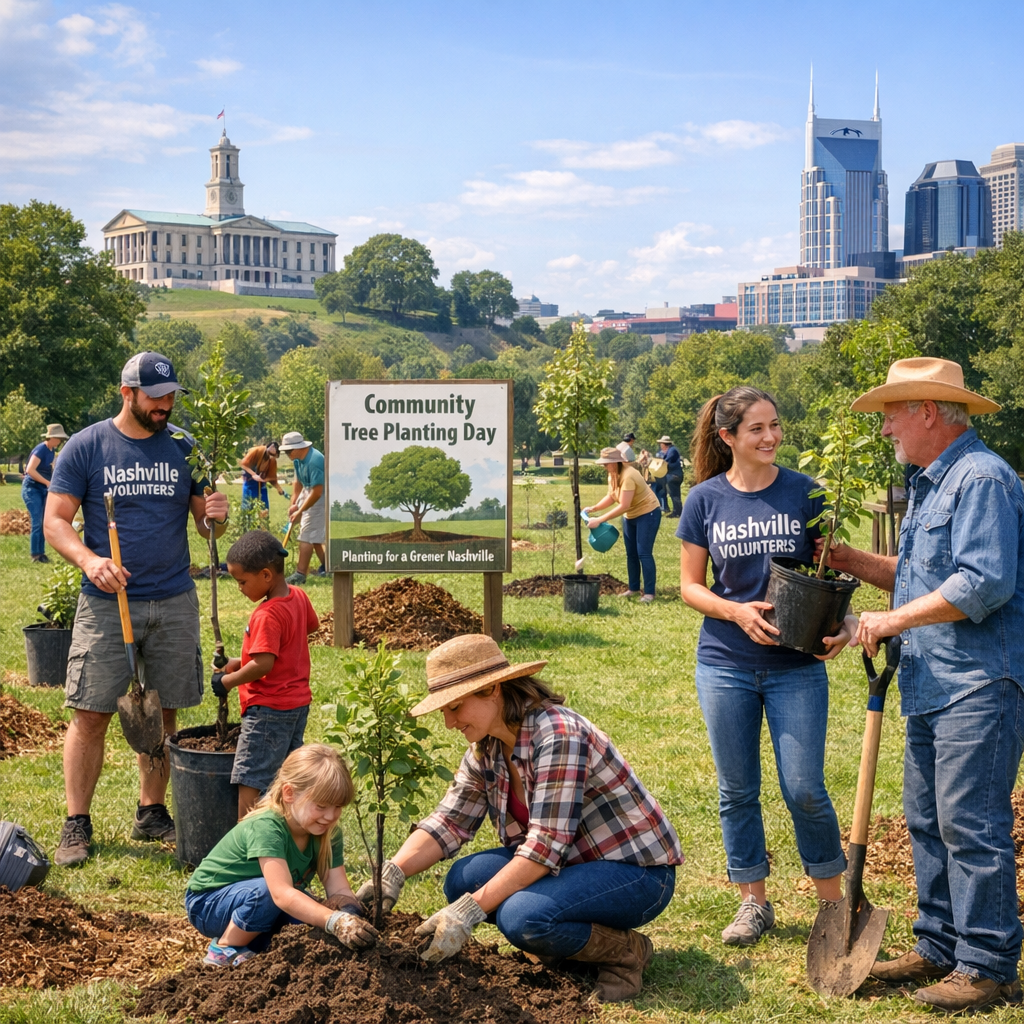
Nashville’s dedication to environmental sustainability is evident through various initiatives and community collaborations. The city’s natural environment, encompassing air, water bodies, plants, animals, forests, and green spaces, provides essential services that support daily life. Preserving these assets ensures responsible use of finite resources and maintains the city’s unique character.
Major Environmental Initiatives
Investing in Our Tree Canopy
Recognizing the importance of urban forestry, Nashville has implemented legislation to manage trees on public property as valuable assets. This includes regular progress reports and a review panel overseeing large-scale tree removals, ensuring robust replacement standards. Additionally, a dedicated revenue stream supports tree canopy restoration on private properties, aiming to plant 500,000 trees by 2050.
Parks and Greenways Expansion
The city’s strategic master plan, adopted in 2017, outlines a ten-year vision to meet Nashville’s needs for parkland, greenways, community centers, and sports facilities. Goals focus on land acquisition, facility development, program enhancement, operational improvements, and sustainable funding.
Community Engagement and Education
Urban Green Lab
Urban Green Lab, a local nonprofit, teaches communities how to live sustainably. Their programs have trained numerous educators and reached nearly half of Davidson County’s zip codes, serving hundreds of organizations. This grassroots approach empowers residents to adopt sustainable practices in their daily lives.
Nashville Earth Day
Since 2020, the Centennial Park Conservancy has managed Nashville Earth Day, donating proceeds to support local environmental projects. These funds have facilitated the planting of over 380 trees in various parks and schools, as well as the introduction of bee hives to promote pollination and biodiversity.
Strategic Planning for Sustainability
Ecological Conservation Strategy
Metro Planning has launched the Ecological Conservation Strategy to assess the health of Nashville’s natural resources and develop an action plan for conservation. This initiative aims to balance growth with the preservation of waterways, forests, hilltops, hillsides, and green spaces.
Climate Adaptation and Resilience Plan
In response to climate change, the Mayor’s Office, in partnership with various departments and the Sustainability Advisory Committee, developed the Climate Adaptation and Resilience Plan. This plan prepares Nashville to withstand climate stressors like heat waves, severe storms, and flash flooding, ensuring the city’s resilience for future generations.
Zero Waste Initiative
In December 2019, Nashville’s Solid Waste Region Board approved a Solid Waste Master Plan aiming to divert 90% of the city’s waste from landfills. The plan focuses on increasing recycling, reducing food waste, and promoting composting throughout Davidson County. Strengthening public education programs encourages residents to refuse, reduce, reuse, recycle, and compost, fostering a culture of sustainability.
Nashville’s commitment to environmental stewardship is a collaborative effort involving government initiatives, nonprofit organizations, and active community participation. By investing in green infrastructure, promoting education, and implementing strategic plans, the city is paving the way for a sustainable future.