

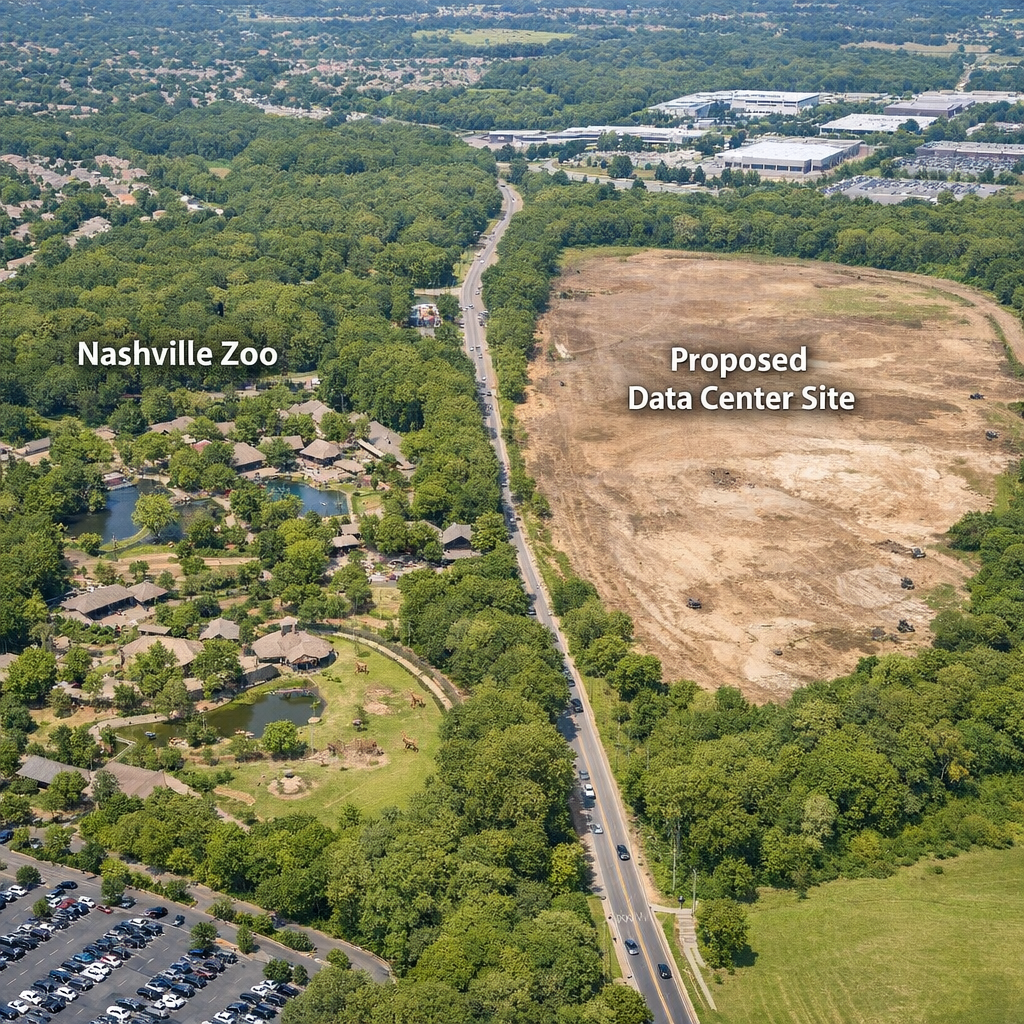
Nashville is at a crossroads, grappling with the rapid expansion of data centers and the accompanying community concerns. The proposed construction of a data center near the Nashville Zoo has ignited a citywide debate on balancing technological advancement with environmental and community well-being.
Community Concerns and Political Response
The planned data center by DC BLOX, situated approximately 50 yards from the Nashville Zoo, has raised alarms among zoo officials and animal rights advocates. They fear that noise and light pollution could adversely affect the zoo’s 3,000 animals, particularly the clouded leopards involved in critical conservation efforts. In response, the zoo initiated a petition that has amassed over 500,000 signatures, reflecting widespread public apprehension.
Political figures have taken note. Mayor Freddie O’Connell has proposed using eminent domain to acquire the land intended for the data center, emphasizing the city’s commitment to protecting community interests. Additionally, a temporary moratorium on new data centers has been introduced in the Metro Council, aiming to pause further developments until comprehensive regulations are established.
Legislative Measures and Future Implications
Metro Councilmember Rollin Horton has proposed legislation to regulate data center development. The proposed measures include stringent application procedures, location restrictions—prohibiting centers over 500,000 square feet in non-industrial zones—and emission controls to prevent on-site power generation that causes emissions. These initiatives underscore the city’s intent to manage growth thoughtfully, ensuring that technological progress does not come at the expense of community and environmental health.
As Nashville navigates this complex issue, the outcome will likely set a precedent for how the city balances economic development with the preservation of its unique community character and environmental resources.