

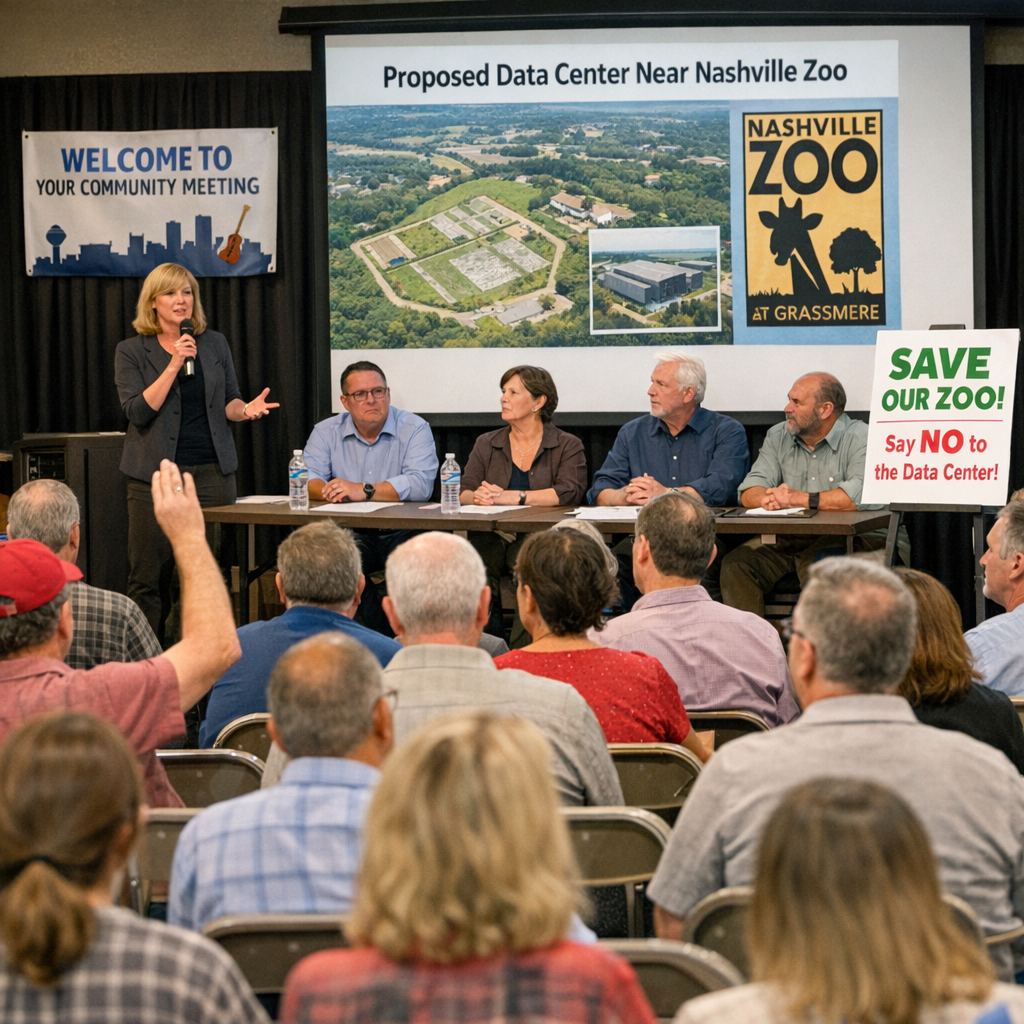
Nashville is at a crossroads, grappling with the rapid expansion of data centers and the accompanying community concerns. The proposed construction of a data center near the Nashville Zoo has ignited a citywide debate on balancing technological advancement with environmental and community well-being.
Community Concerns and Political Response
The Nashville Zoo, home to over 3,000 animals, has voiced strong opposition to the proposed data center by DC BLOX, planned just 50 yards from its boundary. Zoo officials and animal rights advocates are particularly worried about the potential noise and light pollution affecting sensitive species, such as the clouded leopards involved in critical conservation efforts. A petition against the project has garnered over 500,000 signatures, reflecting widespread public concern.
In response, Mayor Freddie O’Connell has taken decisive action by filing eminent domain legislation to acquire the land intended for the data center. This move aims to prevent the construction and address the community’s apprehensions. Additionally, the Metro Council is considering a temporary moratorium on new data centers to allow time for comprehensive regulations to be developed.
Legislative Measures and Future Implications
Metro Councilmember Rollin Horton has proposed legislation introducing stricter regulations for data centers. The proposed measures include application procedures, locational restrictions—prohibiting centers over 500,000 square feet and limiting them to industrial zones—and emission rules banning on-site power generation that causes emissions. These steps aim to ensure that data center development aligns with Nashville’s community values and environmental standards.
As Nashville continues to grow as a technological hub, the city faces the challenge of fostering innovation while preserving the quality of life for its residents and protecting its natural and cultural assets. The outcome of this debate will likely set a precedent for how Nashville navigates future developments in the tech industry.