

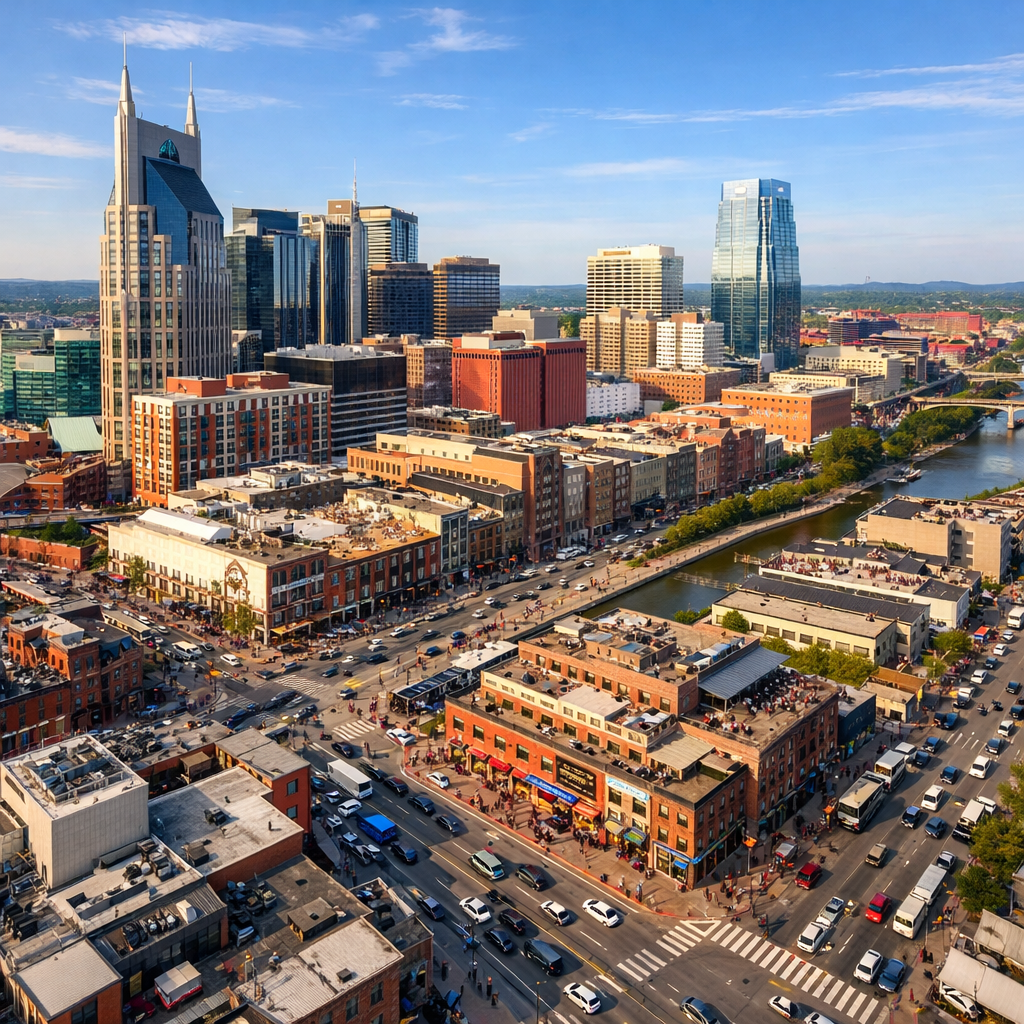
Nashville’s economic landscape has undergone significant transformation in recent years, reflecting broader national trends and underscoring the city’s pivotal role in the U.S. economy.
Population Growth and Economic Implications
In 2025, Nashville, particularly Davidson County, led Tennessee’s population growth by adding nearly 9,300 residents—the highest increase among the state’s 95 counties. This surge presents both challenges and opportunities, including rising home prices, increased traffic, and extensive construction projects. Conversely, it fosters innovation, attracts new businesses, and creates high-paying jobs.
Educational Attainment and Income Disparities
Data from 2024 indicates a strong correlation between higher education and income levels in Nashville. Adults aged 25 or older without a college education earned a median income of $41,393, highlighting the wage gap between high school graduates and those with higher education. This trend aligns with national discussions on the value of higher education and its impact on economic mobility.
Housing Market Dynamics
The COVID-19 pandemic significantly reshaped Nashville’s housing market, leading to soaring home prices driven by low borrowing costs and the rise of remote work. Middle Tennessee experienced some of the sharpest price increases, with areas like East Nashville seeing home values rise by 50% since 2020. This mirrors national real estate trends observed over the past five years.
Immigration Policies and Community Impact
Following a weekend immigration enforcement operation in Nashville targeting predominantly Hispanic neighborhoods, city leaders established a fund to support the affected immigrant community. Mayor Freddie O’Connell criticized state and federal agencies for causing “deep community harm” and emphasized the city’s commitment to inclusivity. This local response reflects broader national debates on immigration policies and their societal impacts.
Climate Change and Extreme Weather Events
Nashville recently faced a peak in extreme heat, with a heat advisory in effect for Middle Tennessee. This heat wave is part of a broader trend affecting cities nationwide, with experts linking the increasing frequency and severity of such events to human-induced climate change. Vulnerable populations, including those with pre-existing health conditions and individuals without access to air conditioning, are particularly at risk.
Political Shifts and Electoral Outcomes
The recent U.S. House District 7 special election in Tennessee sparked significant political reactions, particularly among Democrats, who are optimistic following a closer-than-expected loss. Democratic candidate Behn lost to Republican Matt Van Epps by under nine percentage points, marking substantial progress in a traditionally Republican stronghold. This performance energizes Democrats ahead of future races and reflects shifting political dynamics at both state and national levels.
Institutional Contributions to Economic Development
Vanderbilt University and Vanderbilt University Medical Center made a $22.13 billion annual economic impact on Nashville and Tennessee in 2024. As the largest private employer in the Nashville area and the second-largest in Tennessee, Vanderbilt’s contributions stem from institutional spending, local spending by students and visitors, and economic development through labor force and research commercialization. This underscores the significant role of educational and medical institutions in regional and national economies.
Major Events and Economic Projections
Nashville is planning to invest $60 million into hosting Super Bowl LXIV, expecting a substantial return on investment. The event could generate $386 million in direct spending for Tennessee and approximately $706 million in total economic impact. While such projections are optimistic, some economists caution that actual financial benefits may vary. This initiative highlights the potential economic benefits and challenges associated with hosting major national events.
Public Safety and Crime Trends
Despite calls for deploying the National Guard in Nashville, violent crime in the city has declined. In the first eight months of 2025, fatal shootings decreased by 30.8%, and overall violent crime dropped by 12.5%. This trend aligns with increased police funding and reflects broader national discussions on public safety and crime prevention strategies.
Trade Policies and Local Economies
Nashville’s economy has felt the effects of national trade policies, particularly the trade tensions between the U.S. and Canada. The city’s tourism industry, which relies heavily on Canadian visitors, has experienced a decline in Canadian tourists. This situation illustrates how international trade policies can have localized economic impacts, affecting industries dependent on cross-border relations.
Transportation Initiatives and Urban Development
In October 2025, Nashville announced $104 million in funding for transit projects under the “Choose How You Move” program. This includes sidewalk improvements, smart signals at over 100 intersections, and enhancements to public transportation. By January 2026, the city’s public transit system added 12 new buses, resulting in a 7.3% increase in ridership from the previous year. These developments reflect a growing national emphasis on sustainable urban transportation solutions.
Nashville’s economic and social developments serve as a microcosm of broader national trends, highlighting the interconnectedness of local and national dynamics in shaping the city’s future.