

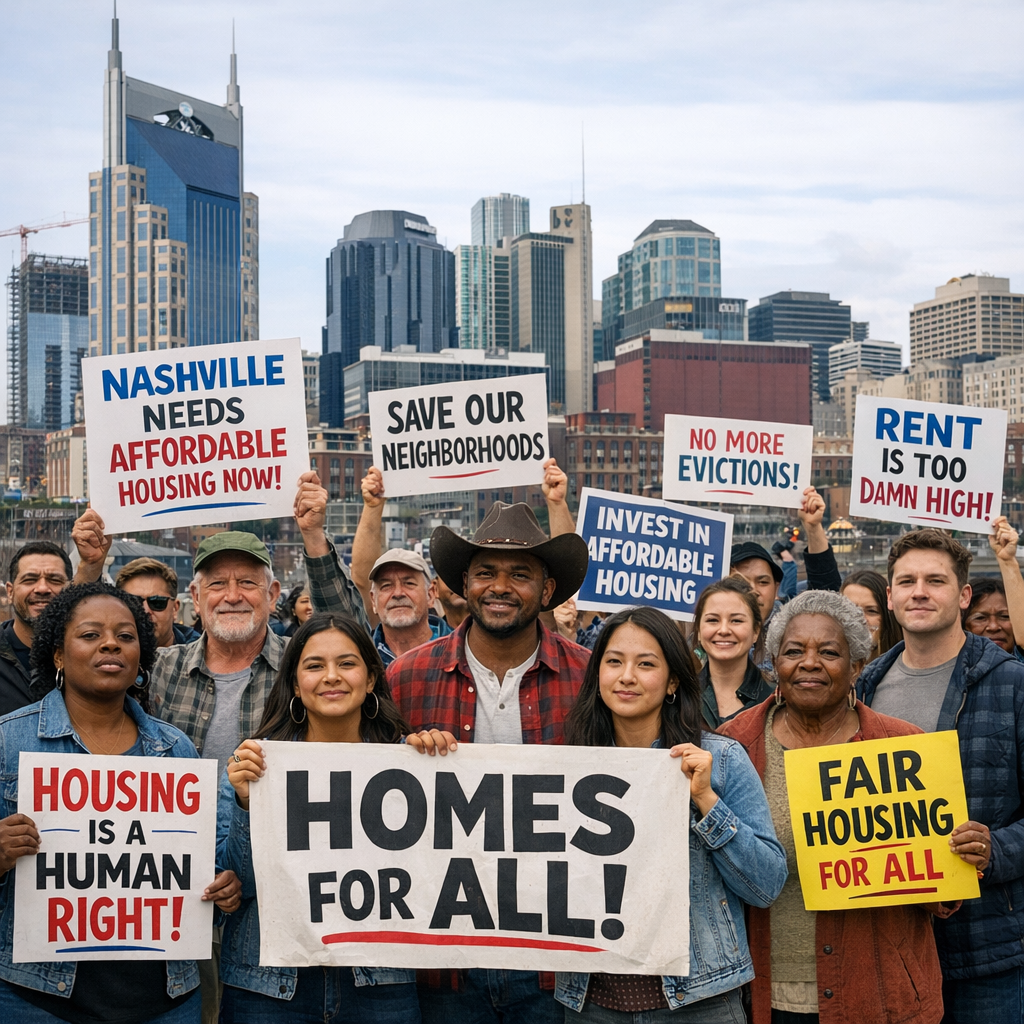
Nashville’s rapid growth has brought prosperity to many, but it has also intensified housing affordability challenges for a significant portion of its residents. Recent studies and surveys paint a concerning picture of the city’s housing landscape.
Widespread Affordability Concerns
A Vanderbilt University poll revealed that 82% of Nashville residents feel they cannot afford to purchase a home in Davidson County. This sentiment underscores the widening gap between income levels and housing costs, making homeownership an elusive goal for many.
Disproportionate Impact on Black and Hispanic Families
The housing crisis has hit Black and Hispanic communities particularly hard. A comprehensive study found that Black families can afford median-valued homes in only 0.8% of Nashville’s 481 neighborhoods, while Hispanic families fare slightly worse at 0.6%. These statistics highlight the enduring effects of historical discriminatory practices and the pressing need for equitable housing solutions.
Economic Implications and Community Response
The affordability crisis is not just a housing issue; it has broader economic implications. Residents are increasingly prioritizing economic concerns, with 43% emphasizing the need to attract good jobs—a significant rise from 18% the previous year. This shift indicates a growing unease about the city’s economic trajectory and the challenges of maintaining a diverse and inclusive community.
In response, local leaders have initiated efforts to address these challenges. Mayor Freddie O’Connell has emphasized the importance of sustainable investment in Nashville’s infrastructure and community services. Additionally, organizations like Metro Social Services have released reports highlighting the socio-economic disparities and are working towards targeted interventions to support affected communities.
Looking Ahead
As Nashville continues to grow, it is imperative for policymakers, community leaders, and residents to collaborate on solutions that ensure housing affordability and economic opportunities for all. Addressing these challenges is crucial to preserving the city’s vibrant and diverse character.