

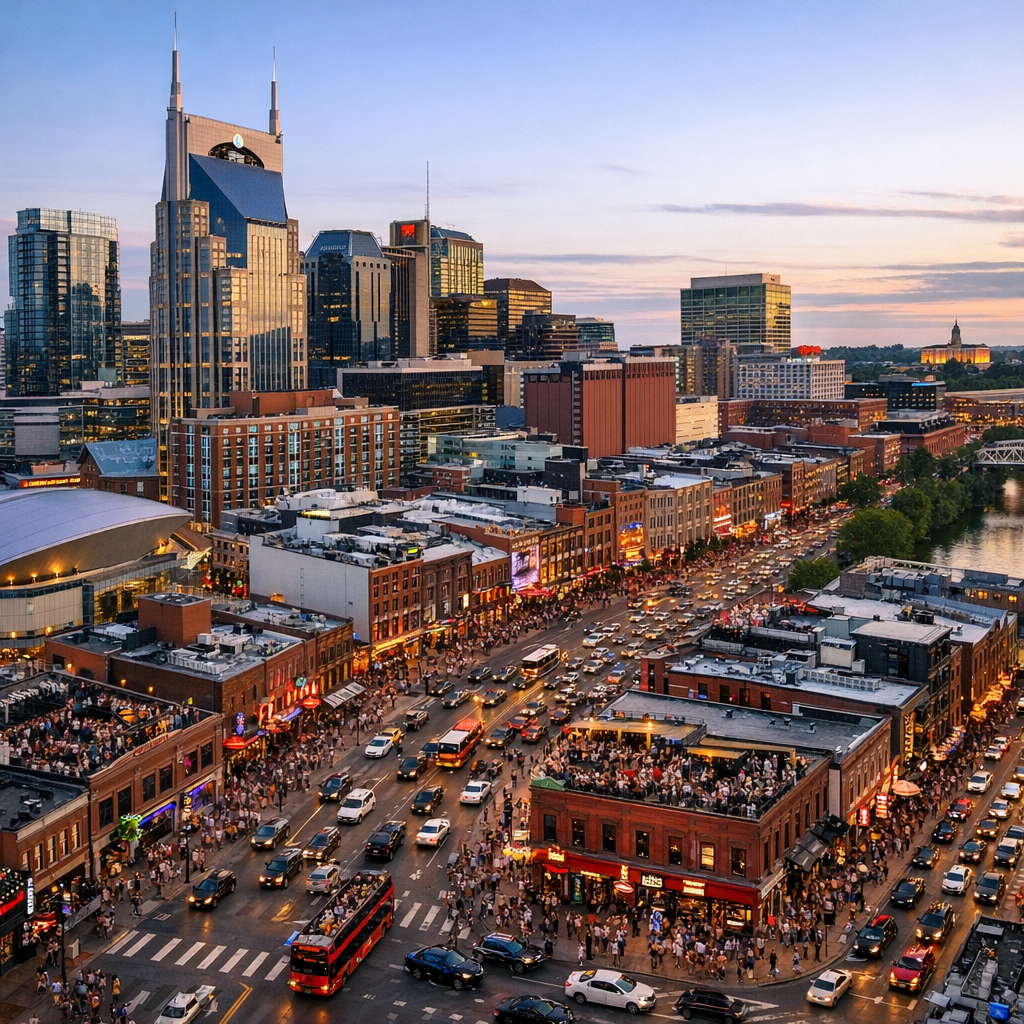
Nashville’s economic trajectory offers a compelling reflection of broader national trends, underscoring the city’s integral role in the U.S. economy.
Population Growth and Migration
Recent data indicates that Nashville’s metropolitan area has experienced significant population growth, surpassing 2 million residents during the pandemic. This surge is largely attributed to domestic migration, with individuals relocating from other states seeking economic opportunities and a higher quality of life. Notably, international migration has also played a role, contributing to the city’s diverse demographic landscape.
Educational Attainment and Income
In line with national patterns, Nashville residents with higher educational attainment tend to earn more. Census data reveals that adults aged 25 or older without a college education have a median income of $41,393. This wage gap highlights the importance of higher education in achieving economic prosperity, a trend observed across the United States.
Institutional Economic Impact
Vanderbilt University and Vanderbilt University Medical Center significantly contribute to Nashville’s economy. Together, they have an annual economic impact of $22.13 billion on the city and state. As the largest private employer in the Nashville area, Vanderbilt’s influence extends beyond education and healthcare, affecting various sectors of the local economy.
Housing Market Dynamics
The COVID-19 pandemic has reshaped Nashville’s housing market, mirroring national trends. Historically low borrowing costs and the rise of remote work have led to a surge in home prices, making homeownership less attainable for many residents. This phenomenon reflects similar challenges faced by cities nationwide.
Climate and Environmental Concerns
Nashville has experienced extreme heat events, with heat advisories issued for Middle Tennessee. These conditions are part of a broader trend affecting cities across the country, with experts linking the increasing frequency and severity of heat waves to human-induced climate change.
Immigration Enforcement and Community Response
Following immigration enforcement operations targeting predominantly Hispanic neighborhoods, Nashville city leaders established a fund to support the affected immigrant community. This response underscores the city’s commitment to inclusivity and reflects broader national conversations about immigration policies and their local impacts.
Conclusion
Nashville’s economic and social developments serve as a microcosm of national trends, highlighting the interconnectedness of local and national dynamics. As the city continues to grow and evolve, it remains a significant player in the broader U.S. economic landscape.