

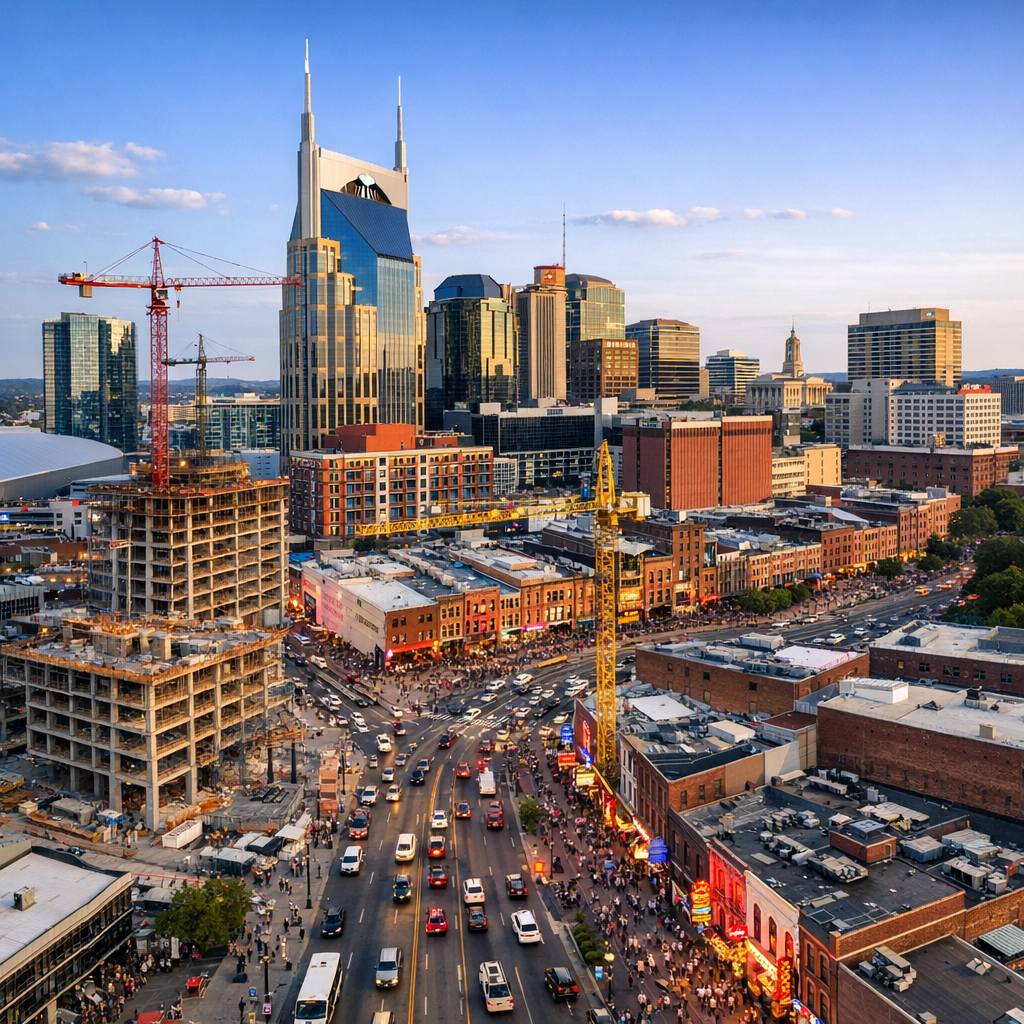
Nashville has long been celebrated for its vibrant music scene and rich cultural heritage. However, in recent years, our city has also emerged as a significant economic powerhouse, reflecting broader national trends and policies.
Population Growth and Economic Expansion
In 2025, Nashville, particularly Davidson County, led Tennessee’s population growth by adding nearly 9,300 residents—the highest increase among the state’s 95 counties. This surge underscores the city’s appeal and the challenges that come with rapid expansion, such as rising home prices, increased traffic, and extensive construction projects.
Educational Attainment and Income Levels
Education remains a key driver of economic success in our community. Data from 2024 indicates that Nashville residents with a college education consistently out-earned their peers. The median income for adults aged 25 or older without a college degree was $41,393, highlighting the importance of higher education in achieving financial stability.
Vanderbilt University’s Economic Impact
Vanderbilt University and Vanderbilt University Medical Center have been instrumental in Nashville’s economic landscape. Between 2019 and 2024, these institutions contributed a staggering $22.13 billion to the city’s and state’s economies. Their influence extends beyond direct spending, encompassing job creation, research commercialization, and community engagement.
Housing Market Transformation
The COVID-19 pandemic significantly reshaped Nashville’s housing market. Historically low borrowing costs and the rise of remote work led to a homebuying boom, causing home prices to soar. This trend has made homeownership increasingly unattainable for many residents, prompting a shift toward suburban areas in search of affordability.
Preparing for the Super Bowl
Looking ahead, Nashville is gearing up to host Super Bowl LXIV in 2030. The city plans to invest $60 million into the event, anticipating a substantial return on investment. Projections estimate $386 million in direct spending and a total economic impact of $706 million, marking it as potentially the most lucrative event Nashville has ever hosted.
As we navigate these developments, it’s crucial for our community to stay informed and engaged. Understanding the interplay between national policies and local dynamics will empower us to make decisions that foster sustainable growth and prosperity for all Nashvillians.