

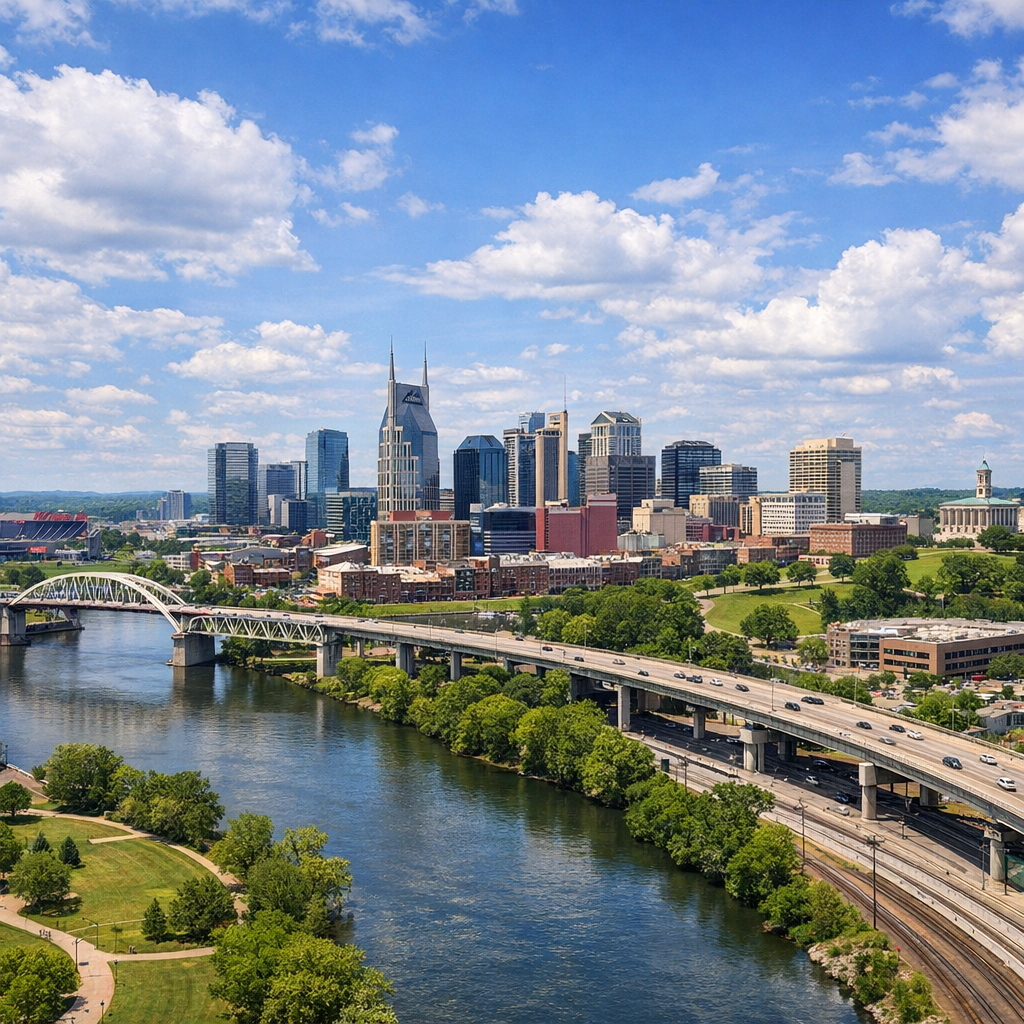
Nashville, Tennessee, experiences a humid subtropical climate, characterized by hot, humid summers and mild to cool winters. This climate classification, known as Cfa in the Köppen system, influences the city’s weather patterns and seasonal variations.
Seasonal Temperature Variations
Throughout the year, Nashville’s temperatures fluctuate significantly. The coldest month is January, with average low temperatures around 30°F (-1°C), while July stands as the warmest month, boasting average highs near 89°F (32°C). These variations contribute to the city’s distinct seasonal experiences.
Precipitation Patterns
Rainfall in Nashville is fairly evenly distributed across the year, totaling approximately 54 inches (1,370 mm) annually. May typically emerges as the wettest month, while August tends to be drier. Snowfall is occasional, averaging about 2 inches (5 cm) per year, primarily occurring between November and February.
Environmental Considerations
Recent reports have highlighted environmental challenges in the Nashville area. The American Lung Association’s 2026 “State of the Air” report indicates that the Nashville-Davidson–Murfreesboro metro area received an F grade for ozone smog, affecting over 400,000 children in Tennessee. However, the same report notes that four counties in the metro area earned A grades for daily particle pollution, ranking the area among the nation’s cleanest cities in that regard.
Additionally, urban heat islands—areas with higher temperatures due to infrastructure and reduced green spaces—affect a significant portion of Nashville’s population. Approximately 71% of residents live in these heat-prone neighborhoods, which can exacerbate the effects of extreme heat, particularly during the summer months.
Adapting to Climate Trends
Understanding Nashville’s climate patterns is essential for residents and visitors alike. By staying informed about seasonal changes and environmental factors, individuals can better prepare for weather-related challenges and contribute to ongoing efforts to address environmental concerns in the community.