

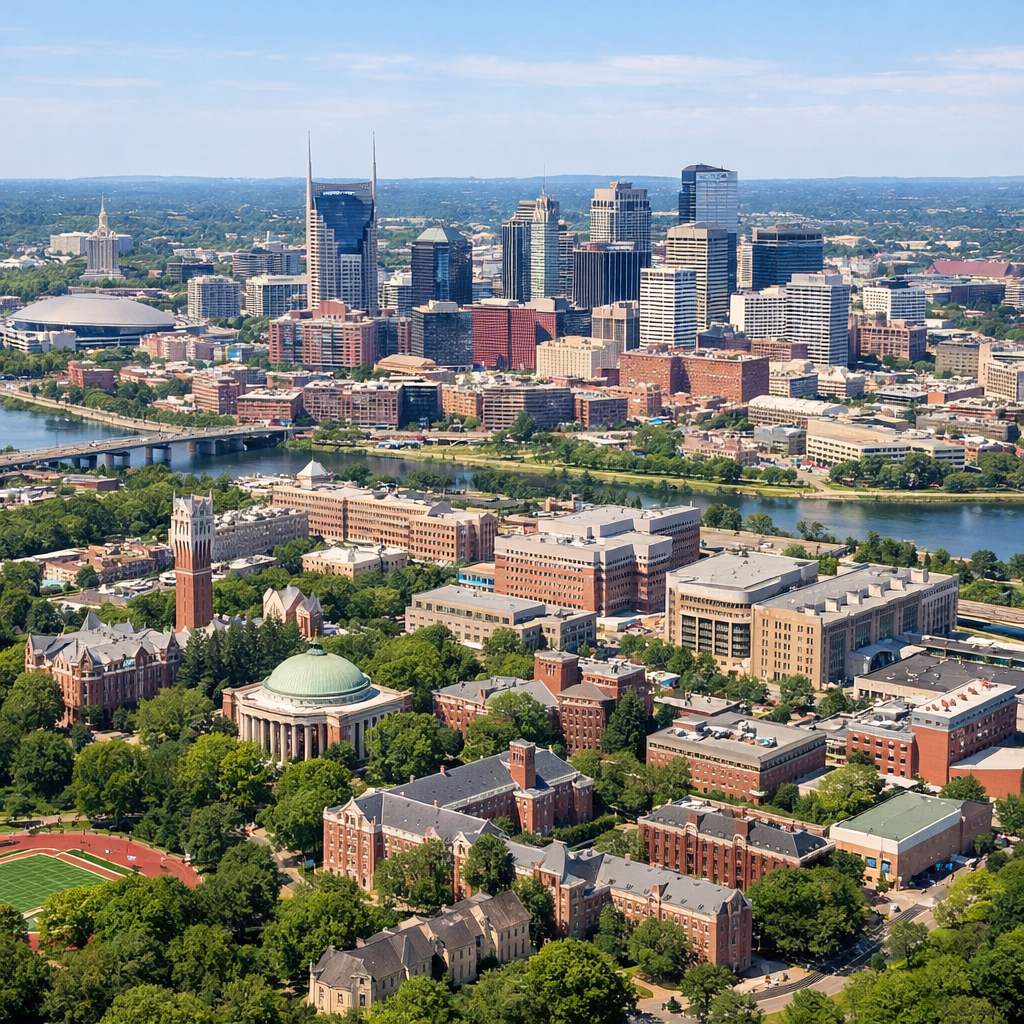
Nashville’s economic landscape continues to flourish, even as national policies undergo significant transformations. The city’s resilience is evident in various sectors, from education to housing and beyond.
Vanderbilt University’s Economic Impact
Vanderbilt University and Vanderbilt University Medical Center have been pivotal in bolstering Nashville’s economy. Between 2019 and 2024, these institutions contributed a staggering $22.13 billion to the city’s and state’s economies. As the largest private employer in the Nashville area and the second-largest in Tennessee, Vanderbilt’s influence extends beyond academia, shaping the region’s economic and social fabric.
Population Growth and Housing Market Dynamics
In recent years, Nashville has experienced significant population growth, particularly in Davidson County, which added nearly 9,300 residents in 2025 alone. This surge has led to a booming housing market, with home prices soaring due to increased demand. While this growth presents opportunities, it also poses challenges such as rising home prices and increased traffic congestion.
Education and Income Correlation
Data from 2024 highlights the strong correlation between higher education and income levels in Nashville. Adults aged 25 or older without a college education earned a median income of $41,393, underscoring the economic advantages of pursuing higher education. Programs like Tennessee Reconnect aim to bridge this gap by offering tuition-free community or technical college education to residents aged 25 and older.
Immigration Policies and Community Response
National immigration policies have had tangible effects on Nashville’s communities. Following immigration enforcement operations in predominantly Hispanic neighborhoods, city leaders established the “Belonging Fund” to support affected residents. This initiative provides assistance with child care, transportation, housing, and food insecurity, reflecting Nashville’s commitment to inclusivity and support for its diverse population.
Climate Challenges and Infrastructure
Extreme weather events, such as heatwaves and flooding, have tested Nashville’s infrastructure and emergency response systems. These incidents highlight the need for continued investment in resilient infrastructure and proactive planning to mitigate the impacts of climate change on the city’s residents and economy.
In conclusion, Nashville’s economic growth and resilience amidst national policy shifts underscore the city’s dynamic nature. By leveraging its educational institutions, addressing housing challenges, supporting its diverse communities, and investing in infrastructure, Nashville continues to thrive and adapt in an ever-changing national landscape.