

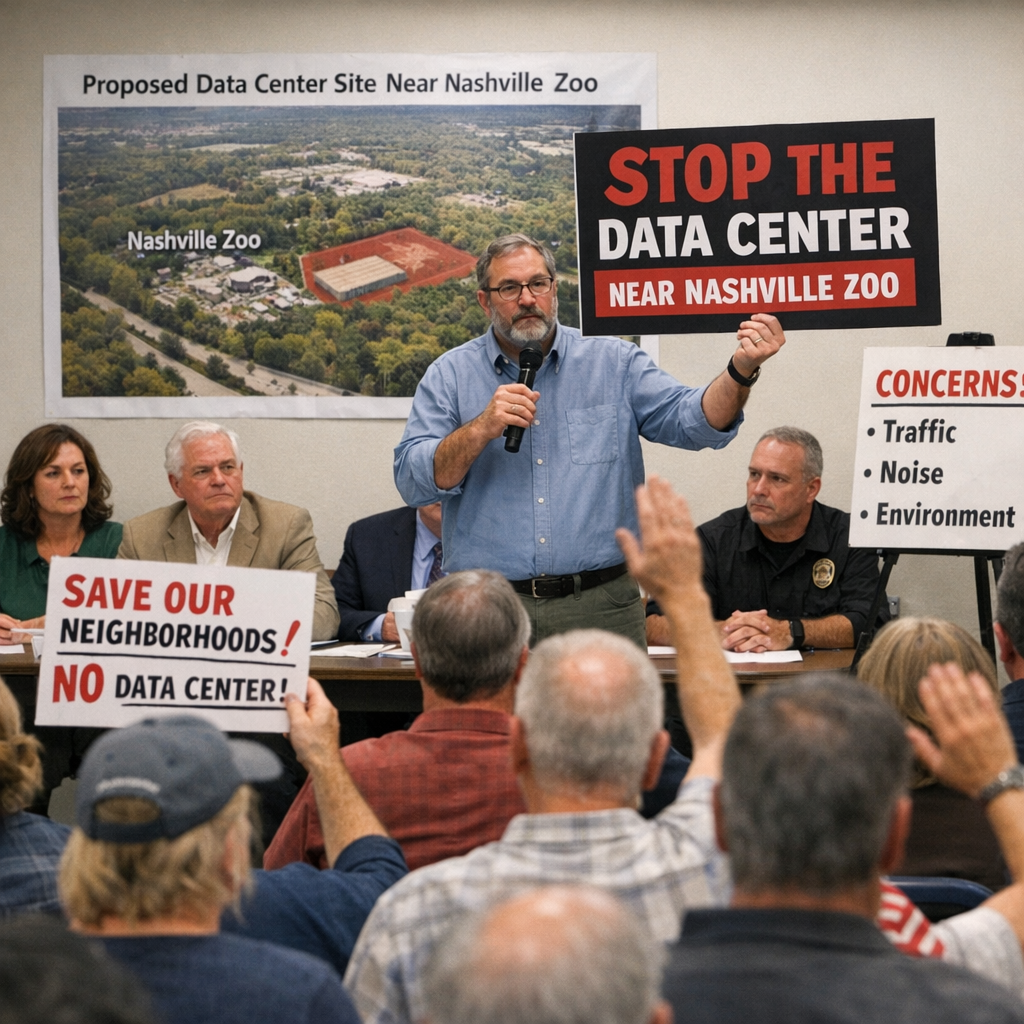
Nashville is currently at the center of a significant debate regarding the development of data centers within the city. As technology companies seek to expand their infrastructure, local communities and officials are grappling with the implications of these projects on neighborhoods and public spaces.
Proposed Data Centers Near Sensitive Areas
One of the most contentious proposals involves a data center planned by DC Blox near the Nashville Zoo. The proximity of this facility has raised alarms among zoo officials and animal welfare advocates, who fear that noise and light pollution could adversely affect the well-being of the zoo’s 3,000 animals, including species involved in critical conservation efforts. The zoo has initiated a petition opposing the project, which has garnered substantial public support.
Community and Political Response
The opposition to the DC Blox project has resonated beyond the immediate vicinity of the zoo. Mayor Freddie O’Connell has taken a firm stance by filing eminent domain legislation to acquire the land intended for the data center, citing a legitimate public need and widespread community concerns. Additionally, the Metro Council has passed a temporary moratorium on new data centers, reflecting the city’s cautious approach to such developments.
Broader Implications and Future Considerations
The debate over data center siting in Nashville underscores the challenges cities face in balancing technological advancement with community well-being. While data centers are essential for supporting the digital economy, their placement near residential areas and public attractions necessitates careful consideration. The city’s actions, including the moratorium and potential land acquisition, highlight a proactive approach to urban planning that prioritizes the interests of its residents.
As Nashville continues to grow, it will be crucial for city officials, developers, and community members to engage in open dialogue to ensure that infrastructure projects align with the city’s values and the needs of its diverse population.