

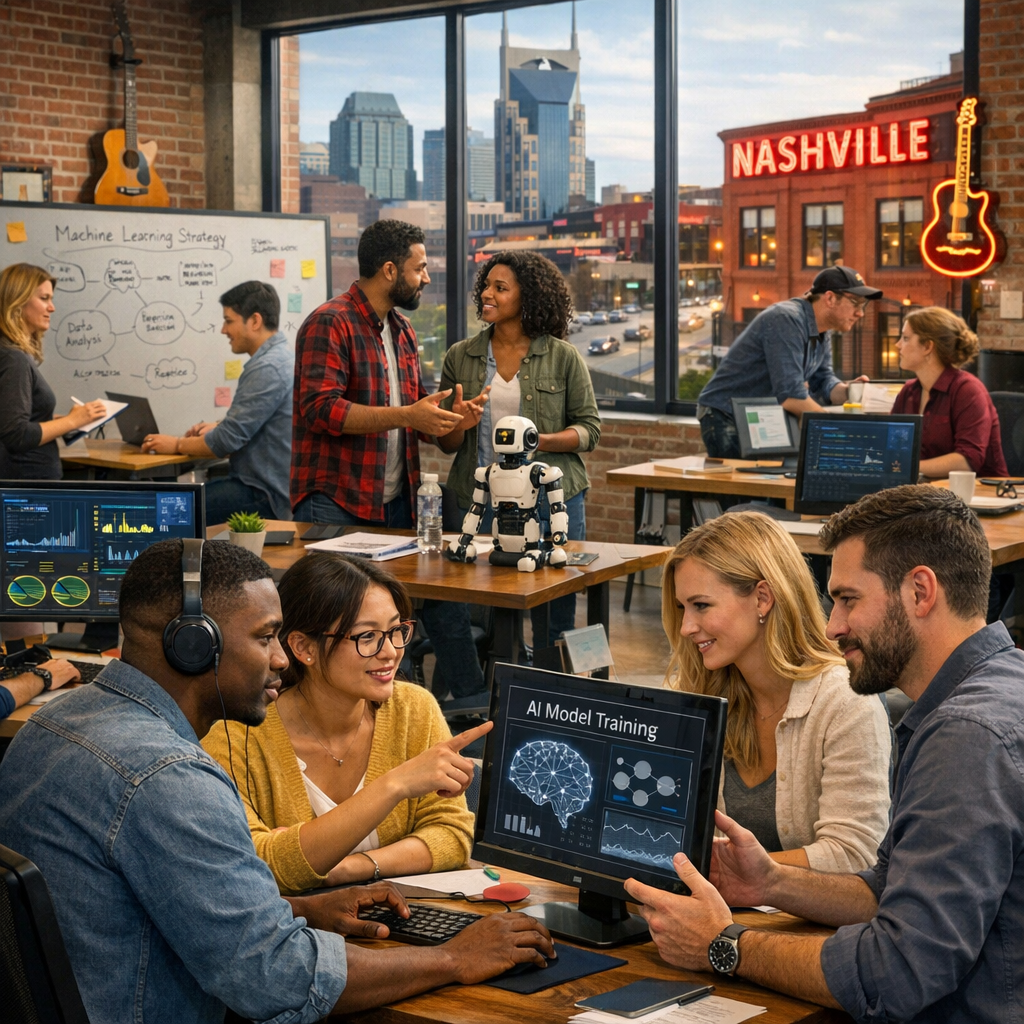
Nashville, traditionally celebrated for its rich musical heritage, is rapidly emerging as a hub for artificial intelligence (AI) innovation. This transformation is evident in the rise of local AI startups, the integration of AI into various industries, and the community’s active engagement with the implications of these advancements.
Emerging AI Startups
The city’s tech ecosystem is witnessing a surge in AI-focused startups. Companies like Music City AI are tailoring AI solutions for essential local businesses, offering services ranging from 24/7 emergency call handling for HVAC and plumbing sectors to appointment scheduling for medical practices. Their commitment to understanding and addressing the unique needs of Nashville’s industries underscores the city’s personalized approach to technology adoption.
Another notable player is ViNIL, a startup dedicated to combating the proliferation of deepfake content. By enabling musicians and celebrities to certify AI-generated media created with their consent, ViNIL aims to protect artists’ rights and maintain the integrity of digital content. This initiative reflects Nashville’s proactive stance in addressing the challenges posed by AI in the entertainment sector.
AI Integration in Daily Life
Beyond startups, established companies are embedding AI into their operations. For instance, Autonomous Agent AI partners with local businesses to deliver AI integrations that drive growth, emphasizing the importance of technology in staying competitive in Nashville’s dynamic market.
Moreover, the city’s healthcare sector is leveraging AI to enhance patient care and operational efficiency. Companies like Contessa Health are utilizing AI to power home-based hospital programs, a model that gained prominence during the pandemic and continues to evolve.
Community Engagement and Challenges
As AI becomes more prevalent, the Nashville community is actively engaging with its implications. A recent controversy involves the proposed construction of a 69,000-square-foot data center adjacent to the Nashville Zoo. The zoo, concerned about potential threats to animal welfare due to noise and light pollution, launched a petition that garnered over 375,000 signatures within a week. This situation highlights the community’s vigilance in balancing technological advancement with environmental and ethical considerations.
Additionally, the introduction of Waymo’s self-driving robotaxi service, in partnership with Lyft, is set to commence in 2026. While this initiative promises to revolutionize urban transportation, it also raises questions about safety, job displacement, and regulatory frameworks. The community’s response to such developments will shape the trajectory of AI integration in public services.
Looking Ahead
Nashville’s journey into the AI era is marked by innovation, collaboration, and thoughtful discourse. The city’s ability to harness AI’s potential while addressing its challenges will determine how technology reshapes the local landscape. As residents, staying informed and engaged will be crucial in navigating this evolving terrain.