

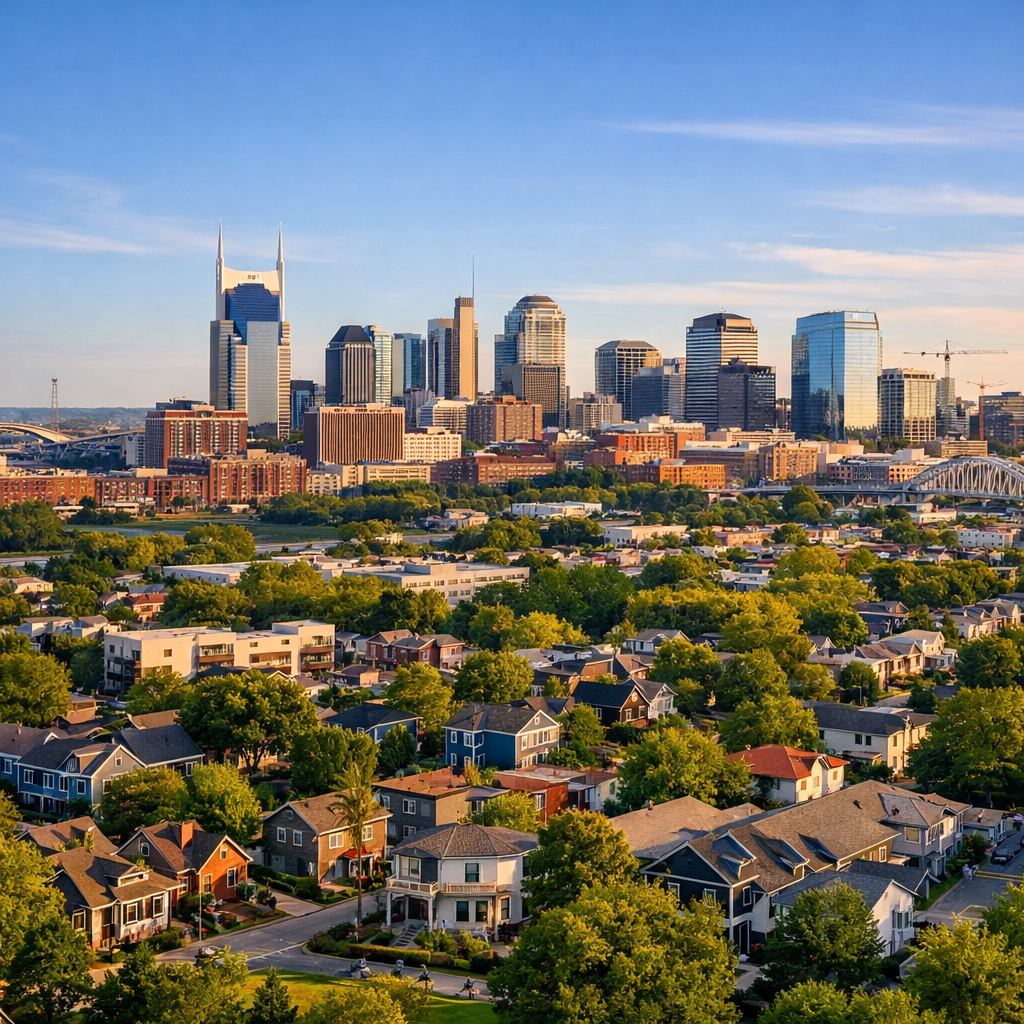
Nashville’s real estate market is undergoing significant changes, presenting both challenges and opportunities for buyers and sellers alike. Understanding these shifts is crucial for making informed decisions in this dynamic environment.
Market Trends
Recent data indicates a cooling in Nashville’s housing market. The average home value has decreased by 3.3% over the past year, settling at $436,603 as of June 2026. Homes are now going under contract in approximately 25 days, reflecting a more balanced market compared to previous years. Source
Inventory levels have also seen a notable increase. In May 2026, active listings rose by 12.3% year-over-year, reaching 3,378 properties. This surge provides buyers with more options and has contributed to a slight dip in median list prices. Source
Emerging Neighborhoods
As affordability becomes a pressing concern, areas like Antioch (ZIP code 37013) have gained popularity. In 2025, Antioch led the city with 1,121 home sales, marking its third consecutive year at the top. The area’s growth is bolstered by new amenities and its relative affordability compared to other parts of Nashville. Source
Similarly, neighborhoods such as Madison and Bordeaux are experiencing increased interest. With median home prices significantly lower than the city average, these areas offer attractive options for first-time buyers and those seeking more affordable housing. Source
Development Projects
Several development projects are set to reshape Nashville’s landscape. The East Bank is slated to receive $300 million in funding for utilities infrastructure and new parks, enhancing the area’s appeal. Key developments include a new Tennessee Titans stadium and a mixed-use project by the Fallon Company. Source
In Belle Meade, the upcoming 1 Iris Lane project will introduce luxury condos starting at $2.5 million. This development is part of a larger redevelopment plan that includes a boutique hotel and public green spaces, catering to the city’s growing demand for high-end living. Source
Conclusion
Nashville’s real estate market is in a state of flux, with increasing inventory and shifting demand patterns. For potential buyers, this means more choices and potential negotiating power. Sellers, on the other hand, may need to adjust strategies to align with current market conditions. Staying informed about these trends is essential for navigating the evolving landscape of Nashville’s housing market.