

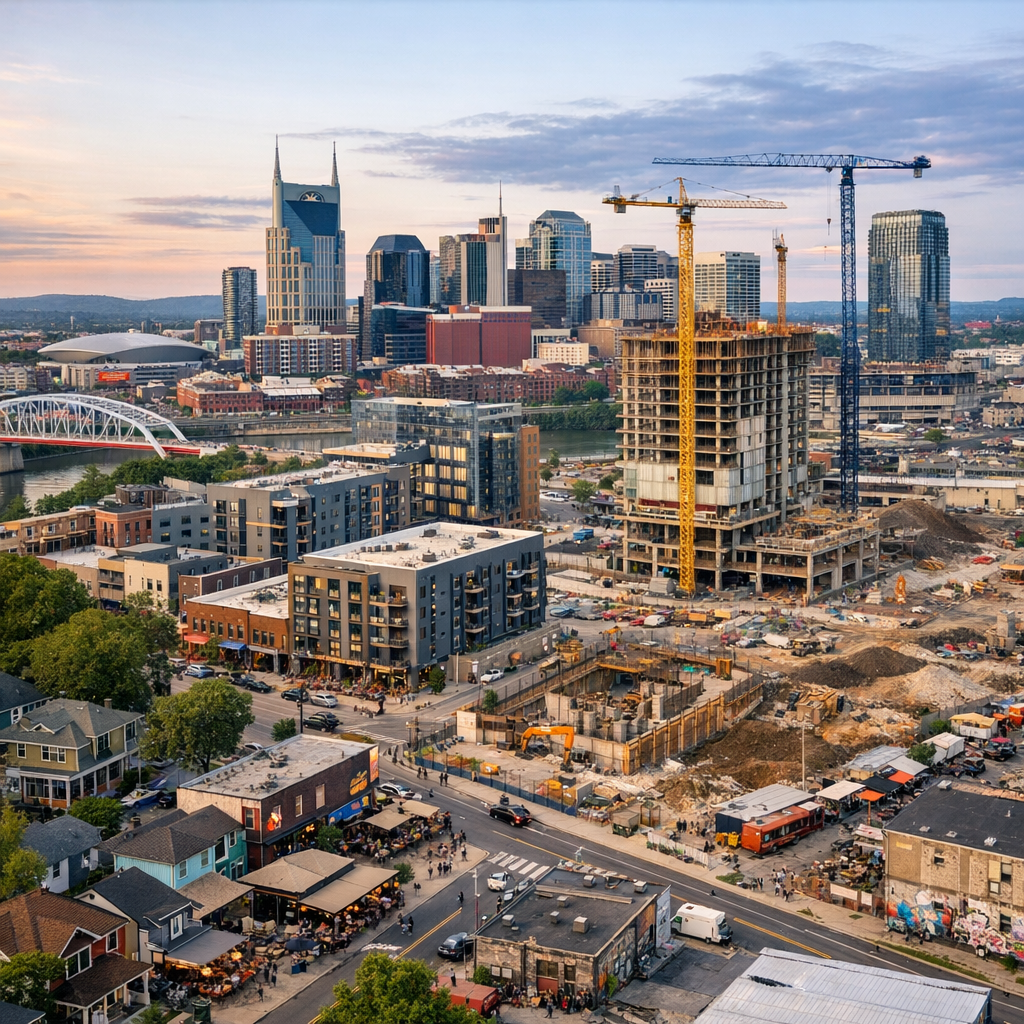
Nashville’s rapid growth has brought both opportunities and challenges, particularly in housing affordability, infrastructure development, and community well-being.
Housing Affordability Concerns
Recent studies highlight significant affordability issues, especially among African American residents. The 2026 Community Needs Evaluation by Metro Social Services reveals that Nashville’s overall poverty rate stands at 11.9%, but rises to 18.0% among African Americans. Additionally, the unemployment rate for African Americans in Davidson County is 5.5%, nearly three times that of whites at 2.0%. Nearly half of all renters in Nashville are “cost-burdened,” spending more than 30% of their income on housing.
Infrastructure and Development
To address infrastructure needs, Metro Nashville plans to allocate $300 million, originally designated for Music City Center, to key projects on the East Bank. This funding will support utilities infrastructure and new parks, with up to $150 million earmarked for these elements, primarily budgeted for 2030. This financial plan aims to enhance Nashville’s bonding capacity for future projects.
Community Health and Well-being
Community health assessments have identified areas for improvement. The 2025 Community Health Assessment, conducted by Metro Public Health Department and partners, provides an understanding of the state of health in the community and the social factors contributing to and influencing health in the area. This assessment serves as a guide for developing community health improvement strategies.
Looking Ahead
As Nashville continues to grow, addressing these challenges requires collaborative efforts from city officials, community organizations, and residents. By focusing on equitable development, infrastructure investment, and community health, Nashville can strive to be a city where all residents thrive.