

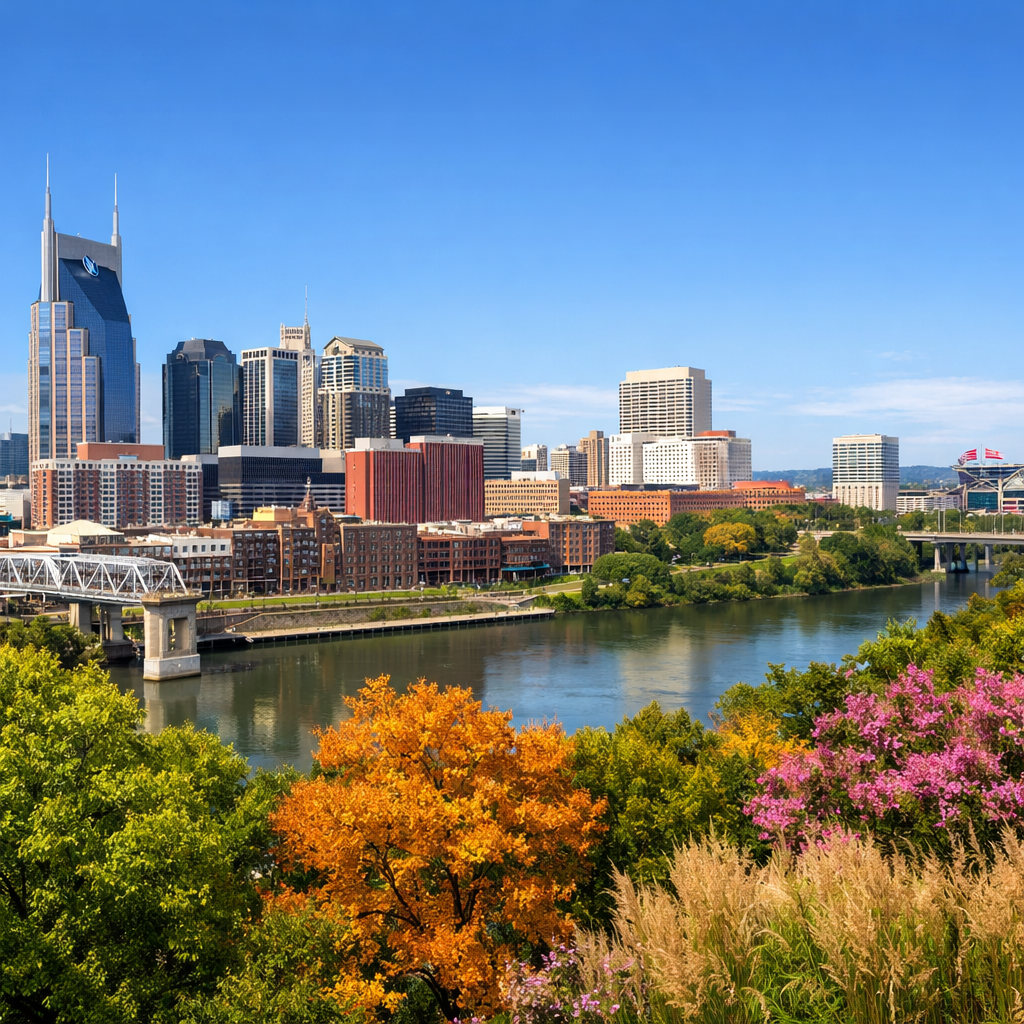
Nashville, Tennessee, experiences four distinct seasons, each offering unique weather patterns that shape the city’s environment and lifestyle. Understanding these seasonal changes is essential for residents and visitors alike.
Spring: A Season of Renewal
Spring in Nashville arrives swiftly, with temperatures transitioning from the 50s in early March to the high 70s by May. This period is marked by blooming Bradford pear trees and redbuds, transforming the city into a vibrant landscape. However, spring also brings increased rainfall, averaging 5.7 inches in May, and frequent thunderstorms, including the peak of tornado season in early spring.
Summer: Heat and Humidity
Summers are characterized by hot and muggy conditions, with average high temperatures around 89°F in July. The season spans from late May to mid-September, with daily highs often exceeding 81°F. High humidity levels can make the heat feel more intense, and residents should be prepared for occasional heat advisories.
Fall: Mild and Pleasant
Fall offers a respite from the summer heat, with temperatures gradually cooling from the 80s in September to the 60s by November. This season is ideal for outdoor activities, as the weather is generally mild and the city’s foliage provides a picturesque backdrop.
Winter: Mild with Occasional Cold Snaps
Winters in Nashville are relatively mild compared to northern regions, with average lows around 31°F in January. Snowfall is infrequent, averaging about 1.7 inches in January during the snowy period from late December to late February. However, residents should remain vigilant for occasional ice storms that can disrupt daily life.
Impact of Climate Change
Climate change is influencing Nashville’s weather patterns, leading to more frequent and intense heat waves, increased precipitation, and a higher incidence of severe weather events. The city has experienced a temperature increase of approximately 3.4°F and an additional 3.3 inches of annual precipitation. These changes pose challenges such as urban heat islands, where areas with less greenery and more infrastructure experience higher temperatures, affecting 71% of Nashville residents.
To address these challenges, Nashville has developed a Climate Adaptation and Resilience Plan, focusing on enhancing the city’s ability to anticipate, adapt to, and recover from climate-driven disruptions. Initiatives include increasing the urban tree canopy, implementing reflective pavement coatings, and improving communication strategies during extreme weather events.
By understanding Nashville’s seasonal weather patterns and the impacts of climate change, residents can better prepare for and adapt to the evolving environment, ensuring the city’s resilience and sustainability for future generations.