

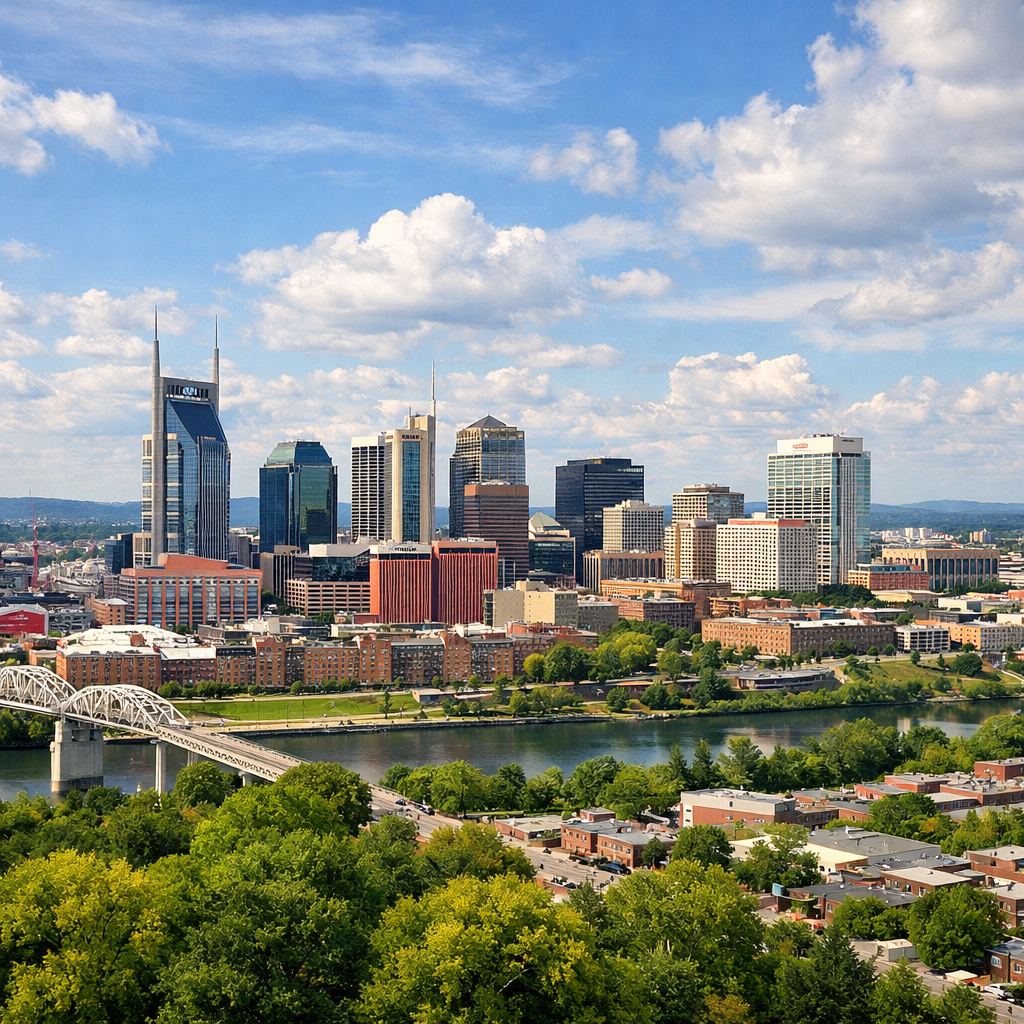
Nashville, Tennessee, experiences a humid subtropical climate, characterized by hot, humid summers and mild to cool winters. This climate influences various aspects of daily life, from outdoor activities to environmental considerations.
Seasonal Weather Patterns
Summer
Summers in Nashville are typically hot and humid, with average high temperatures reaching around 89°F (31.3°C) in July. Residents often experience muggy conditions, making it essential to stay hydrated and take precautions against heat-related illnesses.
Winter
Winters are generally mild, with average low temperatures in January around 30.6°F (-0.8°C). While snowfall is infrequent, averaging about 1.6 inches (4 cm) annually, occasional cold snaps can bring freezing temperatures.
Precipitation
Rainfall is fairly evenly distributed throughout the year, totaling approximately 53.5 inches (1357.9 mm) annually. May tends to be the wettest month, while August is typically the driest.
Environmental Considerations
Air Quality
Recent reports have highlighted concerns about air quality in the Nashville area. The American Lung Association’s 2026 “State of the Air” report noted that the Nashville-Davidson–Murfreesboro metro area received an F grade for ozone smog, indicating unhealthy levels of air pollution. This underscores the importance of ongoing efforts to improve air quality for the health of all residents.
Urban Heat Islands
Urban development has led to the creation of heat islands—areas with higher temperatures due to infrastructures like buildings and roads and fewer green spaces. A significant portion of Nashville’s population resides in these heat-prone neighborhoods, emphasizing the need for increased green spaces and sustainable urban planning to mitigate heat-related risks.
Stormwater Management
Effective stormwater management is crucial in Nashville to prevent pollution from reaching local waterways. Rain and melting snow can carry pollutants from lawns and streets into creeks and streams, eventually affecting the Cumberland River, the city’s primary source of drinking water. Residents are encouraged to adopt practices that reduce stormwater pollution, such as proper disposal of waste and minimizing the use of harmful chemicals on lawns.
Understanding Nashville’s climate and environmental challenges is essential for fostering a healthy and sustainable community. By staying informed and proactive, residents can contribute to the well-being of the city and its natural surroundings.